Get Full Government Meeting Transcripts, Videos, & Alerts Forever!
Get email alerts on the Short Term Rental Variance topic
No spam. Unsubscribe anytime.
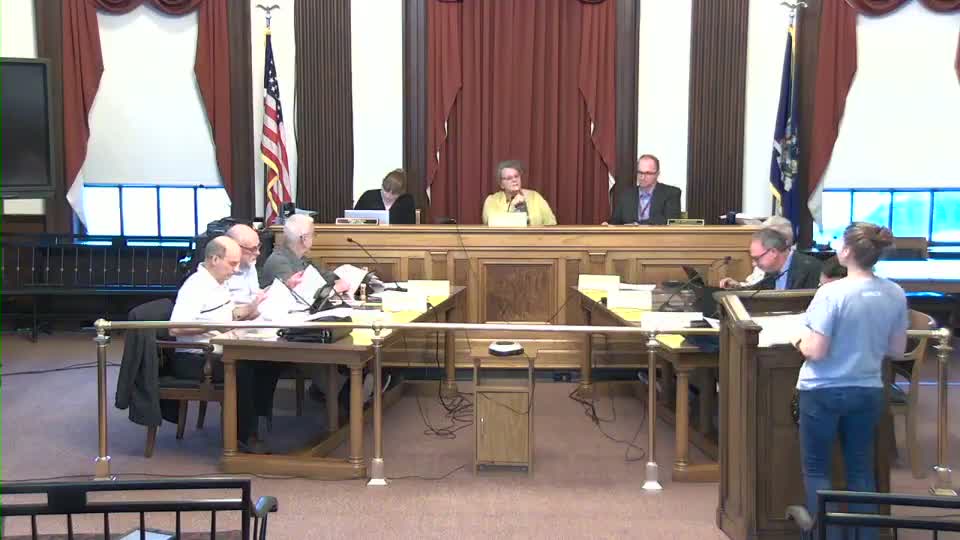
Zoning board denies use variance for short-term rental at 19 Hamilton Ave amid neighbor opposition
Summary
The Zoning Board denied a use variance for 19 Hamilton Ave after residents voiced concerns about neighborhood character and the board found the applicant had not demonstrated a self-created hardship exception.
The Auburn Zoning Board of Appeals denied a request from Rachel Bailey to operate a short-term rental at 19 Hamilton Ave, citing the board’s finding that the applicant did not meet the legal standard for a use variance.
Bailey told the board she and her family own the home and use it part of the year while renting it other times; she said the property is near an R-2 zone, has parking and that many nearby properties are rentals. "We have owned the home for about 5 years and it's a home that we use," Bailey said, noting the house had sometimes hosted contractors or short-term occupants for community projects.
Several neighbors spoke against the variance during public comment, arguing that short-term rentals undermine residential neighborhoods. "The mini hotel is not an appropriate usage in a residential neighborhood," Jacqueline Gumtow said. Mike Pedegrass, another neighbor, said he opposed short-term rentals generally in that area and worried about neighborhood degradation.
The board first adopted a negative declaration on the submitted short environmental assessment form. After public comment and deliberation, a motion to grant the use variance failed on a roll call vote: Steigerwald voted yes; Bilecki, Miller, Tamberrino, Kilmer, Odessa and Martini voted no. The motion did not reach the four-vote majority needed, and the application was denied.
Board members who voted no cited a belief that the hardship claim was self-created and that the applicant had not demonstrated the inability to realize a reasonable return without a variance. The applicant was advised to consult the codes office about documentation and options.