Get Full Government Meeting Transcripts, Videos, & Alerts Forever!
Get email alerts on the Community Police Stakeholders topic
No spam. Unsubscribe anytime.
Auburn Human Rights Commission outlines $35,000 stakeholder process, seeks complaint transparency; votes to enter executive session
Summary
Commissioners described a city-funded stakeholder process led by consultant CSD, said they will seek to include filed complaints in the commission's annual report, discussed possible responses if ICE detains community members and voted to enter an executive session.
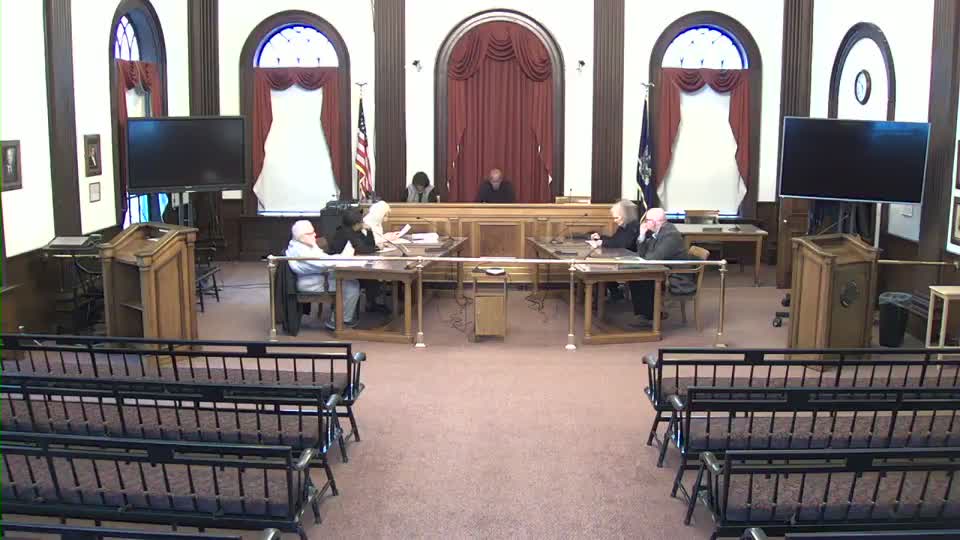
The Auburn Human Rights Commission on Monday described a planned, city-funded stakeholder process to address incidents of racialized violence and to produce a public report, and voted to go into executive session for further business.
Commissioner Rota Overstreet Wilson said the city has allotted $35,000 to a company the commission identified as CSD to run an initial stakeholder group that will focus on “incidences that happen” and recommended expanding to additional stakeholder groups that include social services, mental-health agencies, students and police leadership. “That stake holders group is gonna focus on the incidences that happen. We're not going to allow the overall goal of building relationships to be what deters us from this actual work, this actual conversation that we need to have,” she said.
Why it matters: Commission members said they want the stakeholder process to produce tangible recommendations and follow-up, not only conversation. Rota Overstreet Wilson said she will press for a requirement that all complaints filed with the city also be included in the Human Rights Commission's annual report so the commission can track how many complaints arrive and what happens to them.
The commission expects CSD to invite about four people to the initial stakeholder group, then to recommend participants for additional, smaller stakeholder teams. Rota Overstreet Wilson said the consultant plans three months of work to develop a report for community discussion and that invitations to the first stakeholder group should go out within about two weeks.
“One of the things that I am gonna push for is for all complaints that are filed to be filed with the city and the Human Rights Commission be a part of those complaints,” Rota Overstreet Wilson said. She added the commission would not necessarily control outcomes of those complaints but wants transparency by including them in the commission's yearly report.
Commissioners identified stakeholder organizations expected to be invited, including the NAACP and the Harriet Tubman Center for Justice and Peace, and said police leadership and patrol officers will be included in small-group conversations. Rota Overstreet Wilson said the Human Rights Commission will have “a large presence” in the process because the commission started the work that led to the city partnership.
Members also reported an invitation from Melissa Miranda, identified by Rota Overstreet Wilson as the new head of the New York City Human Rights Commission, to attend a symposium featuring several speakers; Rota said she had just received the notice. Separately, Rota said the commission had been invited to meet with a local chapter of Indivisible to explain the commission's goals ahead of national election organizing.
Commissioners debated how the commission might respond if U.S. Immigration and Customs Enforcement (ICE) detains undocumented community members. "What, if any, will be our stance as a commission if ICE starts to gather up people in our community?" Rota Overstreet Wilson asked. She said the commission will handle such situations on a case-by-case basis and respond as complaints or incidents are brought to them: “Once we start getting complaints and things of that nature, we're able to take the appropriate corrective action.”
Votes at a glance: The commission approved routine meeting items by voice vote before the substantive updates. A motion to accept the April agenda (moved by Commissioner Bill Thule, seconded by Commissioner John Price) was approved by voice vote. A motion to approve the minutes from March (moved by Commissioner John Price, seconded by Commissioner Kathy Barner) was approved by voice vote. A motion to accept the finance report for the period ending in March (moved by Commissioner Jilda Brower, seconded by Commissioner Simone Callender) was approved by voice vote. Later, the commission voted to enter an executive session (motion moved and seconded; voice vote) that the chair estimated would last about 10–15 minutes.
The chair closed the public portion of the meeting after the executive-session motion. The commission also discussed routine administrative items earlier in the meeting — ordering pins and business cards for commissioners and a tent for outreach — and noted the city allotment and potential grant impacts from federal policy changes.
The commission said it will circulate invitations and more-detailed stakeholder materials prepared by CSD and will report back to the full commission and the public when the consultant's initial report is available.