Get Full Government Meeting Transcripts, Videos, & Alerts Forever!
Get email alerts on the Public Safety Police Equipment topic
No spam. Unsubscribe anytime.
Residents split over proposed armored response vehicle; veterans and a former officer urged caution and support
Summary
Public commenters at the April 3 Auburn City Council meeting raised both safety and civil‑liberties concerns about a proposed armored emergency response vehicle for the police department, while a former officer described operational benefits in floods and barricade incidents. No formal council action on the vehicle was recorded that evening.
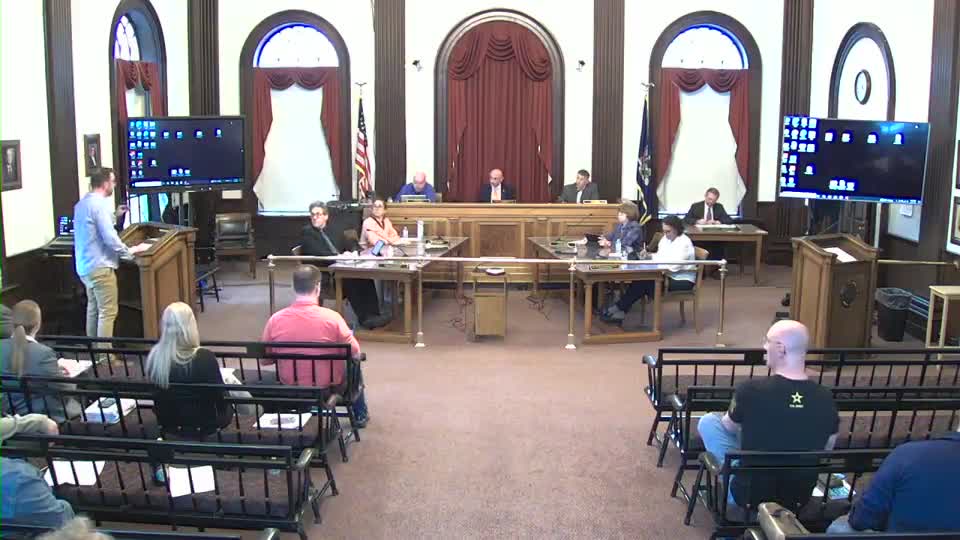
At the April 3, 2025 meeting of the Auburn City Council, residents urged caution and raised safety concerns about a proposed armored emergency response vehicle for the Auburn Police Department, while one former officer spoke in favor of adding the vehicle to the city's fleet.
Brian Tukey, a resident of 6218 Oak Ridge, told the council he supports officer safety but urged sensitivity to how the vehicle would appear in the community. "I listened to the presentation officers gave to council last week," Tukey said. "They did a really good job, and it sounds like they're simply seeking an emergency response vehicle to keep them safer during emergencies. . . . However, as a citizen, I'm concerned about the negative impacts as an armored that the armored vehicle could have on our community." He added that the vehicle "does look remarkably similar to the MRAP vehicles that I used while I was in Afghanistan and that matters to folks with PTSD. Images of war that hit too close to home can be a trigger of PTSD symptoms. More importantly, I'm concerned about my black and brown siblings and other citizens from marginalized populations. . . . I just want those siblings to be able to live in a community free of symbols of terror." Tukey said he would be "slightly warmer to the idea" if the vehicle were parked and used only for bona fide emergencies.
Speaking in support, Joe Vellano, a lifelong Auburn resident and a former local police officer, said the vehicle had practical uses. "I was with the police department for 20 something 21 years," Vellano said, and described past uses of an armored vehicle for flood rescues and for officer and civilian rescues in barricade or active‑gunman situations. "Any incident we had dealing with guns, barricaded individual, we would have to call an armored vehicle which would take us 2 to 3 hours to get to Auburn," he said, adding that local possession of the vehicle would reduce response time and risk: "It's a great tool for the police department to use and other agencies in our area that do not have that option to use."
The public comment period included other speakers on unrelated topics after the armored vehicle remarks. The transcript of the April 3 meeting does not record a formal council vote or other action on acquisition or use policy for the vehicle during that session.
Community concerns focused on the psychological impact of a militarized appearance in public spaces and the risk of the vehicle being present during peaceful First Amendment protests. Supporters emphasized emergency‑response utility for floods, barricades and high‑risk warrants and faster local availability than renting or borrowing vehicles from neighboring cities. The council did not take formal action on the topic in the portion of the record provided.