Get Full Government Meeting Transcripts, Videos, & Alerts Forever!
Get email alerts on the Diversity Equity Inclusion topic
No spam. Unsubscribe anytime.
State Board continues DEI training; consultants stress disability inclusion and accessible practice
Summary
The board's DEI consultants led a late‑afternoon session focused on disability inclusion, accessible practice and intercultural development. Trainers urged the board to build norms, practice accountability and treat accessibility as universal design.
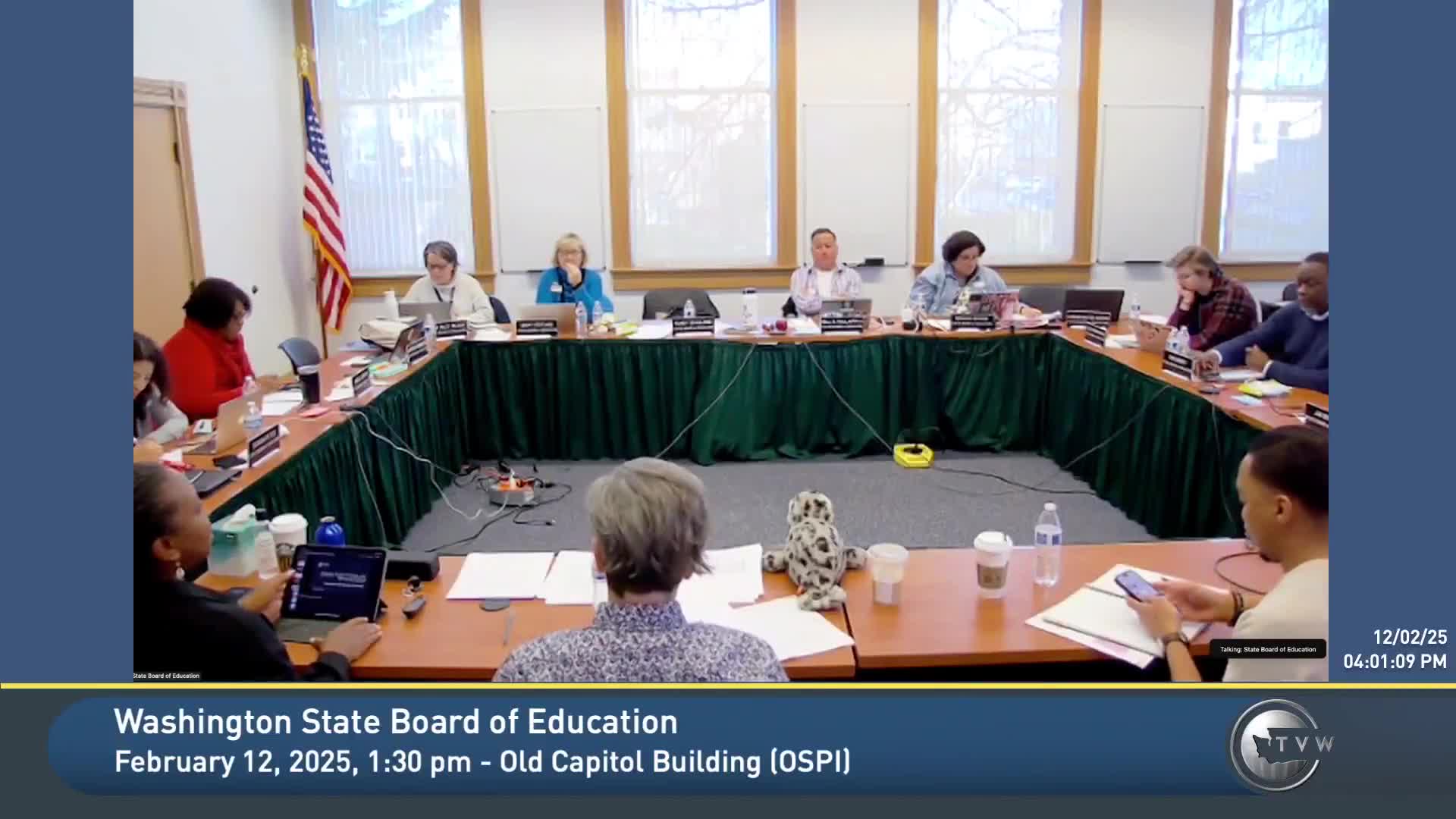
Consultants from Genesys Ed Solutions led a diversity, equity, inclusion and belonging training for the Washington State Board of Education on Wednesday, focusing on disability inclusion, group norms and intercultural development.
The session opened with lead consultant Dr. Joy Gorham Herbie, who framed the workshop as a co‑creative process and described Genesys Ed Solutions' approach to organizational culture change. Consultants Dr. Jen Self and Dr. Blair Hayes presented material on disability inclusion, accessibility practices and a developmental model for intercultural competence (the Bennett scale).
Trainers emphasized practical steps and norms for board and staff interaction. Herbie introduced suggested group norms — for example, speaking with integrity, not making assumptions and doing one’s best — and invited members to mark up and adopt norm language for future meetings. "Our approach to the work is to really enter each space with an appreciation for what the group brings," Herbie said.
A major portion of the session addressed disability in workplace and school settings. Trainers reminded members that disability is a broad category that includes physical, sensory, learning and cognitive conditions, and that many people move in and out of disability over time. The consultants ran a brief true/false quiz to illustrate common dos and don'ts (for example, do not pet or distract a service dog; address people directly rather than speaking to an interpreter).
Board members shared experiences and raised implementation concerns. Several members described inclusive practices they had seen, such as universal design for online materials and integrated sports programs that provided access and leadership opportunities for students with disabilities. Members also raised gaps: uneven special education staffing, persistent segregation for some students with intellectual disabilities, and differing outcomes for students of color with disabilities.
Trainers closed by asking the board to surface specific follow‑up questions and to commit to small accountability practices such as permission to be corrected and to name discomfort when it arises. "If you see me behaving badly… give me a signal or something," Herbie said in an example of asking colleagues to hold one another accountable. The session concluded with an invitation to provide feedback on the workshop and to continue the conversation in future board meetings.
Ending
The board scheduled further internal work on organizational norms and a subsequent workshop on building anti‑racist organizational practices; trainers said they will incorporate member feedback into the April session.