Get Full Government Meeting Transcripts, Videos, & Alerts Forever!
Get email alerts on the Graduation Requirements topic
No spam. Unsubscribe anytime.
State Board launches multi‑year review of high school graduation requirements
Summary
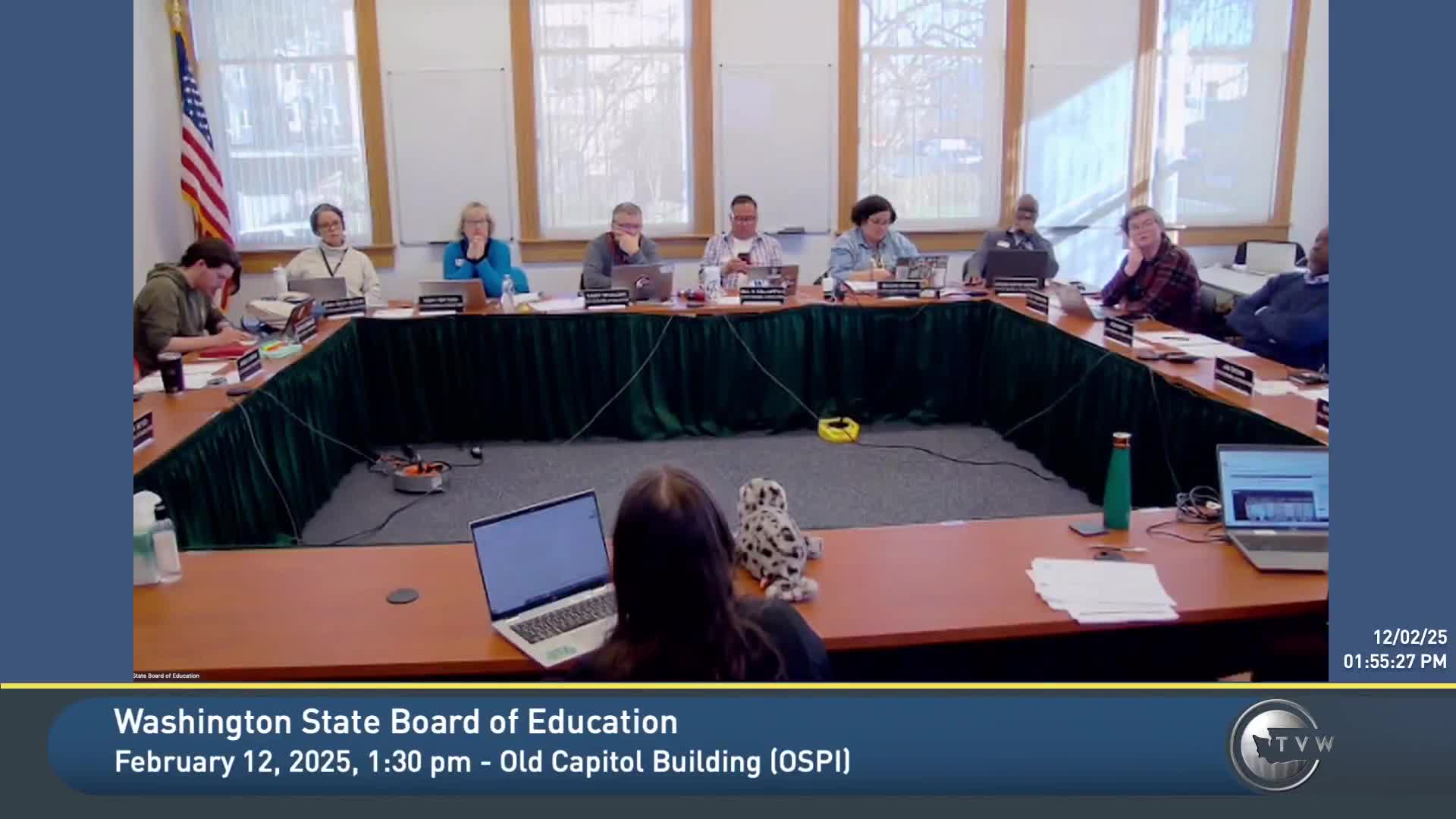
The Washington State Board of Education staff on Wednesday described the newly launched Future Ready initiative, a multi‑year review intended to comprehensively update the state's high school graduation requirements and produce a legislative proposal by fall 2026.
The Washington State Board of Education staff on Wednesday described the newly launched Future Ready initiative, a multi‑year review intended to comprehensively update the state's high school graduation requirements and produce a legislative proposal by fall 2026.
The board's deputy executive director, Kaylee (Jaylee) Schultz, told members the effort will be “Future Ready, which is 1 of the strategic plan initiatives. And it is focused on comprehensively updating Washington's high school graduation requirements through a collaborative process involving a wide range of education partners.” The initiative will be guided by a cross‑sector task force and community liaisons, she said.
Board staff framed Future Ready as more than a credit count change. Schultz said the task force will examine a profile of a graduate, transferable and essential skills, interdisciplinary learning and the supports districts will need to implement any changes. “It's not just the tinkering and the small adjustments, but really looking at it holistically,” she said.
Task force makeup and timeline
Schultz said about 35 representatives make up the cross‑sector task force, including students, families, K‑12 educators, employers, postsecondary partners and community‑based organizations, and that the group will use subcommittees and paid community liaisons to broaden outreach. Staff told the board the task force held a level‑setting meeting in January and will hold a visioning meeting in March; staff described the work plan as three phases with an interim report planned for December 2025 and a full proposal due in fall 2026.
Staff emphasized statutory constraints and implementation realities. Schultz reminded board members that any change to graduation requirements must be phased to begin with a new ninth‑grade cohort; under the current schedule the earliest cohort that could be affected would be the students entering ninth grade in the class of 2031.
Board questions and points raised
Several board members asked about outreach and membership on the task force. Mary Martin Lawrence asked about statewide awareness and the outreach metrics; Schultz said signups and a newsletter are growing and that staff have presented to legislative education committees. Ron Mabry and other members urged attention to implementation details such as funding, transportation and schedules that determine student access to pathway options. Members also noted gaps the task force should examine, including financial literacy, computer science and bilingual education.
Staff research and next steps
Schultz said staff will work with the Education Research & Data Center and other partners to answer task force questions, run literature reviews and produce quantitative analyses comparing Washington's credit and subject‑area requirements with other states. Staff also said they will provide a written summary of findings the task force requested on the evidence connecting graduation frameworks to student outcomes.
Staff asked board members to send additional research questions now so partners can begin digging into data. The task force will return to the board at the board's June retreat as the effort moves from visioning and gap analysis to recommendation development.
Ending
Schultz said the approach is intended to center equity and to include voices the education system has underserved. The board scheduled further discussion of the initiative at upcoming meetings and asked staff to circulate task force materials and summaries of the research partners' findings as they become available.