Get Full Government Meeting Transcripts, Videos, & Alerts Forever!
Get email alerts on the Place Of Worship Events topic
No spam. Unsubscribe anytime.
Public hearing on Midland church proposal highlights septic and event-capacity questions; staff recommends postponement
Summary
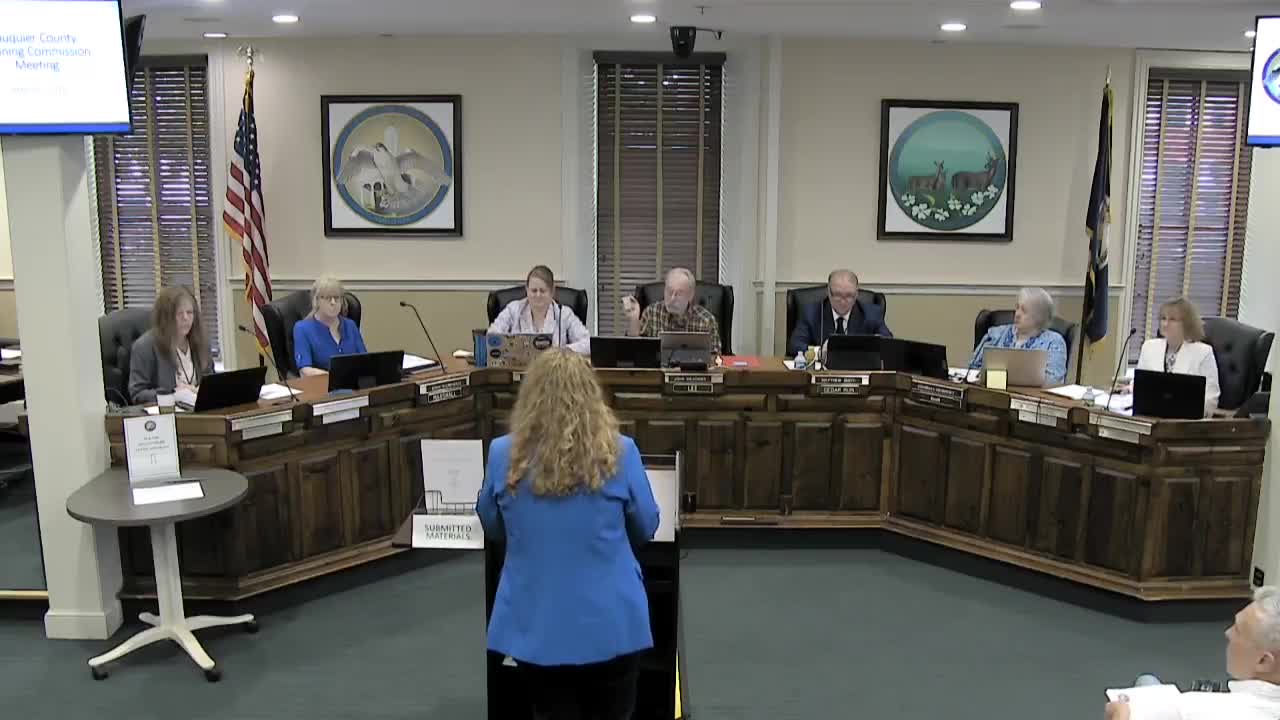
Fauquier County planning staff presented a public hearing Thursday on a special-exception and special-permit application by Church of God at Midland for a major place of worship and an annual Class B event on an approximately 60-acre property at Catlett and Metz roads.
Fauquier County planning staff presented a public hearing Thursday on a special-exception and special-permit application by Church of God at Midland for a major place of worship and an annual Class B event on an approximately 60-acre property near the intersection of Catlett Road and Metz Road.
The application seeks a category-6 special exception for a major place of worship and a category-9 special permit for Class B events longer than three days. The applicant proposes a main church building of roughly 35,000 square feet that would include a 325-seat auditorium, meeting rooms, a fellowship hall, bathrooms and a kitchen; an auxiliary building of about 17,500 square feet; outdoor recreation areas; 261 parking spaces; and an underground water tank for fire suppression.
Attendance and event scheduling were the focus of the hearing. The applicant clarified that they intend to hold two Sunday services with 325 seats each (325 attendees at each service), a Wednesday service with 325 attendees, a Tuesday “bridal study” with 30 attendees, Friday youth services with 50 attendees and occasional weddings and funerals. The church also seeks to continue a six-day annual fellowship meeting typically held in summer that the applicants estimate would have cumulative attendance of about 3,000 across six days (roughly 400–500 attendees per day). The applicant said these large annual events are generally for church members and not open to the public.
Septic capacity and water usage dominated the discussion. Staff presented the applicant’s wastewater characterization, which used a 5-gallons-per-seat assumption (theaters standard) rather than a per-person figure. Staff reported a weekly peak flow of 3,650 gallons and an average daily flow of 521.4 gallons. Staff described a proposed Sandrip treatment system with a 600-gallon-per-day dosing rate and a 4,000-gallon holding tank; staff also noted the applicant has provided an updated study but that county soil-science and health-department comments were still pending.
County staff included conditions for consideration that would limit attendance to 840 persons per week or 325 persons per day, hours of operation for the place of worship from 10 a.m. to 9 p.m. with activities ending by 10 p.m. (Bridal study may go until 11 p.m.), require VDOT-standard left- and right-turn lanes, require portable toilets and a pump truck standby during the annual event with a contract provided to zoning prior to the event, and prohibit overnight stays on the property. The zoning ordinance requires Class B event sites to contain a minimum of 100 acres; because the subject property is approximately 61 acres staff noted the Board of Supervisors would need to make an explicit finding that the property’s smaller size would still meet public-health, safety and welfare standards equivalent to the ordinance requirements if they chose to approve the request.
Questions from commissioners sought clearer numbers. One commissioner said the updated materials from the applicant indicated the intent to have two Sunday services of 325 seats each and asked whether that changed the condition limiting weekly attendance to 840; staff confirmed the applicant seeks a higher weekly allowance to encompass regular services and said the applicant had proposed a weekly total of 1,055 to include the regular activities but that the health department had not yet provided comment. Staff reiterated their recommendation to postpone action so county technical reviewers could confirm wastewater capacity and staff could update conditions to reflect the revised attendance figures.
Kara Marshall, presenting staff analysis, told the commission that given the “last minute submission of materials, and the confusion over numbers, sizes, etcetera, that postpone action and allow us time to digest this as staff and bring it back to you.” The transcript records that the commission planned to hear public comment that evening but that staff and several commissioners supported postponing final action until the health department and the county soil scientist had reviewed the updated wastewater materials.
No final decision to approve the special exception appears in the transcript. The record shows the commission held the public hearing, received staff recommendation to postpone action, and discussed the outstanding technical reviews that remain to be completed.