Get Full Government Meeting Transcripts, Videos, & Alerts Forever!
Get email alerts on the Historic Preservation Boards topic
No spam. Unsubscribe anytime.
Staff proposes removing ARB duties from zoning ordinance, asks supervisors to postpone action for public comment
Summary
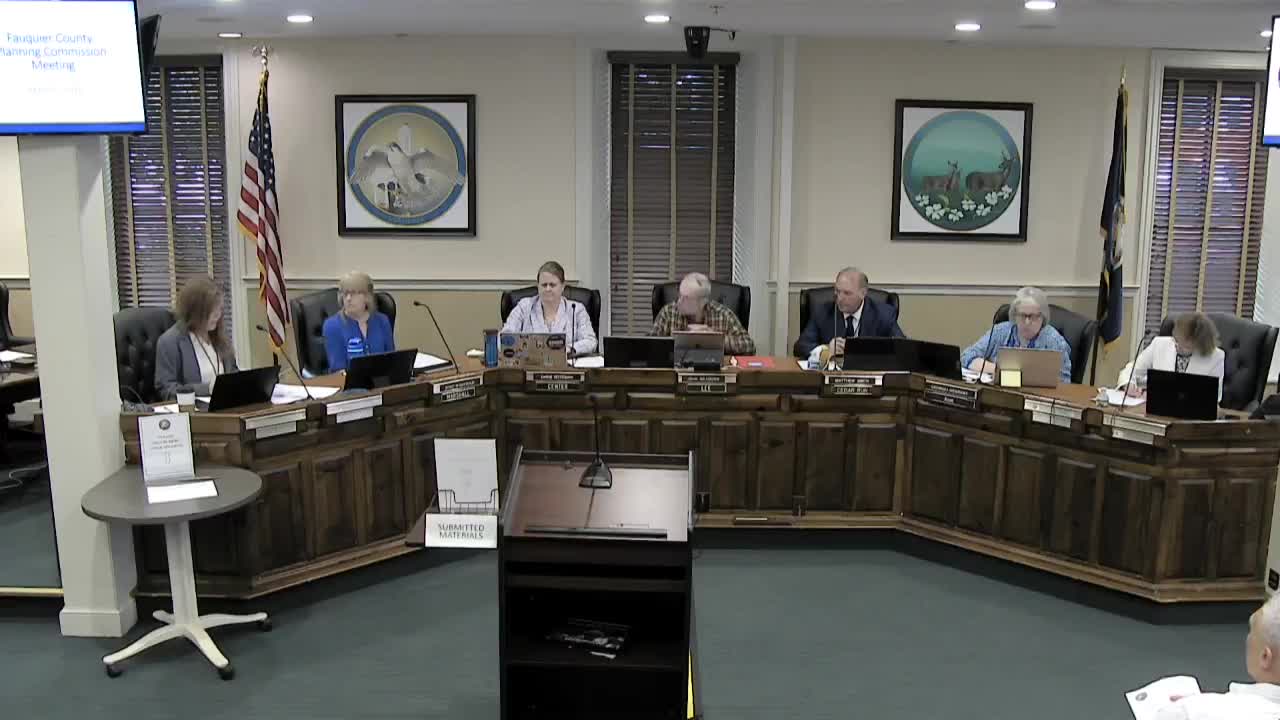
Fauquier County planning staff on Thursday previewed a zoning-ordinance text amendment that would transfer most responsibilities of the county's Architectural Review Board to community development staff and remove several ARB references from Articles 4, 11, 14 and 15 of the zoning ordinance.
Fauquier County planning staff on Thursday previewed a zoning-ordinance text amendment that would transfer most responsibilities of the county's Architectural Review Board to community development staff and remove several ARB references from Articles 4, 11, 14 and 15 of the zoning ordinance.
The proposal matters because the county currently has no historic area districts under the ordinance, and staff said the ARB has not been required to perform its primary statutory duties. Kara Marshall, county planning staff, told the commission that the Code of Virginia allows but does not require localities to establish a local review board for historic-area permits and that the ARB — established in 1976 — has had “no historic area districts” to administer.
Marshall said staff reviewed which boards, commissions and committees are required by the Code of Virginia and which are active and providing defined roles. She told the commission that some roles now performed by the ARB — advising on historically significant sites, owner outreach, historic markers and cooperation with preservation organizations — are already carried out by community development staff, particularly the county’s preservation planner, Wendy Wheatcraft.
Under the draft amendment, Article 4 (historic area district requirements) would replace references to the ARB with community development staff. Article 11 (wireless communication facilities) currently requires ARB review for wireless facilities within a half mile of a National Register property or a national scenic byway; staff reported only two ARB reviews of that kind since February and recommended deleting the ARB requirement and transferring review responsibility to staff. Article 14 and Article 15 references to the ARB would likewise be removed or revised in the proposed language.
Marshall emphasized that the changes would not end the county’s public programming: “Staff would continue as they do now to organize these type of events,” she said, noting that some citizens asked what would happen to ARB-sponsored workshops and that staff would continue those activities. She also said the Board of Supervisors could create a citizen advisory preservation committee in the future without embedding it in the zoning ordinance.
Commission members asked clarifying questions. One commissioner asked about costs of running the ARB; Marshall said the cost is minimal and is driven by staff time and occasional modest costs for refreshments. Another commissioner asked who identifies nationally or state-designated historic sites in permit reviews; Marshall replied that the preservation planner routes applications and provides comments in staff reports. When asked whether one preservation planner could handle the workload, Marshall said she believed that person could “keep up and comment on all the applications as well as performing her other duties.”
At the end of the staff presentation Marshall recommended postponing action on the amendment to allow additional public comment and to ensure the public and board members have adequate time to understand the proposed changes. She said, “I am going to ask you to postpone action tonight, just to be sure that there's adequate time for understanding and public comment.”
No formal vote on the text amendment appears in the transcript; staff explicitly requested postponement to allow time for additional review and comment and to update materials as needed.
If supervisors later choose to amend the ordinance or to create a separate citizen advisory committee for preservation, the staff indicated those options remain available.