Get Full Government Meeting Transcripts, Videos, & Alerts Forever!
Get email alerts on the Civilian Review Panel topic
No spam. Unsubscribe anytime.
Fairfax civilian review panel seeks more training, remote file access and outreach; magistrate process adjusted
Summary
The Police Civilian Review Panel reported nine cases pending review, requested a training "library" and remote access to investigative files, and noted a June 2024 change requiring officer accompaniment to the magistrate's office in some circumstances.
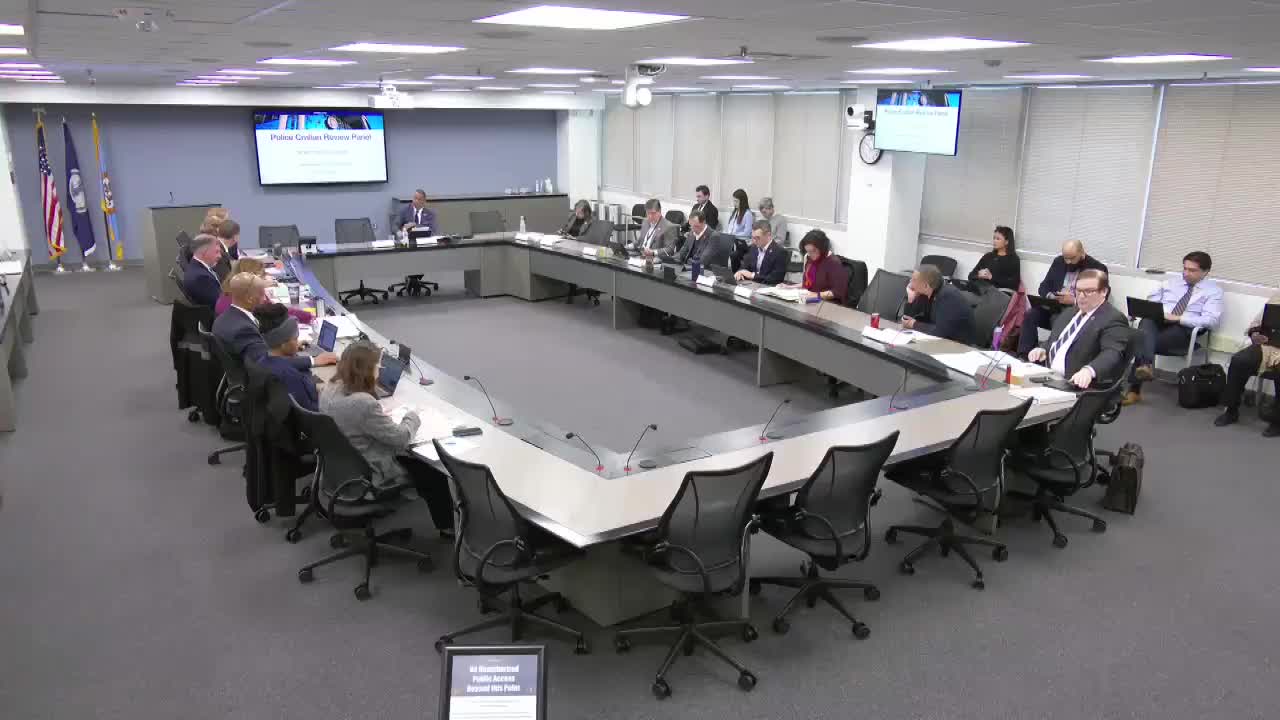
Sherry Belkowitz, the outgoing chair of Fairfax County's Police Civilian Review Panel (PCRP), told the Safety and Security Committee on April 8 that the volunteer panel is pursuing expanded training, remote access to investigative files, and greater public outreach while it handles at least nine cases in its review queue.
Belkowitz said the panel, which had eight members present and nine authorized seats, reviews Internal Affairs Bureau investigations for accuracy, completeness, thoroughness, impartiality and objectivity. She told supervisors that reviews can be time‑consuming, from about two hours up to eight to ten hours for a file, and that subcommittees of three members handle case reviews.
Belkowitz described several operational obstacles and proposals. The panel is rebuilding its capacity after turnover and is creating a "library" of recorded trainings and a Saturday training series with the National Association for Civilian Oversight of Law Enforcement (NACOL) to reduce repeated classroom burden on volunteers. She said the liaison, Craig Miles, has provided monthly trainings and that the panel will schedule a weekend training day beginning in June after the Community Police Academy session ends.
The panel noted practical changes and recommendations that have already been implemented or reviewed. Belkowitz said that, following panel inquiries, the magistrate's office and the FCPD amended procedures as of June 2024 so that officers accompany citizens to the magistrate in order to obtain subpoenas or warrants when the citizen lacks sufficient identifying information. She also said the panel observed occasional transcription of body‑worn camera footage in case files and urged broader use because transcripts make it easier to search footage for key terms.
Other issues raised included better questioning techniques to identify possible racial bias, exploring restorative justice for some complainants, offering same‑sex officers for searches when available, and combining community outreach with public meetings. Belkowitz said many other review panels have remote access to investigative files and some have limited investigative authority; the Fairfax panel currently does not. Multiple supervisors acknowledged the value of the panel's work but expressed caution about granting investigatory powers to a largely volunteer body without additional staff and training.
Supervisor Lusk and other supervisors commended the panel's outreach and training efforts. Supervisor Smith opposed extending investigative authority to volunteers, saying it would be a burden and that the police department currently has investigative staff. Deputy county staff and the panel liaison said they would continue to work on a recommendations matrix and provide follow‑up on proposed changes. The committee asked staff to continue supporting the panel's training and to work with the liaison on community engagement plans.
Belkowitz said the panel had nine cases queued for subcommittee review, highlighted a recent racial‑bias complaint review (not shown as a separate category in an annual chart because of filing‑date conventions), and urged expanding public comment opportunities at panel meetings. She closed by encouraging continued board support for training and outreach and said the panel will pursue scheduled weekend trainings and more public sessions.
The Safety and Security Committee did not take formal action on changes to the panel's authority at the April 8 meeting; supervisors asked staff and the panel to return with further training plans and implementation details.