Get Full Government Meeting Transcripts, Videos, & Alerts Forever!
Get email alerts on the Winter Storm Response topic
No spam. Unsubscribe anytime.
VDOT Defends Snow Response as Fairfax Supervisors Cite Gaps in Subdivision Clearing
Summary
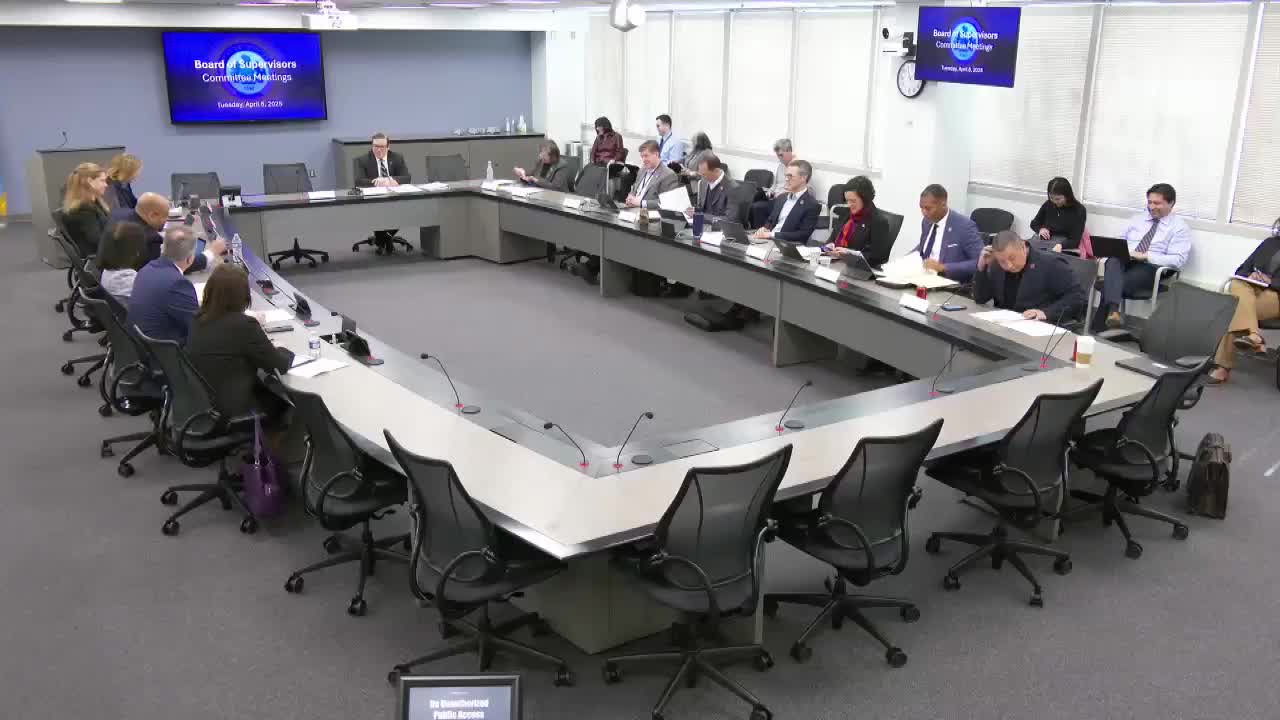
VDOT Northern Virginia District officials reviewed their January 6 snow response at a Fairfax County Board of Supervisors Transportation Committee meeting, and supervisors pressed the agency to explain why many subdivision streets were not cleared to residents' expectations.
VDOT Northern Virginia District officials reviewed their January 6 snow response at a Fairfax County Board of Supervisors Transportation Committee meeting, and supervisors pressed the agency to explain why many subdivision streets were not cleared to residents' expectations.
VDOT officials said the agency mobilized at its highest level, deployed more than 3,000 pieces of equipment and achieved first‑pass clearance on interstates within two hours and on high‑volume primaries and secondaries within about an hour; those interstates and high‑volume routes were “completely done within 12 hours after the first flake fell,” Monica Bhatia, VDOT Northern Virginia District deputy district administrator for maintenance and operations, told the committee. VDOT reported first‑pass timing in subdivisions of about 24 hours in Loudoun, 30 hours in Prince William and 36 hours in Fairfax.
The discussion centered on the agency's operational definition of “passable” for subdivision streets, monitoring and quality control of contractors, and how VDOT communicates what residents should expect. VDOT's definition—designed to preserve emergency access—prioritizes clearing hills, curves and intersections and creating an 8‑ to 10‑foot path for emergency vehicles rather than guaranteeing bare pavement across a driveway to driveway surface in every subdivision, the agency said. Ellen Kamalakis, VDOT assistant district administrator for communications, said the agency's definition is “emergency vehicle access” and stressed that drivers still must “drive with extreme caution.”
Supervisors and the county executive disputed VDOT's statement that a first pass occurred across the district within 36 hours. Supervisor Jimenez told the panel, “People were stuck for a week…You failed miserably,” and other supervisors gave specific local examples of streets they say had no plow visit within that window. County Executive Hill and several supervisors described “holes” in the response where constituents reported no visible truck activity despite VDOT data indicating a pass. The discrepancy prompted repeated requests for improved monitoring and verification of contractor work.
VDOT officials said they use multiple monitoring mechanisms—field monitors, automated vehicle locator (AVL) data and customer service reports—and that their incident command was co‑located with Fairfax emergency operations during the event. Bill Cutler, VDOT Northern Virginia District engineer, said the district had “a very sophisticated snow operation plan” and that the response kept the regional economy functioning and supported school‑system decisions. Cutler added that VDOT will continue to review contractor performance and internal processes.
The county pushed for improvements in two technical areas: the Plow Tracker app and a communications audit. VDOT said central office is developing enhancements to the statewide Plow Tracker (including breadcrumb trails and timestamping of passes) and that Northern Virginia District has requested those improvements. VDOT also asked Fairfax County to allow its communications staff to conduct a joint audit of VDOT information on the county website, saying inaccurate web content had been reported to VDOT and not corrected.
VDOT gave operational context: the January event combined 6–10 inches of snow with a prolonged deep freeze—an unusual combination for the region, the presenters said—making previously plowed surfaces re‑pack and ice over when vehicles continued to traverse them. Monica Bhatia said the deep freeze was “the key for us,” and Ellen Kamalakis noted the agency saw widespread online footage of drivers repeatedly traversing and packing already‑treated streets, which can make cleared surfaces appear unplowed.
Quantitative details offered to the board included roughly 14,000 lane miles in the NOVA district, about 16,000 subdivision streets statewide in the district's inventory, and VDOT's tally of roughly 4,973 customer calls, web submissions and emails to the Northern Virginia customer service center for the January period. VDOT also said it mobilized at Level 5 for the event and activated incident command with multiagency participation.
Board members pressed for a clearer quality‑control process to reconcile customer complaints with AVL and contractor reports. VDOT said it will continue reviewing AVL logs and monitor reports and move to enhance oversight; the agency also committed to hold an annual elected‑official snow briefing in October to coordinate expectations, share pre‑packaged communications content and improve direct outreach to supervisors.
The committee did not vote on any motions during the presentation, but county officials said they expect follow‑up briefings and additional documentation. Supervisors asked VDOT to return later this year with results of after‑action reviews, specific contractor assessments, and progress on Plow Tracker improvements and a communications audit.
VDOT closed by asking supervisors to share its official messaging and to continue the interagency dialogue; supervisors said they want evidence that monitoring and contractor oversight produce measurable improvements before the next winter season.