Get Full Government Meeting Transcripts, Videos, & Alerts Forever!
Get email alerts on the Police Oversight topic
No spam. Unsubscribe anytime.
Fairfax independent police auditor reports 29 new cases in 2024, urges faster co‑responder rollout
Summary
The Office of the Independent Police Auditor reported 29 new cases and 100 active investigations in 2024, reviewed multiple officer‑involved shootings and recommended faster implementation and reassessment of the county's co‑responder and civilian response models.
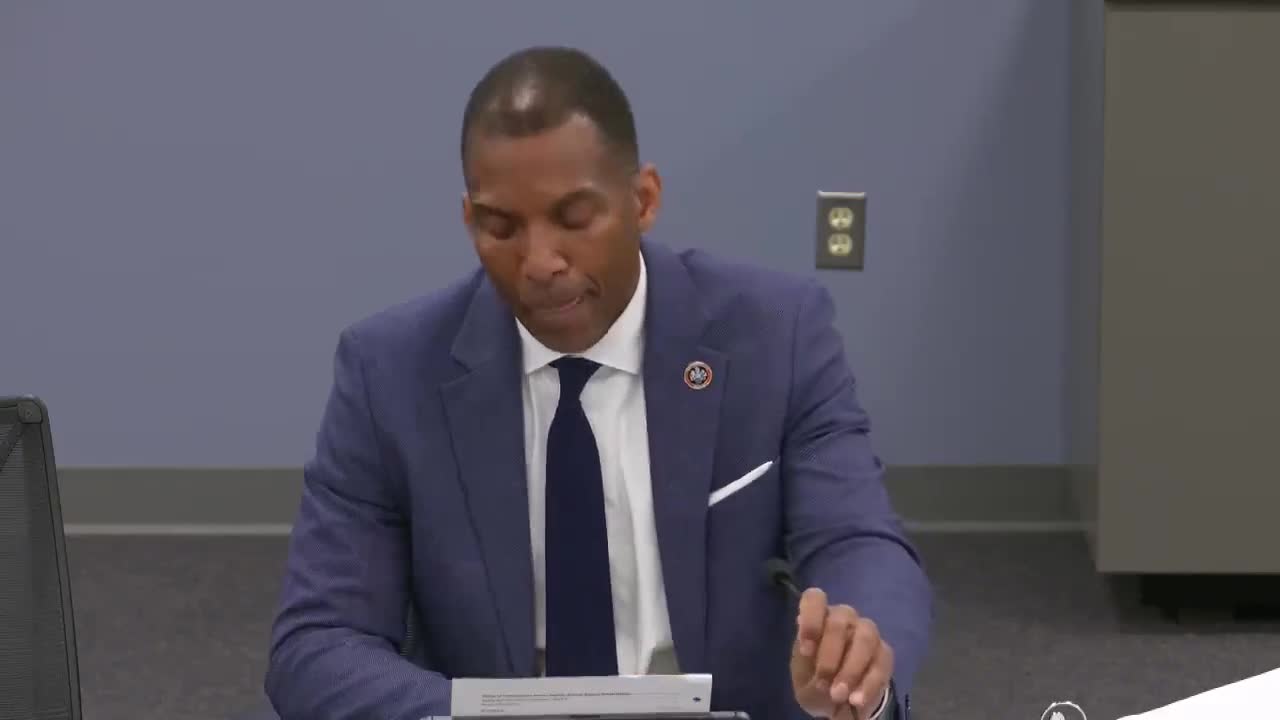
Richard Schott, the independent police auditor for Fairfax County, told the Board of Supervisors Safety and Security Committee on April 8 that his office opened 29 new cases in 2024 and had 100 active investigations at some point during the year, and he recommended accelerating the county's co‑responder program and considering additional policy changes to guide force reviews.
Schott said the 2024 caseload included one officer‑involved shooting opened that year, one death or serious‑injury case and 27 use‑of‑force complaints. He described a backlog of retroactive reviews transferred from the Fairfax County Police Department (FCPD) in May 2023 that increased the number of cases his office monitored.
The audit office completed reviews of multiple high‑profile incidents during 2024, including three officer‑involved shootings and two in‑custody deaths. Schott said he agreed with the FCPD's internal findings in three 2024 officer‑involved shooting reviews, concluding the officers'use of deadly force was objectively reasonable under Virginia law and department policy in those cases. He also said he completed additional reviews in 2024 and published reports or memos on 18 force complaints that year.
The auditor reviewed a total of 13 of the 16 officer‑involved shootings that have occurred in Fairfax County since 2017, Schott said; he completed three OIS reviews in 2024 and continues to monitor others. He told supervisors he found that, overall, the FCPD's internal investigations he reviewed were complete, thorough, impartial and accurate for multiple cases, though he issued five recommendations to the department in 2024 (one implemented, one under ongoing discussion with the sheriff's office, two pending research or review, and one not being implemented at this time).
Among the recommendations Schott highlighted were: continued emphasis on time, distance and cover tactics in officer training; expanding recurrent training and revisions to General Order 540; enumerating noncriminal factors from the Estate of Corey Hill v. Miracle decision into department policy when officers encounter persons in medical or mental‑health crises; and rapid implementation of the county's co‑responder program.
Schott said the FCPD has revised General Order 540 (use of force) to treat the pointing of a firearm as a display of force requiring documentation and investigation. He said the department has updated training and made some language changes but has not incorporated the specific noncriminal factors from Miracle into written policy. Schott said he believes explicitly listing those factors would provide clearer guidance when force is used in noncriminal or medical/mental‑health contexts.
On co‑response, Schott reiterated his earlier recommendation that the Fairfax County co‑responder program be implemented fully and quickly. He noted county plans announced after a July 2022 incident already called for expanding the program to four teams operating seven days a week. He also said he is monitoring a national trend — including Department of Justice guidance and civilian response programs elsewhere — toward purely civilian responses for some behavioral‑health calls, and he plans to report further on that topic.
Schott proposed a legislative option he described as a logical extension to recent General Assembly bills on vehicle seizure: asking the General Assembly to allow forfeiture of vehicles used by people who flee from police. He acknowledged the FCPD is not pursuing that legislation at this time but noted related bills during the recent session addressed seizure or impoundment for exhibition driving and racing.
On office capacity, Schott said his office has been staffed by him and a management analyst for most of the past seven to eight years and that staffing constraints contributed to the backlog. He said he hopes to hire a temporary employee to help address retroactive reviews and expects to reduce the number of active reviews substantially in the remaining nine months of 2025.
Supervisor Lusk praised the annual report and its legal analysis, saying, "I very much appreciate reports that you provide, and the analysis that you include in those. Your legal references are helpful." Several supervisors asked for follow‑up: to produce staffing and timeline estimates, to return with data on whether 24‑hour co‑responder coverage is needed, and to share literature about nonpolice civilian response models. Tom Morrow and a county deputy executive discussed circuit‑level case law (Fourth Circuit Pinehurst decisions) and differences with Sixth Circuit Miracle guidance as part of the department's internal review of possible policy language.
The committee did not take formal votes on policies during the presentation. Supervisors directed staff to return to the committee with updated information on co‑responder staffing and coverage, and several supervisors said they support adding temporary assistance for the auditor's backlog.
Schott said he will continue monitoring the outstanding officer‑involved shooting investigations and other active reviews and will report further to the board as those work products are completed.
The committee scheduled its next meeting for May 20, 2025.