Get Full Government Meeting Transcripts, Videos, & Alerts Forever!
Get email alerts on the Judicial Appointments topic
No spam. Unsubscribe anytime.
Thirtieth Judicial District commission appoints Rosanna Mathis as Kingman County magistrate judge
Summary
After a virtual interview, the Thirtieth Judicial District Nominating Commission unanimously selected Rosanna Mathis to fill the Kingman County magistrate vacancy created by Judge Sylvester's retirement; the commission instructed staff to prepare a certificate of appointment for filing with the Kansas Secretary of State.
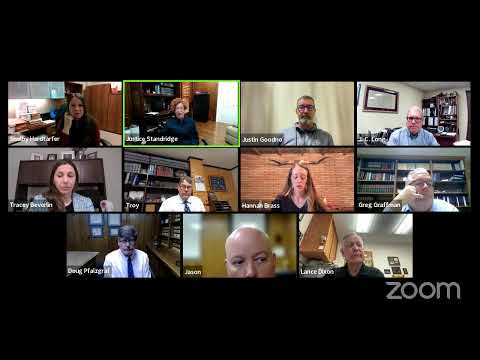
The Thirtieth Judicial District Nominating Commission unanimously appointed Rosanna Mathis as Kingman County magistrate judge following a virtual interview and raised‑hand vote on the single candidate. Melissa Standridge, chair and nonvoting liaison of the commission, convened the meeting to fill the vacancy created by Judge Sylvester.
Mathis, who served more than 26 years as a magistrate judge in the 26th Judicial District and said she retired five years ago, told commissioners she has continued working and wants to return to the bench. "I think I still have a lot to contribute to the judicial system," Mathis said, citing experience with video conferencing for hearings and work with interpreters in diverse communities.
The commission's questions focused on how Mathis would adapt to current practice and local needs. Commissioners asked about her approach to bench warrants and bonds, pretrial supervision and use of remote hearings. Mathis said she favors holding people accountable but is willing to tailor practices to local conditions: she described issuing bench warrants to get compliance but said she had adjusted that practice when district judges preferred other approaches. "If they don't appear on a summons, then do another notice. If they don't show up, then do a bench warrant with no bond," she said, adding she is open to pretrial supervision where available.
Commissioners also pressed Mathis about electronic case management and remote hearings. Mathis said she used electronic filing and audio/video conferencing in prior assignments for first appearances and reviews, and that she has experience handling court technology from work as a dispatcher. Standridge and another commission member noted that judicial education offers training on e‑filing and remote hearing platforms.
Standridge asked members to indicate their votes by raising hands. Shelby Hardefer, the commission's judicial executive assistant, reported the vote appeared unanimous and the commission appointed Mathis. Hardefer will draft a certificate of appointment, Jason Roberts (the commission secretary) will sign it, and Standridge will sign before the certificate is forwarded to the Kansas Secretary of State for filing; the chief judge will arrange Mathis’s swearing‑in. Commissioners said they expected the swearing‑in to proceed as soon as filing and scheduling allow; they noted Judge Sylvester's last day was May 1.
In discussion before the vote, commissioners also noted outreach and recruitment for the vacancy: advertising is handled via emails to attorneys and the Judicial Council website, and the panel encourages local bar announcements and member outreach; commissioners observed that this vacancy produced a single applicant after a prior opening drew three. The commission acknowledged one applicant withdrew by letter (no reason provided in the record).
The commission distinguished between discussion during the interview, direction to staff about the appointment paperwork, and the formal approval vote. After the vote, Standridge reiterated that the certificate of appointment will be filed with the Secretary of State and the chief judge will handle swearing‑in so the county will have an active magistrate as soon as administrative steps are complete.
The commission did not identify a specific date for Mathis’s swearing‑in during the meeting.