Get Full Government Meeting Transcripts, Videos, & Alerts Forever!
Get email alerts on the Ethics Code Amendment topic
No spam. Unsubscribe anytime.
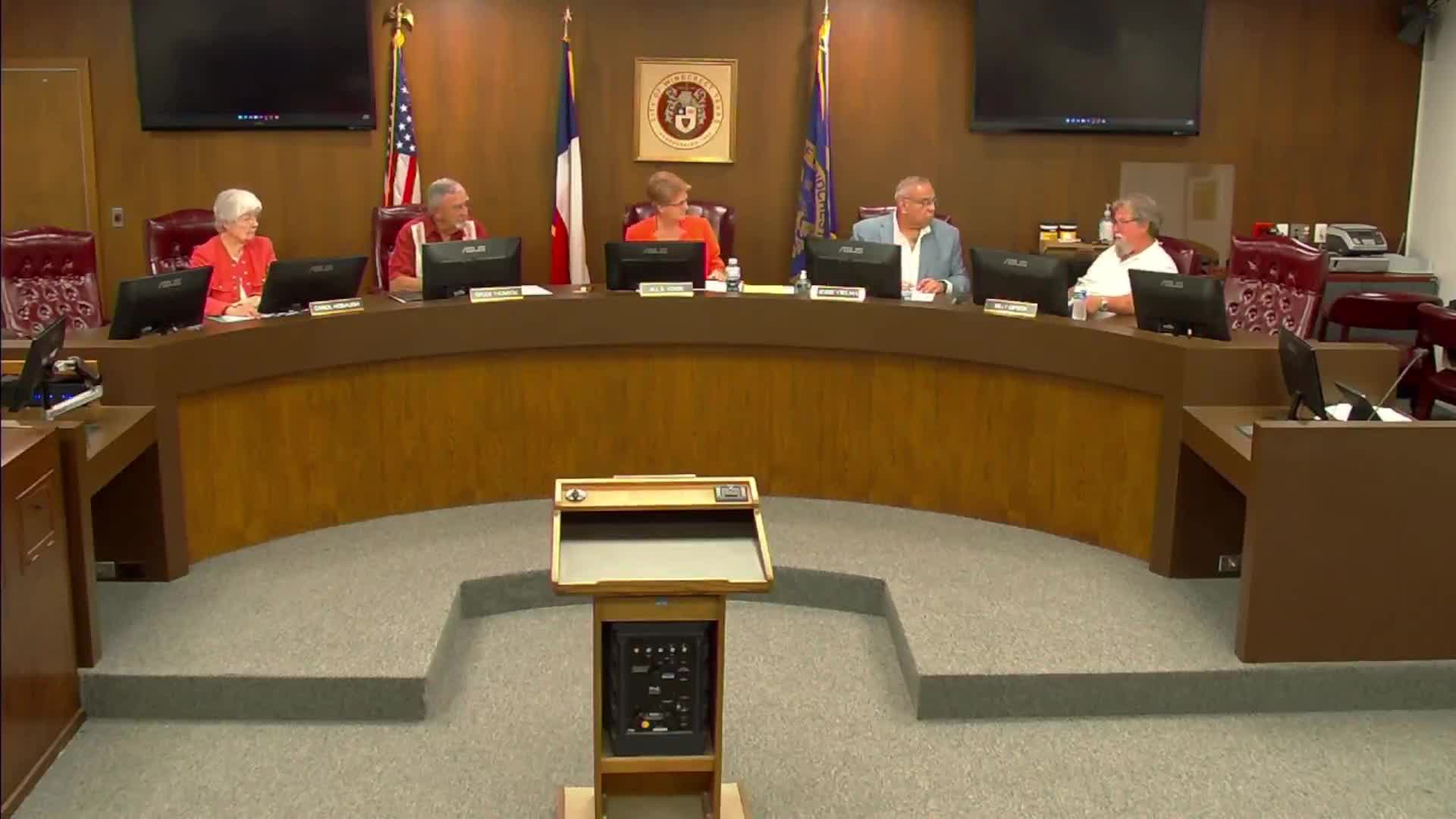
Windcrest Ethics Commission elects officers, begins multi‑page review of city ethics code
Summary
The Windcrest Ethics Commission on April 16 elected leadership and began a page‑by‑page review of proposed amendments to Chapter 2, Article 3 of the Windcrest code of ordinances, but took no final votes to change the ordinance.
The Windcrest Ethics Commission on April 16 elected leadership and opened a detailed review of proposed amendments to the city’s ethics ordinance and the commission’s internal protocols.
The commission voted to continue Jill Bogle’s leadership after Carol Hoball nominated her, and later approved Jesse Vilma as vice chair and Billy Gibson as secretary. The votes were taken by voice; no formal roll‑call tallies were recorded in the meeting transcript.
Commission members spent the bulk of the meeting reviewing redlined suggestions supplied to the commission. Henry (counsel) described the document as a starting point: “These are just suggestions,” he said, adding the draft reflects lessons from past complaints and other cities’ codes. Commissioners discussed a series of substantive choices, but took no final ordinance action and asked staff and counsel to bring a revised draft back at a later meeting.
Why it matters: the changes under discussion would clarify who is covered by the code, narrow which statutes and ordinances may trigger an ethics complaint, add or refine definitions such as “impropriety,” and set procedural details for disclosures and recusals. Commission members repeatedly emphasized avoiding vague language that could be “weaponized” in future complaints while preserving tools for serious misconduct.
Major discussion points
- Scope of enforceable laws: Counsel told the commission the draft currently ties enforcement to statutes and ordinances that “pertain to conflicts of interest, election campaigns, financial disclosures, employer responsibilities, open processes of government and city ordinances.” Commissioners debated whether that language is too broad (which could allow unrelated violations such as traffic infractions to be pled as ethics complaints) or too narrow. Several members favored narrowing the list to laws specifically tied to officials’ public duties.
- Definition of “impropriety” and public drunkenness: The draft includes a definition drawn from state law that lists dishonest behavior, physical abuse and “behavior brought about by public drunkenness.” Commissioners questioned how to apply and prove public drunkenness and whether the phrase should remain; counsel said the language was pulled from state law for a reason but could be revised for clarity.
- Disclosure, recusal and forms: Commissioners discussed adding a requirement that disclosures and recusals be recorded on a form approved by the commission or council so records are consistent and administrable. Counsel said that would be appropriate and suggested a new standalone subsection to cover any required form.
- Employees serving on boards and commissions: The draft requires city employees who accept certain offices to resign their employment; commissioners discussed whether that should apply to appointed (non‑elected) roles and whether employees should be allowed to serve voluntarily with supervisor approval. Counsel recommended retaining the prohibition for elected positions while allowing carefully scoped participation by employees where there is no conflict with their job duties.
- Undue influence and interference: The draft adds language prohibiting members of City Council or other officials from applying “undue influence” on deliberations or staff. Commissioners asked for a narrower, fact‑based standard; counsel suggested a footnote clarifying the clause is intended to prevent functional interference that actually prevents an employee from performing job duties, not ordinary communication.
- Technical and statutory references: Counsel proposed removing references to VTCA (Vernon’s Texas Codes Annotated) and replacing them with modern code citations (e.g., “Texas” followed by the relevant code name). He also recommended inserting footnotes to explain the statement of purpose as non‑enforceable background context rather than a substantive prohibition.
Decisions and next steps
- Officer elections: Carol Hoball nominated Jill Bogle to continue as chair; the motion carried by voice vote. Jesse Vilma was nominated and approved as vice chair. Billy Gibson self‑nominated and was approved as secretary.
- Draft revisions and timing: The commission did not adopt ordinance language at the meeting. Counsel, identified in the meeting as Mr. Henry, said he would prepare the agreed edits and return a revised redline; he asked for at least a week to produce the update. Commissioners agreed to schedule a follow‑up meeting in the weeks after the redline is circulated; staff will send a survey to determine availability.
- Records and prior matters: Commissioners confirmed letters of admonition and censure relating to earlier matters (including a matter involving “Mr. Turner”) had been completed and placed in city records but not published; they remain available by public records request.
What the commission did not do
- No ordinance amendments were adopted at the April 16 meeting. The meeting served as a work session and direction‑setting exercise; formal changes must be recommended by the commission and adopted by the City Council per the city’s adoption process.
Who spoke (selected)
- Jill Bogle, Chair, Windcrest Ethics Commission (nominated and confirmed as chair) - Carol Hoball, Commissioner (nominated Bogle) - Jesse Vilma, Commissioner (nominated/confirmed as vice chair) - Billy Gibson, Commissioner (self‑nominated and confirmed as secretary) - Mr. Henry, attorney/advisor to the commission (led legal review and redline explanations) - Adam (City Secretary) and Rachel (city staff) provided administrative support and logistics.
Next meeting: commissioners asked staff to circulate availability; counsel said he would return a revised draft after at least a week. The commission adjourned at 7:31 p.m.
Ending
The review will continue at a future meeting after counsel circulates a revised redline; any ordinance changes will require the commission’s formal recommendation and City Council action. The commission invited members to read the draft, suggested consolidating defined terms into a single definitions section, and emphasized balancing enforceable standards against language so broad it could be weaponized.