Get Full Government Meeting Transcripts, Videos, & Alerts Forever!
Get email alerts on the Municipal Code topic
No spam. Unsubscribe anytime.
Council adopts municipal-court code update on first reading, tables standing scoring committee and asks staff to draft nonconforming-use procedure
Summary
On first reading the council adopted an ordinance updating municipal court code references to align with state law, tabled an ordinance to create a standing scoring and evaluation committee and directed the city attorney to draft a procedure for nonconforming land uses after recent state law changes.
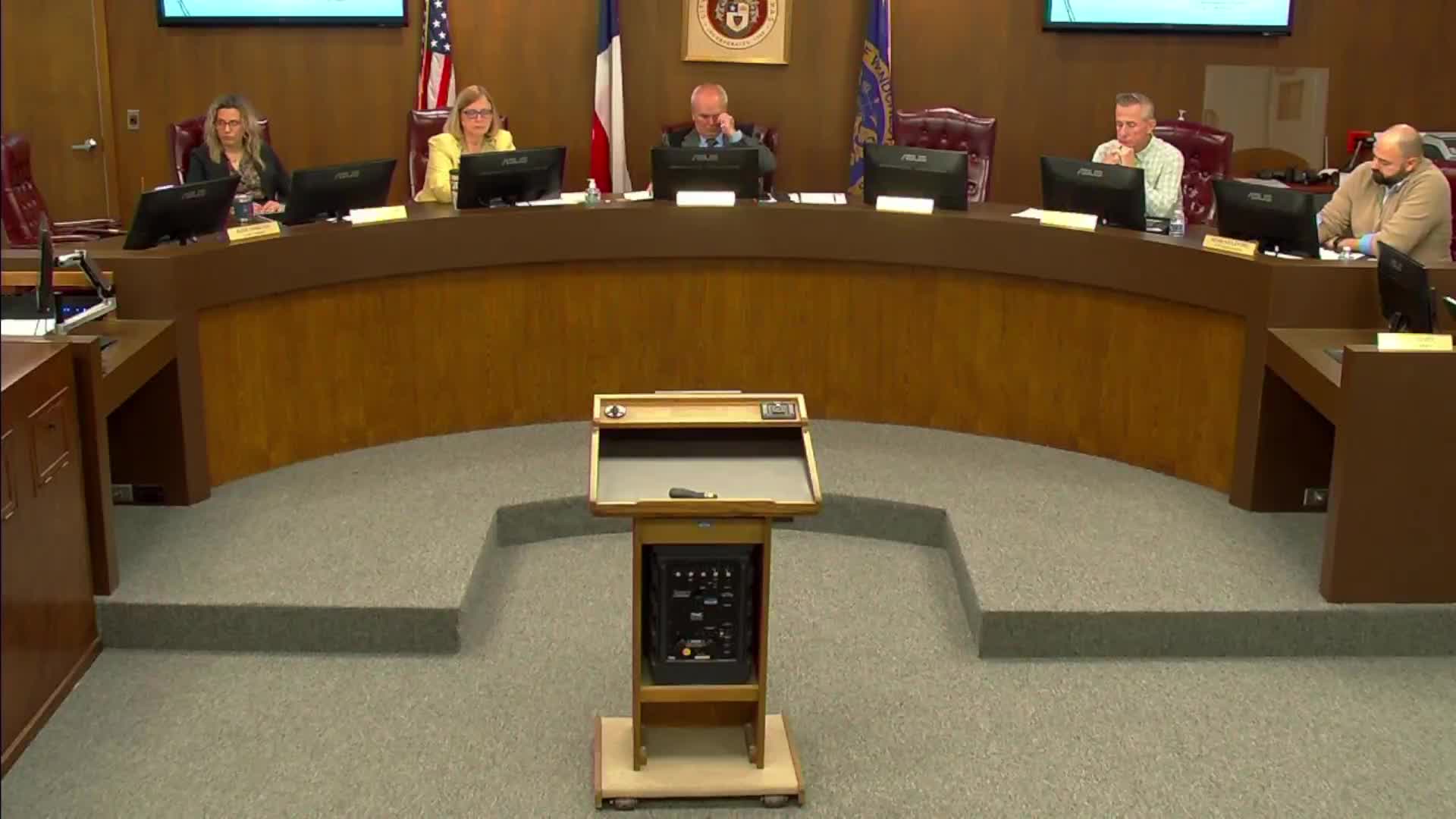
The Windcrest City Council voted to adopt, on first reading, an amendment to section 20-2 of the Windcrest Code of Ordinances to update references used by the municipal court so the local code aligns with current state law. The change was presented as an update to bring the ordinance references in line with state statutory sections; council members said the changes do not exceed state requirements.
Separately, the council considered an ordinance to create a permanent scoring and evaluation committee to review RFQs and RFPs and tabled that ordinance for additional review. The motion to table passed without objection; several council members said they were still “mulling” the content and preferred more time to consider how a standing committee would interact with ad hoc needs.
Council members also discussed recent state changes affecting how cities handle nonconforming land uses (amortization and buy-out options) and directed the city attorney to draft ordinance language that adopts the procedural steps required under the updated state law. The city attorney explained that the new legislative changes require a specific procedure if a city shortens or ends a previously lawful nonconforming use and recommended proactively adding those steps to the Windcrest zoning ordinance.
Why it matters: the municipal-court update reduces ambiguity in local code references; the nonconforming-use work would clarify a process that can affect property owners if zoning changes are enacted; the standing scoring-committee ordinance was tabled after council indicated concerns about scope and usefulness.
Next steps: staff will place the municipal-court ordinance for a second reading and return with drafted nonconforming-use ordinance language. The scoring-and-evaluation committee measure will return to council when staff or council members bring a revised draft.