Get Full Government Meeting Transcripts, Videos, & Alerts Forever!
Get email alerts on the Local Activities topic
No spam. Unsubscribe anytime.
Council kicks off rules review for live outdoor music in downtown, asks staff to build permit option and conduct outreach
Summary
Council asked staff to pursue a permit‑based approach (rather than an onerous specific‑use permit) for small outdoor music venues in downtown and to engage businesses and residents on decibel thresholds, hours and mitigations.
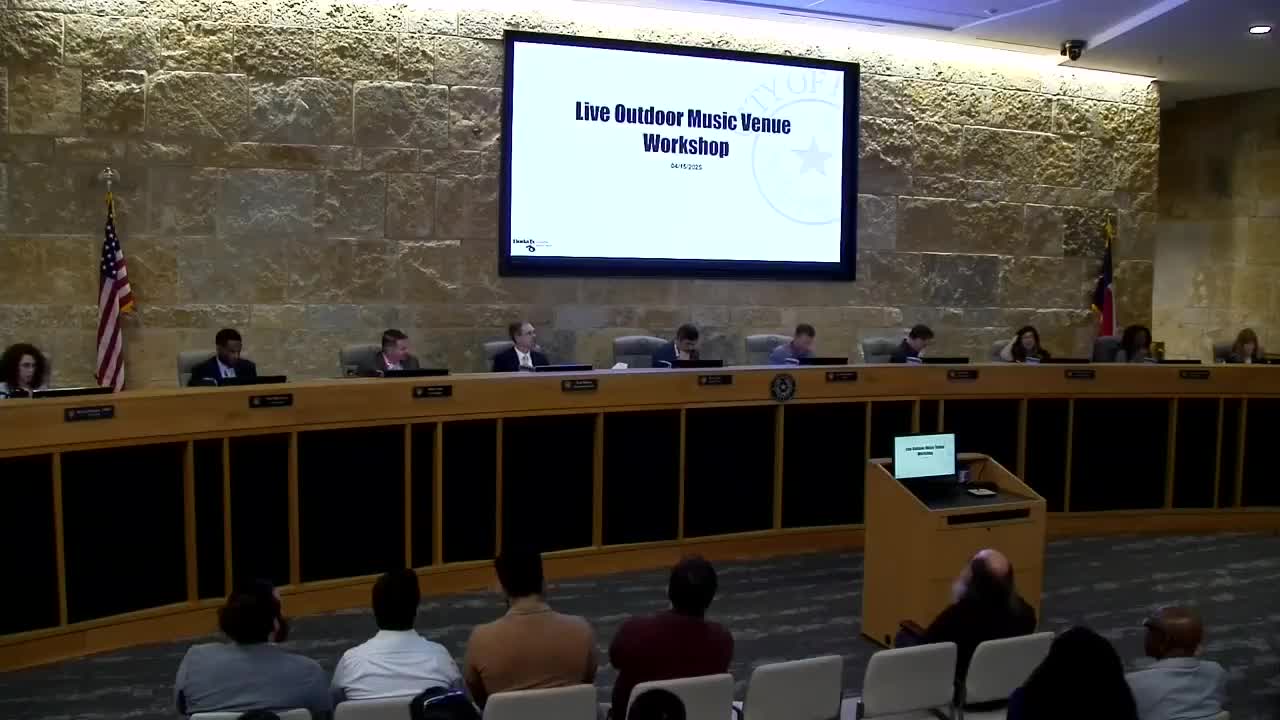
Buda — City staff and council members opened a workshop discussion April 14 on how to allow more live outdoor music in downtown Buda while limiting neighborhood impacts such as noise.
City Manager Micah Grau and Development Project Manager Adam McKee told council the city previously amended the Unified Development Code to allow “small live outdoor music venues” under a specific‑use permit (SUP) in F4H/F5H downtown zoning districts. Staff said the SUP process and associated fees (about $3,000 and a three‑month timeline) and the city’s existing noise ordinance make the approval process a barrier for many downtown businesses already set up to host music.
Nut graf: Council signaled preference for a permit approach that would be faster and less costly for established downtown venues, but members asked staff to engage both businesses and residents to find balanced hours of operation, clear decibel standards and enforcement mechanisms before formal adoption.
What staff presented and why: Staff compared local noise limits to other Texas cities. Under Buda’s current code, residential decibel limits (63 dB daytime, 56 dB nighttime) likely prohibit most amplified outdoor music in downtown. Other cities (Austin, Round Rock, New Braunfels) use business‑permit models with higher measured limits and yearly reviews. Staff presented two paths: (1) create a new outdoor‑music venue permit and amend the noise ordinance, or (2) retain the SUP process but create a streamlined “SUP‑light” with lower fees and quicker review.
Council response and direction: Council members generally supported moving to a permit model rather than the SUP process. Members emphasized:
• Outreach first: staff should survey and hold meetings with downtown businesses and nearby residents because hours, expectations and enforcement are likely to vary between weekdays and weekends.
• Measured standards and compliance: develop decibel thresholds (with consideration of weekend/weekday differences), approval criteria that reward sound‑aware venue design (directional speakers, barriers), and an annual review/renewal tied to permit compliance.
• Mitigation and equity: ensure new permits do not unfairly advantage new businesses over existing venues; consider staging grandfathering or a phased approach for incumbents.
Next steps: Staff will return with a public‑engagement plan (business and resident outreach) and draft ordinance options: either a new permit type (recommended by staff) plus a noise‑ordinance amendment, or an SUP‑light process with streamlined fees and hearings. Council asked for details on staff hours required, enforcement tools and possible hours-of‑operation scenarios.
Ending: The workshop established consensus to pursue a permit approach and to involve downtown stakeholders in drafting standards intended to balance vibrant nightlife and neighborhood livability.