Get Full Government Meeting Transcripts, Videos, & Alerts Forever!
Get email alerts on the Animal Services topic
No spam. Unsubscribe anytime.
Chatham County Animal Services reports higher live‑release rates, outlines TNVR expansion and plans to extend public hours
Summary
Animal Services Director Dr. Hopper gave a quarterly presentation reporting improved live‑release rates, reduced feline intake after a TNVR program, staffing and facility details, and plans to extend public hours and increase disaster response training; commissioners asked about follow-up, TNVR voucher capacity and after‑hours service.
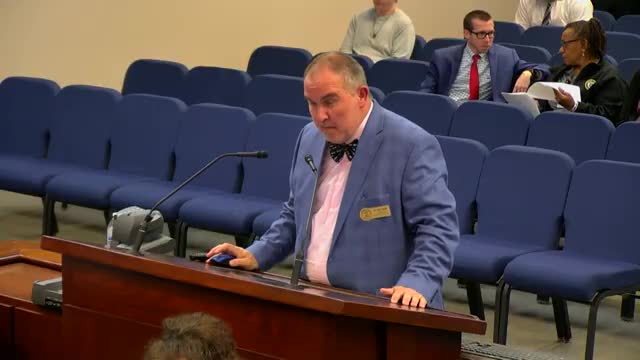
Dr. Hopper, director of Chatham County Animal Services, told the Board of Commissioners the county’s shelter has increased its live‑release rate through expanded transfer partnerships, a targeted trap‑neuter‑vaccinate‑release (TNVR) program and community outreach, and outlined goals to expand hours and disaster training.
“Most of the animals that we take in as far as cats go, stray cats, are typically injured or sick,” Dr. Hopper said, describing how the county shifted from being primarily a holding facility to managing animals with enrichment, behavioral modification and transfers to partner rescues. He credited the formation of the community portal Chatham90 and partnerships with Renegade Paws, the Humane Society and others for helping move animals into homes or foster care.
Dr. Hopper presented operational details: the shelter is open 8 a.m.–5 p.m. daily and open to the public 1 p.m.–4:30 p.m. (closed to walk‑in public service on Wednesdays for training); field officers respond 24/7 to emergency calls with scheduled non‑emergency coverage from 8 a.m.–6 p.m. He described capacity at the facility — inside/outside runs for dogs, banks of stainless steel cages for cats — and staff composition, including seven field officers, animal care assistants, a part‑time veterinarian and a rescue/adoption coordinator.
On cats, Dr. Hopper said the TNVR voucher program (administered with PetFix, the county’s contracted low‑cost clinic) has reduced impounds and improved cat live‑release statistics. He told commissioners the program typically sterilizes about 80–100 cats per month; because PetFix’s veterinary capacity has narrowed (it currently runs fewer clinic days), scheduling and supply‑chain constraints limit throughput. “We’re kind of stuck with what we do now and stuck with the supply that we have of veterinarians,” he said.
The director said the shelter’s live‑release rate for dogs has risen and highlighted community outreach programs — adoption specials, a volunteer program (26 active volunteers), dog playgroups and a social media initiative — that support placements and transfers. He also described the shelter’s role in disaster evacuation and mutual aid arrangements with shelters in other jurisdictions for mass‑evacuation scenarios.
Commissioners pressed for clarity on follow‑up to citizen complaints, TNVR capacity and peak call times. Commissioner Aaron Whiteley asked whether callers receive updates after reporting welfare checks; Dr. Hopper said staff generally provide status information when asked but that investigatory and privacy limits (and open‑records considerations) sometimes restrict routine disclosures. Whiteley also asked about costs; Dr. Hopper said the PetFix contract costs about $50 per cat and that at roughly 80–100 cats per month that equates to about $4,000–$5,000 per month in voucher fees.
Commissioner Anthony Wayne Noah and others raised wildlife and after‑hours questions. Dr. Hopper clarified that calls about raccoons, alligators and other wild animals should be routed to the Georgia Department of Natural Resources (DNR) unless the animal is injured or poses a public‑safety threat; animal services focuses on domestic animals, bites, injured or aggressive animals and welfare checks.
Dr. Hopper said a key near‑term goal is to extend public hours at the shelter beyond 4:30 p.m. and expand training for officers, and he asked for support in identifying more local veterinarians to increase TNVR throughput. He reported recent statistics showing the shelter’s year‑to‑date live‑release rate at levels the staff described as their best performance to date.
The board did not take formal action on operations at the meeting; commissioners asked for continued quarterly reporting and additional outreach on TNVR capacity and wildlife resource links for the public.