Get Full Government Meeting Transcripts, Videos, & Alerts Forever!
Get email alerts on the Public Safety Funding topic
No spam. Unsubscribe anytime.
Fire chief: Converse responding to heavy call volume in ESD No. 1 while contract revenue covers a fraction of cost
Summary
Converse fire officials told the council that the city responds to high volumes of emergency calls in neighboring Emergency Service District No. 1 but receives roughly 20% of the department’s budget from that contract, creating an operational and funding mismatch that the council said it will address.
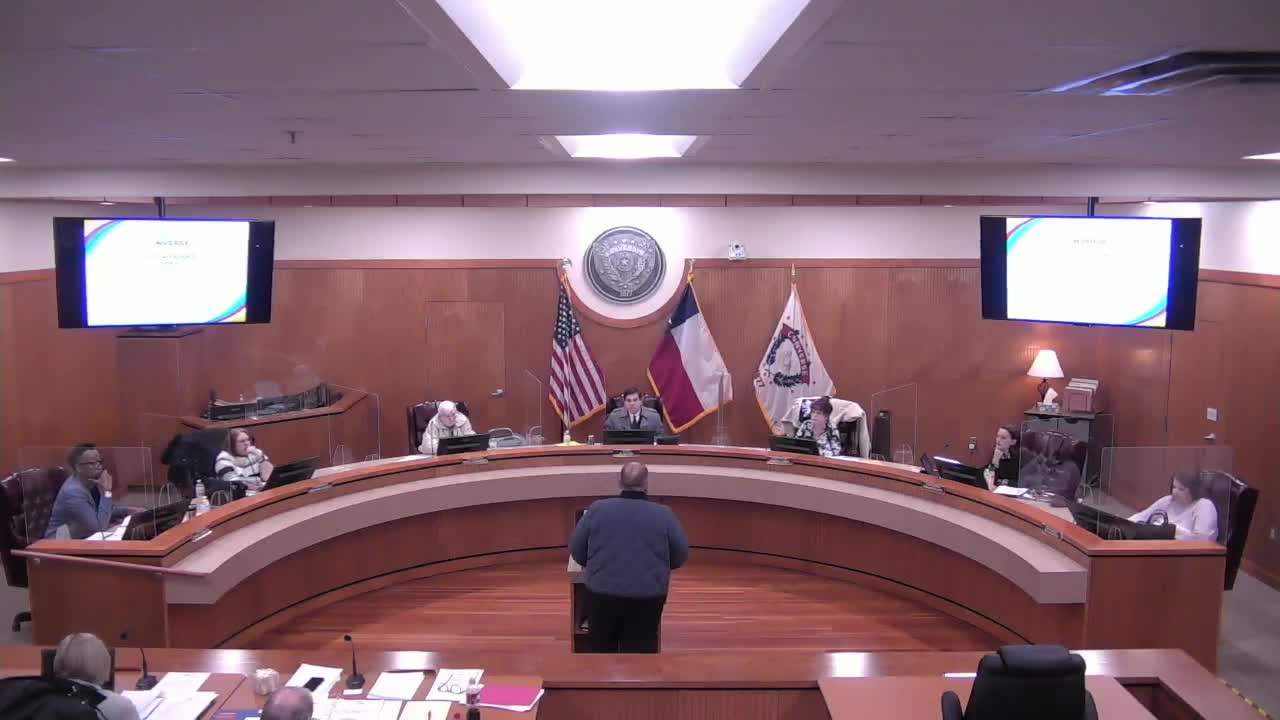
Converse fire officials briefed the City Council on Jan. 21 about an increasing imbalance between the city’s emergency response workload in Emergency Service District (ESD) No. 1 and the revenue the city receives from that contract.
The fire chief said the city responded to 2,474 emergencies in ESD No. 1 last year, including 1,932 medical calls and 542 other service calls; the ESD experienced 68 structure fires during the period. The chief described ESD No. 1 as now densely populated and said it behaves in operational terms like a separate small city. He said the district’s tax rate is 10 cents per $100 valuation and that the total revenue the city received for the contract was about $1.5 million — “less than 20% actually of our total budget” — while roughly 40% of the fire department’s call volume came from the ESD.
The chief explained that Converse provides initial fire and medical first‑response in the ESD and often waits for the county-contracted ambulance service (Allegiance EMS, which earlier in the year replaced Acadian). When ambulances are delayed or unavailable, city crews sometimes transport patients; crews have pulled resources from city coverage to serve the ESD, a strain that has grown with call volume. The chief noted that the city’s annual calls have increased from under 3,000 seven years ago to over 6,000 now.
Interim City Manager Lanny Lambert told council members that the city previously requested more funding when the contract was renewed but did not get an increased share; he said the city will need to approach the matter more aggressively in future negotiations. Lambert asked council to be aware of the cost mismatch and directed future discussion toward negotiating funding and contract terms.
Council members asked clarifying questions about funding, call trends and the potential need for higher contract payments or renegotiation; no formal action occurred at the meeting. The mayor and council said they plan to discuss the funding disparity and the contract’s terms in upcoming meetings.