Get Full Government Meeting Transcripts, Videos, & Alerts Forever!
Get email alerts on the Hospital Expansion topic
No spam. Unsubscribe anytime.
Marlborough Hospital seeks special permit for emergency department expansion and proton therapy center
Summary
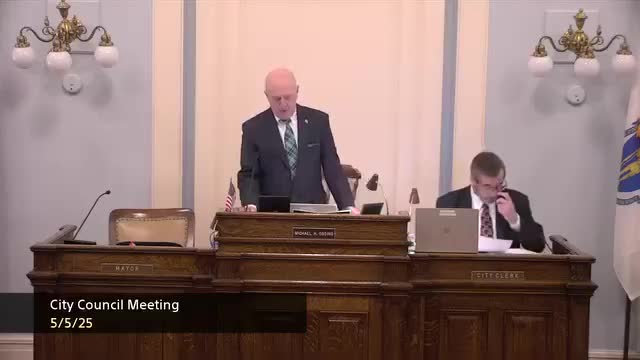
Marlborough Hospital and UMass Memorial presented plans May 5 for an 8,000-square-foot emergency department expansion, a $6 million multidisciplinary clinic and a proposed $40 million proton therapy center; the city council closed the public hearing and referred the matter to the Urban Affairs Committee for a draft special permit.
Marlborough City Council on May 5 heard a public hearing on a special permit application from Marlborough Hospital and UMass Memorial Realty Inc. seeking an 8,000-square-foot emergency department expansion, a second-floor $6,000,000 multidisciplinary clinic and a proposed $40,000,000 proton therapy center at the Marlborough Hospital campus.
Attorney Brian Faulk, representing the applicant, described the project to the council and the public. “This is an application for a special permit for several exciting projects at Marlborough Hospital,” Faulk said, and he outlined the proposed expansions and the city approvals the project will need.
The project would more than double emergency department treatment rooms from 13 to 27 and add two bays that can combine for larger cases and two trauma rooms, Faulk said on the record. John Kelly, who identified himself as “the chief nursing officer and chief operating officer at Marlborough Hospital,” told the council the ED has grown from roughly 22,000–23,000 visits a year when he started to “we're just under 30,000” visits now and that overcrowding has led to patients sometimes being treated in hallways.
Why it matters: the proposal would increase in‑hospital capacity and add a proton therapy system — a form of targeted radiation therapy that providers say reduces dose to healthy tissue and is particularly valuable for treating some pediatric and complex adult tumors. Faulk said a Marlborough proton center would be “only the second such facility in New England.” The council was told the project would require a traditional special permit and a Section 6 finding related to existing nonconforming hospital uses in the A‑3 zoning district, followed by formal site plan review and state approvals.
Details presented and public questions: Faulk and Kelly gave construction and service details: the ED expansion would include two CAT (CT) scanners placed in hospital space adjacent to the ED; the proposed multidisciplinary clinic would co‑locate specialties; and the proton therapy addition would attach to the existing cancer center building. Kelly described proton therapy’s clinical advantage in reducing radiation to surrounding tissue, saying in part, “So it really doesn't destroy all that surrounding tissue ... this is really, really, you know, great care, particularly when ... children ... are still growing.” The hospital said the ED will remain open during construction.
Residents and hospital trustees spoke in support. One longtime resident who identified themselves as a Marlborough Hospital trustee described being treated and serving on the hospital board and urged councilors to “move this forward.” Anne Malloy, introduced herself as a member of the hospital board and a partner at a Worcester law firm, and said, “I think this is this is a great opportunity for the community.”
Members of the public asked operational questions that were answered in the hearing: Jacqueline Dimadio asked whether the ED expansion would include holding‑area space; Kelly said the existing waiting room will revert to a waiting room once the new clinical space opens and the hospital’s goal is to “have you seen by a provider in less than 30 minutes.” Pete Charon asked whether both projects would be built simultaneously; hospital staff said the ED work will begin first in mid‑ to late summer with the proton component starting a month or two later and that they expect some construction overlap. On parking, hospital staff said current surveys suggest no additional parking is required and that the ED expansion would take about 11 existing spots; they said the proton center “may take a few more up, but the way it's laid out, we anticipate being okay.”
Council questions and staff clarifications: Councilors asked whether the ED would remain open (hospital: yes), whether handicap parking would be reviewed (hospital: they will ensure sufficient handicap spots), and whether a cell tower on a rear chimney would be moved (hospital: it will remain). Councilor Naven noted the item will go to the Urban Affairs Committee for a draft permit; Faulk said the applicant is meeting with the City Site Plan Review Committee before returning to the council.
Action and next steps: The council closed the public hearing, and committee members placed the matter in Urban Affairs for preparation of a draft special permit. The project will also require formal site plan review and unspecified state approvals before construction can begin.
The council did not vote on the special permit application at the May 5 meeting; the record shows the hearing was closed and the item turned over to the Urban Affairs Committee and to the city Site Plan Review process.