Get Full Government Meeting Transcripts, Videos, & Alerts Forever!
Get email alerts on the Land Use Adus topic
No spam. Unsubscribe anytime.
Gunter council holds public hearing on accessory dwelling unit ordinance; no final vote recorded
Summary
Council held a public hearing and extended debate on revisions to the city's accessory dwelling unit (ADU) rules, including proposed size limits tied to lot size and a 60% lot-coverage cap; Planning & Zoning recommended approval but a final council vote was not recorded in the transcript.
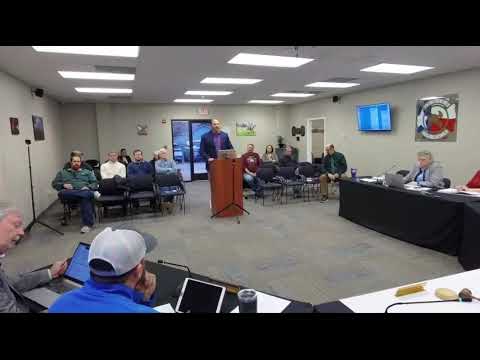
GUNTER, Texas ' The Gunter City Council opened a public hearing Feb. 20 on an ordinance amendment to expand where accessory dwelling units, or ADUs, can be built and to set size and setback standards.
The amendment would allow ADUs on more single-family-zoned lots, with different maximum sizes depending on lot area: 800 square feet on lots smaller than a half-acre and up to 1,400 square feet on lots of one acre or larger as drafted for council consideration. The draft also keeps setback, height and other zoning standards in force and reiterates that ADUs must meet building-permit and septic/aerobic-system requirements.
The proposal drew extended questions from council members about the appropriate size limits and how the ordinance would interact with homeowners associations and existing covenants. Councilmembers repeatedly raised concerns that a 1,400-square-foot ADU on a half-acre lot would leave little yard area and could change neighborhood character. One councilmember suggested using a percentage-of-lot standard rather than fixed square-foot caps; others supported keeping a firm cap tied to lot size to avoid larger additions.
Eric, the city's director of planning and development, explained the draft would expand ADUs beyond the SFE (one-acre minimum) district to other single-family districts where lots are large enough to accommodate them and that ADUs would only be permitted after a primary dwelling exists. Eric said ADUs require the same building-permit submittals as a single-family house, including structural plans and plumbing, and that ADUs could not be rented as short-term rentals under the city's existing short-term rental policy described in the draft.
Planning & Zoning recommended approval of the ordinance at the board's review, according to the packet and staff comments. During the council discussion, one resident (Mark Merrill) raised a public-comment question about how "single-family" is defined and whether separate living quarters previously allowed by an HOA should be permitted; staff replied the city regulates zoning while HOAs still control architectural covenants.
Councilmember William moved to accept the amended ordinance as presented; the motion initially lacked a second. Another motion followed proposing numeric changes (references in the hearing record to 800/1,400 and alternate 600/1,200 figures), and debate continued but a recorded final roll-call vote on the ordinance does not appear in the transcript provided.
The council opened and closed the public hearing during the Feb. 20 meeting; staff indicated the ordinance would be brought back for final action after council direction and minor numeric clarifications were resolved.
Why it matters: ADU rules affect housing supply, neighborhood scale, and property rights. The council's decision will determine whether homeowners on smaller single-family lots can add independent living units and under what dimensional limits and permitting requirements.
What's next: Staff and council signaled plans to refine the square-foot and coverage numbers, confirm HOA/CC&R interactions, and return the ordinance for a final vote at a subsequent meeting.