Get Full Government Meeting Transcripts, Videos, & Alerts Forever!
Get email alerts on the Subdivision Code topic
No spam. Unsubscribe anytime.
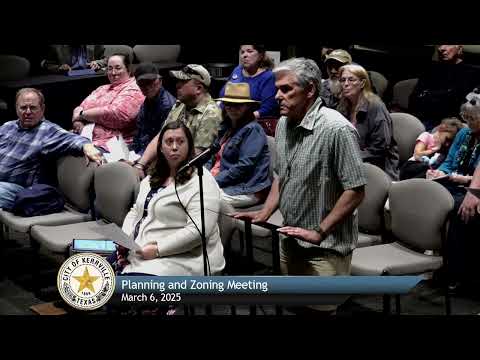
Staff outlines proposed subdivision-code updates; workshop only, no action taken
Summary
Planning staff presented proposed updates to Kerrville’s subdivision code designed to streamline plat processing, align code with recent state law, and limit deferred infrastructure to surface elements; the item was presented for feedback and will proceed to City Council for public hearing and adoption.
Planning staff led a workshop on proposed changes to the city’s subdivision code intended to remove procedural barriers to development, reflect recent state-law changes and standardize submittal practices.
Why it matters: The proposed changes would affect how plats and related engineering plans are submitted and reviewed, limit what infrastructure can be deferred after plat recording, and could speed minor adjustments (replats) by delegating approval authority to staff for certain situations.
Key proposed changes described by staff: - Make pre-application mandatory meetings optional (many local surveyors already know the process). - Allow the adequate facilities plan and civil construction plans to be submitted together as standard practice (many applicants already do so), rather than requiring a separate alternative-procedure request. - Require an improvement agreement at application and require security prior to recording; allow only surface infrastructure (streets and sidewalks) to be deferred after plat recording — all water, sewer and utilities should be installed prior to recording. - Align code language with recent state-law changes that removed automatic approval of engineering plans after 30 days (plats still are subject to 30-day automatic approval under state law) and clarify that certain plans are not automatically approved. - Recommend that replats (where infrastructure is already in place) be approved at the staff level rather than requiring Planning Commission review; preliminary and final plats would still be reviewed by the commission.
Staff also described learning from recent projects (e.g., a multi-family project that deferred civil infrastructure to after recording) and the administrative and bonding difficulties developers experienced when banks would not issue security prior to approvals. Staff said the next step is City Council public hearing and adoption; no action was required or taken by the commission at the workshop.
Ending: The code revisions are intended to reduce procedural delays while retaining engineering safeguards for utilities and drainage; the items will proceed to City Council for public hearing and adoption.