Get Full Government Meeting Transcripts, Videos, & Alerts Forever!
Get email alerts on the Ordinance Amendment topic
No spam. Unsubscribe anytime.
Commission approves text cleanup to Planned Development Ordinance 2019‑22; no land‑use changes
Summary
The commission approved an amendment to remove confusing sub-descriptions from the concept plan and land-use table in Planned Development Ordinance 2019‑22. Staff said the revision clarifies naming (e.g., 'dwelling, multifamily' vs. 'apartments') but does not change permitted or conditional uses.
The Planning and Zoning Commission approved an amendment to the Planned Development (Ordinance 2019‑22) to remove redundant or inconsistent sub-descriptions in the concept plan and land‑use table.
Why it matters: The amendment is a textual cleanup intended to reduce confusion between naming conventions used in the ordinance and the city’s zoning code (for example, the code uses the term “dwelling, multifamily” rather than “apartments” in the land‑use table). Staff said the change does not alter permitted uses or the concept plan’s districts.
What staff presented: Planning staff displayed the original 2019 concept plan and the existing land‑use table and explained that several sub‑descriptive phrases on the concept plan (e.g., “commercial with live/work and efficiency apartments,” “blended transition to townhomes and apartments,” “modern residential mix”) were not mirrored precisely in the land‑use table and caused confusion during permitting and legal review. The amendment removes those sub‑descriptions but retains the named districts and the same permitted and conditional uses.
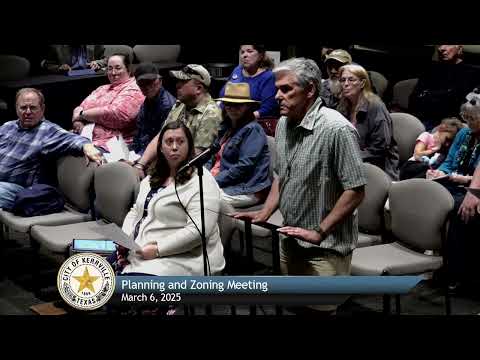
Public comment and outcome: A small number of residents asked clarifying questions about whether the amendment would change allowed uses; staff confirmed it would not. The commission moved and approved the amendment. The item will advance to City Council for public hearing and readings.
Ending: The textual cleanup aims to streamline permitting and reduce ambiguity for developers and the public without changing what uses are allowed in the planned‑development districts.