Get Full Government Meeting Transcripts, Videos, & Alerts Forever!
Get email alerts on the Rezoning topic
No spam. Unsubscribe anytime.
Residents raise flood and traffic concerns as commission approves Aransas Addition rezoning to R-2
Summary
After a lengthy public hearing in which multiple residents raised flooding, runoff and traffic concerns, the commission approved rezoning several Aransas Addition lots from R-1 to R-2. Staff and the applicant cited engineering plans, third‑party reviews and inspection procedures intended to address drainage risks.
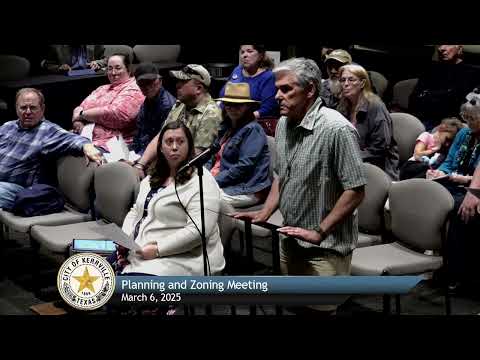
The Planning and Zoning Commission approved an ordinance to rezone selected lots in the Aransas Addition from R-1 (single-family) to R-2 (medium-density residential), following an extended public hearing in which multiple nearby residents voiced concerns about flooding, runoff to Quinlan Creek, parking and the character of the neighborhood.
Why it matters: The rezoning will allow smaller‑lot single-family development consistent with the original 1986 platting intent the applicant described; neighbors warned that increased impervious cover and altered drainage patterns could worsen flooding on adjacent properties and downstream waterways.
Applicant and staff presentation: Applicant Bruce Strachey said the subdivision was originally platted in 1986 for townhome construction and that the current request aims to return the site to the original intent with smaller lots (applicant said smallest lots are approximately 40 by 100 feet). Strachey noted the number of platted lots was reduced from 15 to 12 during recent replatting. Staff said the area is shown in the future land-use plan as part of a mixed-use corridor extending from downtown; staff supports the request and confirmed engineering plans and third-party drainage reviews have been submitted and approved.
Public comments and concerns: Numerous residents spoke in opposition or with concerns, citing: - Flooding risk and runoff into Quinlan Creek (several commenters said parts of the area are in a FEMA floodplain and that the creek is on a TCEQ “404(d)” list), and that increased impervious cover (streets, roofs, driveways) could speed runoff and worsen local flooding. - The height and placement of a recently poured standing curb and concrete private drive that commenters said appeared higher than neighbors expected and could redirect flow toward their yards. - Parking and traffic increases on formerly quiet dead-end streets; residents questioned whether duplexes or multi‑family units would be allowed (staff and applicant said lot sizes would preclude duplexes because duplex lots require 6,000 square feet).
Staff and applicant responses: Applicant and staff described engineered stormwater plans with a standing curb, a swale at F Street and a hump near Travis Street intended to keep certain street flows from entering the site; staff said engineering plans were reviewed and approved by the city’s consulting reviewer and that city engineering and building inspectors will inspect the infrastructure and construction. The applicant said no import of material is planned (cut/fill will use on-site material) and that the private drive is intended as the access with no gates.
Technical clarifications noted at hearing: Staff explained that changing from R-1 to R-2 affects setback standards (the rear setback drops from 25 feet to 15 feet, allowing the rear of houses to move 10 feet closer to property lines); utility easements (35 feet on the west, 10 feet on the east for some lots) remain in force and may be more restrictive than the setbacks; the zoning change does not itself authorize duplexes on undersized lots.
Outcome and next steps: The commission approved the rezoning by motion and will forward the item to City Council for public hearing and final action (transcript referenced the April 8 City Council agenda). Staff emphasized that building permits and construction inspections remain required and that engineering approvals are intended to prevent increased flood risk on adjacent properties.
Ending: While rezoning was approved, neighbors were advised they may raise concerns again at City Council; staff underscored that engineering approvals and inspections are the city’s mechanisms to manage stormwater and construction impacts.