Get Full Government Meeting Transcripts, Videos, & Alerts Forever!
Get email alerts on the Immigration Enforcement topic
No spam. Unsubscribe anytime.
Residents raise ICE concerns; Medford councilors urge local protections and Know-Your-Rights outreach
Summary
Multiple residents expressed fear after recent ICE activity and urged Medford officials to act; council members described local non-cooperation policies, proposed city ordinances and community "know your rights" outreach and urged residents to organize and report incidents.
Several residents used the public-participation portion of the April 9 meeting to urge the city to take stronger steps after reported U.S. Immigration and Customs Enforcement activity in the region.
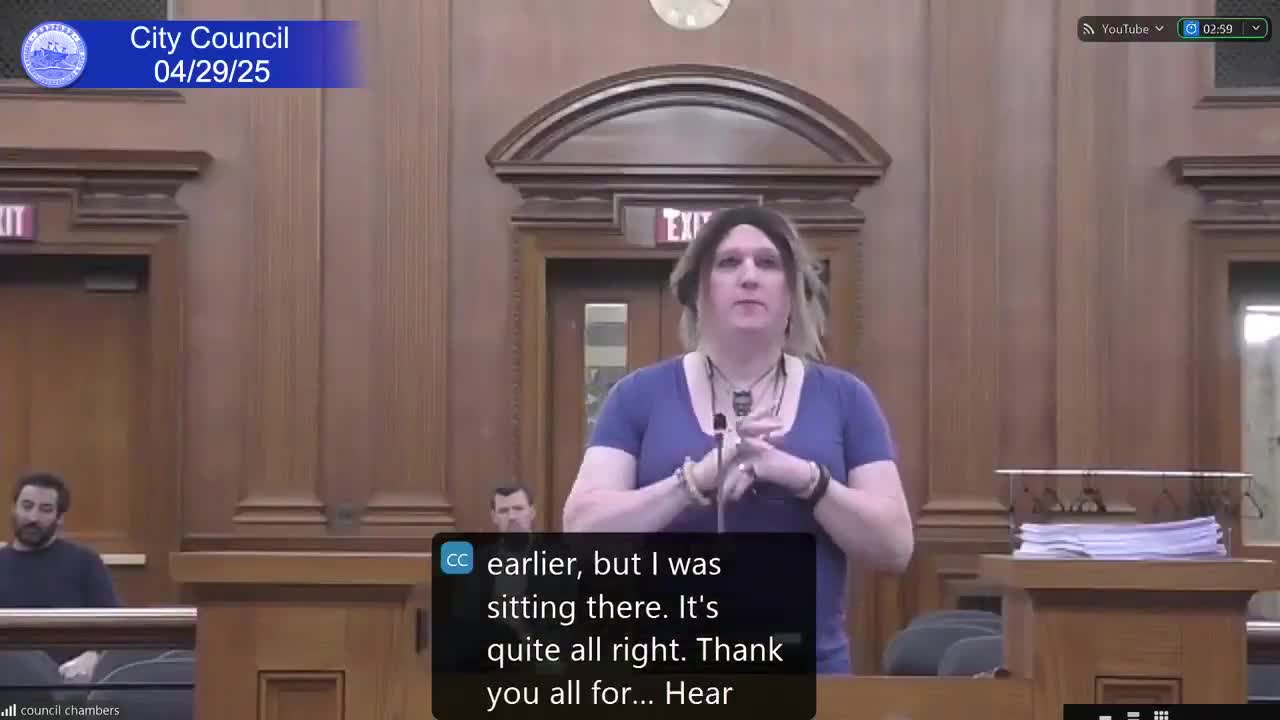
Sabrina Hewitt, a Medford resident, said she is a trans woman and described fear about recent ICE detentions: “I need Massachusetts to feel safe… We could maybe make Medford a sanctuary city,” she told the council, asking officials to take visible protective steps.
Councilors responded with measures they said the city already has taken and additional actions they support. Councilor Singh, Councilor Lemming and Vice President Collins all thanked speakers and urged community organizing to distribute “know your rights” information. Councilors noted the council had passed earlier resolutions opposing recent detentions and said the mayor’s office should pursue communications and community outreach.
Councilors said local options include codifying existing administrative non-cooperation practices into ordinance, distributing know-your-rights materials through partners, and supporting community-led "ICE watch" monitoring and hotline efforts. Vice President Collins called for greater public-safety coordination and said the city should prioritize protecting residents while seeking to keep lines of communication open with state and federal agencies.
Councilors also encouraged residents to contact the mayor’s office and council members directly and offered to help connect residents to community organizations that are training volunteers in non-cooperation and rapid-response support.
No formal council action was taken at the meeting; several councilors said they would continue to press the mayor’s office for public outreach and to consider codifying protections through local ordinance.