Get Full Government Meeting Transcripts, Videos, & Alerts Forever!
Get email alerts on the Udc Structure topic
No spam. Unsubscribe anytime.
Pearland officials begin Unified Development Code rewrite, stress clarity and searchability
Summary
City staff, Planning & Zoning commissioners and council members opened a multi-session rewrite of Pearland's Unified Development Code, emphasizing simpler language, visual aids, consolidated procedures and improved online search features to make the code easier for residents, developers and staff to use.
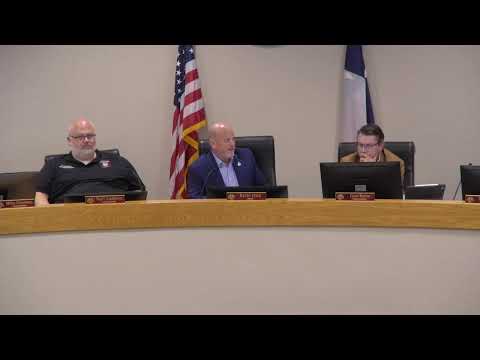
City of Pearland officials on a joint council and Planning & Zoning Commission workshop discussed a rewrite of the city's Unified Development Code (UDC), focusing on clearer language, visual aids, streamlined procedures and better online searchability.
The rewrite project, led by consultant Claire Hempel of Design Workshop and City Community Development Director Vance Wiley, is organized as a four‑phase effort that began with a project kickoff and roadmap. The team said it is now in a deep‑dive phase to identify issues and develop recommended amendments, with a summarized memo due in early summer and additional workshops planned.
Officials said the current UDC is highly technical, often duplicative across sections, lacks consistent cross‑referencing, and is presented online as a hard‑to‑navigate PDF. "The goal here is to regularly review and update the UDC to improve clarity, accessibility, and ease of use," Hempel said. Wiley noted state legislative changes may require adjustments as the rewrite proceeds.
Commissioners and council members urged plain language, more graphics and interactive tools, and an index or searchable format so business owners and residents can determine whether a proposed project is allowed without hiring lawyers or planners. Several members recommended keeping an authoritative, archived PDF of any adopted text so there is a single, verifiable record of what each body approved.
Speakers also discussed governance of future amendments: multiple participants suggested a formal, periodic review cycle (semiannual or annual) rather than ad hoc emergency amendments. Several members stressed the UDC should be easier for staff to update and maintain so routine changes do not require costly, year‑long consultant projects.
Design Workshop presented sample graphics and suggested recommendations including plain‑language summaries, targeted graphics or flowcharts for common procedures, consolidated enforcement language, and digital tools to guide applicants through permit, site plan and rezoning steps.
Officials asked staff to balance the addition of graphics and interactive elements with the practical need to keep the code maintainable and not excessively large. Several commissioners warned against converting the UDC into a so‑called "behemoth" that would be costly to update.
The workshop is the first of five planned working sessions intended to produce concrete recommendations before drafting updated ordinance language for review and eventual adoption.
Pearland's next joint session on the UDC rewrite is scheduled for June 9, where the group will address additional topics including hotel standards, enforcement and administration, landscaping, housing and signage.