
DPW presents FY26 sanitation, highway, fleet and water/sewer budgets; MWRA assessment drives enterprise increase
Get AI-powered insights, summaries, and transcripts
Subscribe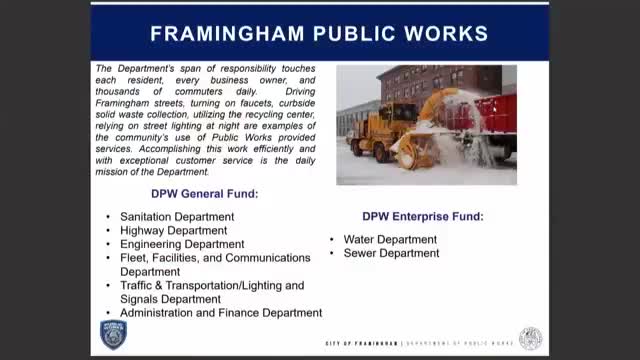
Summary
Public Works presented a set of operating budgets on May 10 covering sanitation, highway, fleet, engineering, and the water and sewer enterprise funds. The department recommended lean, mostly level funding with contractual increases, highlighted a $71,000 request to replace two RDC compactors and said an MWRA assessment increase will drive a
The Framingham Department of Public Works (DPW) presented multiple divisions’ FY26 budgets to the finance subcommittee on May 10, saying most budgets are lean and largely level‑funded but that the sewer and water enterprise funds require rate adjustments because of a higher Massachusetts Water Resources Authority (MWRA) assessment.
Why it matters: DPW budgets cover essential services—trash and recycling collection, street maintenance, fleet repair, drainage, and the water and sewer system—that directly affect public health, infrastructure condition and the city’s long‑term capital needs.
Sanitation and contracts: DPW reported that sanitation costs reflect a contractual per‑ton tipping fee increase and modest tonnage growth; the department noted a roughly $71,000 request to purchase two compactors required by state DEP rules to continue recycling and drop‑off center operations (the cost excludes concrete pad and electric work). The division manages household hazardous‑waste events, seasonal leaf and brush collection and other resident services.
Highway, fleet and engineering: The highway presentation noted continued service levels despite leaving five highway labor positions unfunded and not recommending a departmental project manager; the fleet division asked for a $22,000 part‑time line to restore apprentice/technical support that can reduce outsourcing. Engineering showed a net decrease because a proposed traffic & transportation reorganization would move three positions out of engineering into a new traffic department. The DPW presentation said if the council does not authorize the reorganization, two positions would remain in engineering.
Water and sewer enterprise funds: The enterprise (ratepayer) funds showed the largest percentage increase (roughly 6%) because MWRA assessment charges rose by about $900,000 and the department is passing those costs through to ratepayers. DPW staff said the current rate structure and retained earnings are sufficient to cover FY26 costs; they reported the enterprise retained earnings between roughly $1 million and $3 million and said consultants (Weston & Sampson) will monitor rate implementation.
Snow and ice, operating patterns: Councilors questioned snow‑and‑ice spending after DPW reported an overrun for the recent winter despite a calendar perception of a “mild” season. DPW and highway leadership explained that the season included 14 treat/tactical events and three plowing events; many events were wet (requiring salt and repeated treatments) and several fell on weekends and holidays, increasing overtime and contractor costs. DPW agreed to supply event‑level cost breakdowns for future oversight.
Revenue and efficiencies: DPW highlighted in‑house CDL training and other measures that have generated savings compared with last‑year outsourcing; DPW said consolidating mechanics among departments is under consideration as retirements occur and that the recycling‑coordinator position is being reevaluated as staff duties are reshaped.
Ending: The subcommittee asked DPW to provide detailed event reports for snow‑and‑ice costs, revenue figures for revolving accounts (beaches, programs) and to participate in cross‑department capital‑planning discussions. The subcommittee did not vote on DPW budgets May 10.