Get Full Government Meeting Transcripts, Videos, & Alerts Forever!
Get email alerts on the Public Hearing Format topic
No spam. Unsubscribe anytime.
Framingham CPC narrows format for CPA public hearing; presenters to focus on needs and application process
Summary
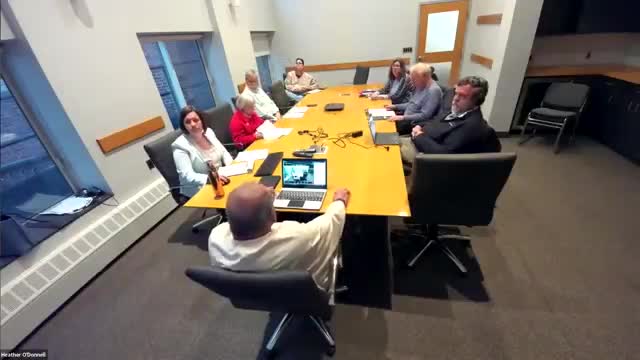
At its May 5 meeting, the Framingham Community Preservation Committee reviewed a draft PowerPoint for the committee's annual public hearing and agreed to emphasize the hearing's purpose, require presenters to focus on needs and application process rather than project promotion, and collect presenter slides before the next committee meeting.
The Framingham Community Preservation Committee on May 5 reviewed a draft PowerPoint for the committee's annual public hearing and agreed to emphasize the hearing's purpose, instruct outside presenters to focus on how projects addressed community needs and applications, and collect presenter slides before the next meeting.
Committee members decided the presentation should open with a clear statement of purpose and that the chair would deliver opening remarks. Heather (Coordinator) told the committee, “I have included a draft of the PowerPoint,” and committee members asked for a separate slide that states the hearing's purpose and what the committee is asking the public to provide. Karen (committee member) reminded the group of the legal requirement: "We are required by statute to hold a public hearing for people to provide input." The committee agreed that purpose language should explicitly invite ideas about needs, possibilities and resources.
Members debated whether to include short presentations by recent applicants. The committee agreed presenters may attend but should be coached to describe how they identified needs and how they approached the application (letters of support, rule compliance, project impact) rather than give detailed project pitches. The committee asked the presenters (Allison, Diane, Anna and Lino) to submit their slides in advance; Heather said she would collect the materials and work with presenters on scope and timing. Several members recommended limiting presenter time to about four to five minutes and opening public questions at the end to avoid derailing the hearing.
The draft presentation will also include a slide that explains what kinds of projects the Community Preservation Act (CPA) funds can support (eligibility categories) and a condensed history of the local CPA program (voter adoption, formation of the committee, plan adoption) so attendees understand the context for funding decisions. Members requested wording that emphasizes the hearing’s role in updating the committee’s planning work and soliciting input rather than providing a detailed history lesson.
No formal motions were taken on the presentation content; the committee directed staff (Heather) to (1) add a purpose slide, (2) request and review presenter slides before the next meeting, and (3) prepare language clarifying that the hearing is the statutory opportunity for public input. The committee also discussed how to handle live questions during the hearing and agreed to ask attendees to hold questions until the end, with staff available afterward to follow up.
Background: the committee noted that Framingham’s CPA was adopted by voters in 2020, the committee was formed in 2021, and the town’s plan was adopted in 2022; since 2020 the CPC has supported projects (committee cited “31 projects” in discussion). The coordinator reported that city council approved this year’s CPC-recommended projects and a reallocation for Riordan Park, and that grant agreements work is underway.
Next steps: staff will circulate revised slides incorporating the agreed changes and collect presenter slides ahead of the committee’s next meeting so members can review content and timing.