
Framingham mobility updates: MWRTA adds buses and a new commuter connector; ADA trips increase
Get AI-powered insights, summaries, and transcripts
Sign Up Free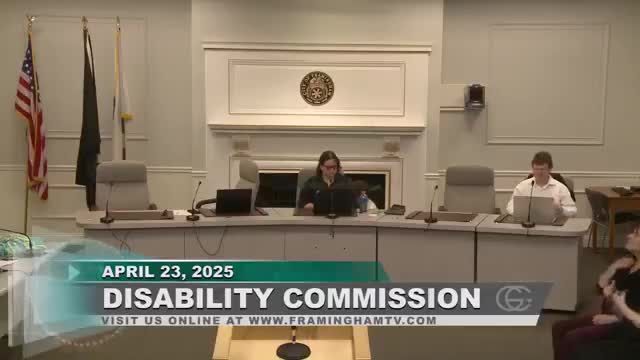
Summary
MWRTA unveiled larger Gillig buses and will launch a 495 connector fixed route May 27; MWRTA ADA paratransit trips in Framingham rose to 3,188 in March from 2,940 the prior March.
Framingham’s MWRTA service and the regional Center for Independent Living reported service changes and outreach at the city’s Disability Commission meeting Wednesday.
Tyler Trossi, reporting for the Massachusetts‑area Center for Independent Living and the MetroWest Regional Transit Authority, said MWRTA recently unveiled three new higher‑capacity Gillig buses and plans to deploy them on the system’s highest‑ridership routes starting in late May.
MWRTA will also launch a new fixed route commuter connector, the 495 connector, on May 27. The route will link the Framingham commuter rail station north to South Acton and south along I‑495 to Forge Park/495 in Franklin, staff said.
The Center for Independent Living reported statewide advocacy events in March and April focused on in‑home personal care attendant (PCA) caps and the value of independent living services. Staff also said they have begun free workshops for consumers on topics including learner’s permit test prep, housing searches and young‑adult social groups.
Why it matters: The new Route 495 connector is intended to improve commuter access to multiple rail stations in the region; larger buses are designed to increase capacity on busy corridors. Commissioners were also invited to arrange a site visit to inspect bus accessibility features, including kneeling capability and boarding conditions.
Staff reported ADA paratransit ridership in March of this year at 3,188 trips in Framingham, up from 2,940 trips in March of the prior year. Commissioners discussed coordinating a group visit to test bus accessibility with MWRTA staff.
Next steps: Staff will share details on dates and locations for bus inspections and will provide follow‑up information on the 495 connector launch. The Center for Independent Living continues outreach about state‑level advocacy and local workshops.