Get Full Government Meeting Transcripts, Videos, & Alerts Forever!
Get email alerts on the Economic Development topic
No spam. Unsubscribe anytime.
New Framingham Economic Development Corporation outlines powers, seeks clear city vision and funding
Summary
The newly formed Framingham Economic Development Corporation presented its board, statutory powers and early priorities to the City Council on April 15 and asked city leaders for a clear development strategy and funding to support projects that increase commercial ratables.
The newly reconstituted Framingham Economic Development Corporation (EDC) briefed the City Council on April 15 about its statutory powers, board composition and early priorities, and urged a coordinated city vision and funding plan to attract large, taxable commercial projects.
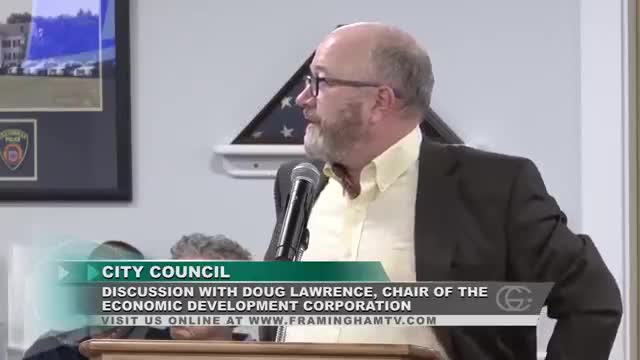
Board chair Doug Lawrence said the corporation — created under state enabling legislation and composed of members with industry and municipal experience — can own and lease property, enter contracts, provide project financing, and work with banks and developers. The EDC replaces an earlier industrial development entity and was reconstituted after Framingham became a city.
Lawrence said the EDC has been benchmarking comparable municipal development corporations such as Marlborough, which has used a portion of hotel‑tax revenues to support economic development and has realized measurable tax base gains. "If we understand and have direction from the mayor and council, it makes it easier to facilitate the kind of projects the city wants," Lawrence said.
The EDC told the council it will (1) inventory city‑owned properties that might be redevelopment candidates; (2) meet monthly with the mayor’s staff and departments to identify procedural barriers to doing business with the city; and (3) return to the council later in the budget cycle with funding options to support EDC operations and project facilitation. Lawrence said larger peer cities invest significant annual sums in EDC activity; Marlborough’s model was cited as roughly a $1 million annual commitment.
Councilors asked about marketing capacity and suggested the EDC spread its early priorities across neighborhoods so benefits and outreach are city‑wide. The EDC said board members include private real‑estate, finance and industrial development experts and that it will solicit mayoral and council guidance on sector targets.
Why it matters: The EDC’s ability to assemble deals, provide financing tools and coordinate with the city could accelerate projects that expand commercial tax revenue and relieve pressure on residential property tax rates, but it will require sustained funding and a clear municipal strategy.
Next steps: The EDC plans to return with a budget request and a prioritized project pipeline during the city’s FY26 budget process.