Get Full Government Meeting Transcripts, Videos, & Alerts Forever!
Get email alerts on the Municipal Finance Budget topic
No spam. Unsubscribe anytime.
Council probes revenue trends as staff defends capital plan and fund balance
Summary
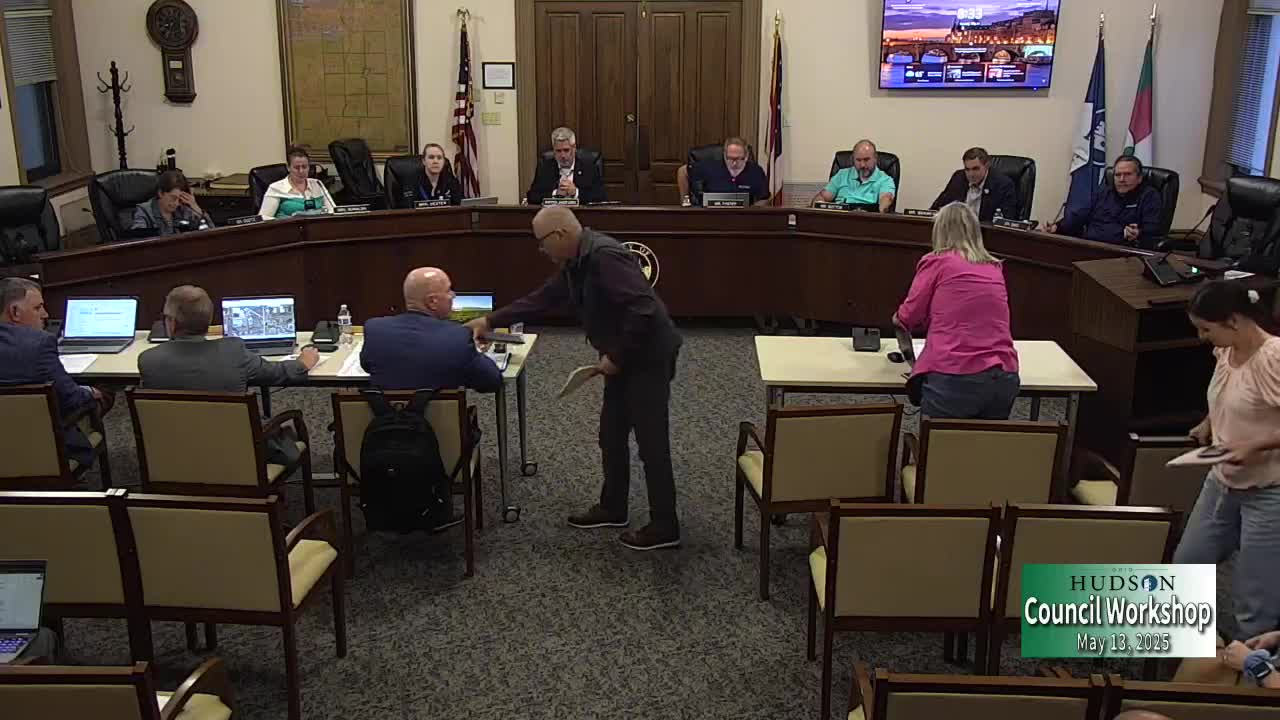
Council reviewed the April 2025 monthly financial report and discussed income tax declines, employer changes and capital priorities. City finance staff identified lost one‑time and employer tax items; councilors debated whether to delay lower‑priority connectivity projects to free funds for fire/EMS and other priorities.
Council reviewed the April 2025 monthly financial report and discussed whether the city should re‑prioritize some capital projects in light of recent revenue changes and competing demands, including Fire & EMS funding options.
Jeff, a city finance staff member, told council the city is beginning to see year‑over‑year income‑tax differences related to personnel and employer changes. "We're starting to see the effects of Joanne. Diebold had some year over year that we've lost. Universal Screen Arts, they've left. And then, also, we've talked about Progressive being 1 of our top tax payers. They had some large, year end bonuses in the prior year that we did not realize this year," Jeff said.
Council members urged caution but differed on whether to delay projects. Councilor Sutton and others said projects in the five‑year connectivity plan should proceed because residents have waited for them. Councilor Kowalski and some colleagues said staff should prepare options that show the connectivity plan out to seven or 10 years and identify lower‑priority items that could be deferred to preserve flexibility for priorities such as fire and EMS.
Why it matters: The discussion reflects a recurring municipal challenge — balancing long‑term capital commitments with near‑term revenue fluctuations and emerging priorities such as public safety staffing and station planning.
Financial context: Staff said the city retains a sizable fund carryover; one councilor cited an $8 million carryover figure when arguing the city remains in a solid fiscal position even while evaluating tradeoffs. Staff also noted anticipated new occupants for recently vacated commercial sites, which could offset some revenue declines.
Next steps: Council directed staff to return with a connectivity prioritization analysis that looks beyond five years and presents options for reprioritizing lower‑priority projects if needed. The monthly financial report was placed on the May 20 consent agenda for formal acknowledgment.
Ending: Council members said they want a thoughtful, not reactive, approach to capital planning and funding decisions and asked staff to prepare alternative prioritization scenarios for further review.