Get Full Government Meeting Transcripts, Videos, & Alerts Forever!
Get email alerts on the Public Health Grants Programs topic
No spam. Unsubscribe anytime.
Lynn City public health staff review grants, TB care, vaccination and substance-use programs
Summary
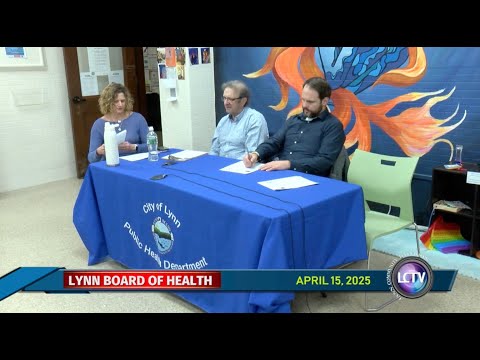
Public‑health staff at the Lynn City Inspectional Services Department presented an overview of grants, programs and community outreach during a Board of Health meeting.
Public-health staff at the Lynn City Inspectional Services Department presented an overview of grants, programs and community outreach during a Board of Health meeting.
Inspectional Services staffer Norris Gascott, identified as public health coordinator, briefed the board on a portfolio of grants and partnerships the division is pursuing and administering. He said the division is focusing on social determinants of health and coalition partnerships to sustain work amid uncertain federal funding. “We've definitely had to but we've always relied on a strong partnership point of contact with different organizations,” he said.
Key grants and efforts cited by staff:
- Community Health Inclusion Index (CHII): Staff described year‑one data collection and partner input and said they are drafting an inclusion plan in year two that will inform policy recommendations and future funding applications.
- Barr Foundation and HEAL partnerships: The division is participating in a community heat‑resiliency grant and a HEAL (Healthy Environments for All Learners) grant in coalition with other municipalities and partners including local schools.
- Department of Transportation grants: The city received a roughly $100,000 award from the Department of Transportation for a community transportation coordinator position; staff were awaiting a response on a separate vehicle grant.
- Mass 14 largest cities funding (DPH): Funds were used to support emergency warming shelter operations and to improve the continuum‑of‑care point‑in‑time count for people experiencing homelessness.
Public‑health clinicians gave program details and metrics. Lead public-health nurse Kezia Diaz said the division provided 17 flu clinics in October–November and delivered 365 flu vaccines during the 2024–25 season (293 regular-dose and 72 high-dose). Diaz also reported 13 active directly observed tuberculosis (TB) treatment cases and 831 TB infection case investigations during the fiscal year cited.
Epidemiologist Yurini Camarinos summarized reportable disease work: in the referenced year the division recorded 3,345 reportable communicable disease reports to the state, including 1,712 novel coronavirus reports and 1,477 influenza reports; staff continue emergency‑preparedness drills and work with the Lynn Fire Department emergency-management office on shelter activation exercises.
Substance‑use coordinator Candice McClory described youth prevention grants (three programs spanning ages 3–24), opioid‑response activity and harm‑reduction work: staff distributed more than 625 naloxone kits since fiscal‑year 2024, trained 130 people in overdose response, placed two syringe kiosks that collected 473 syringes, and installed a health and wellness vending machine that distributed 284 items since January 2025. The division also awarded $247,000 in NOFA grants to nine organizations, supporting 79 individuals; staff reported approximate spending breakdowns: 51% personal‑care support, 24% medication safety, 17.4% transportation, and 6.3% housing and utility assistance.
Staff noted ongoing outreach through a community health resource room, public‑facing events and a public health van. Upcoming events announced included a Healthy Kids Day event at the DeMakis Family YMCA on April 26 and an American Red Cross blood drive at City Hall on April 29.
Ending: Board members praised staff work and asked the division to continue refining grant applications and deliverables. No formal board action or funding allocations were taken during the presentation.