Get Full Government Meeting Transcripts, Videos, & Alerts Forever!
Get email alerts on the City Budget topic
No spam. Unsubscribe anytime.
Redmond budget committee presents cautious FY 2025–26 plan as revenue growth slows
Summary
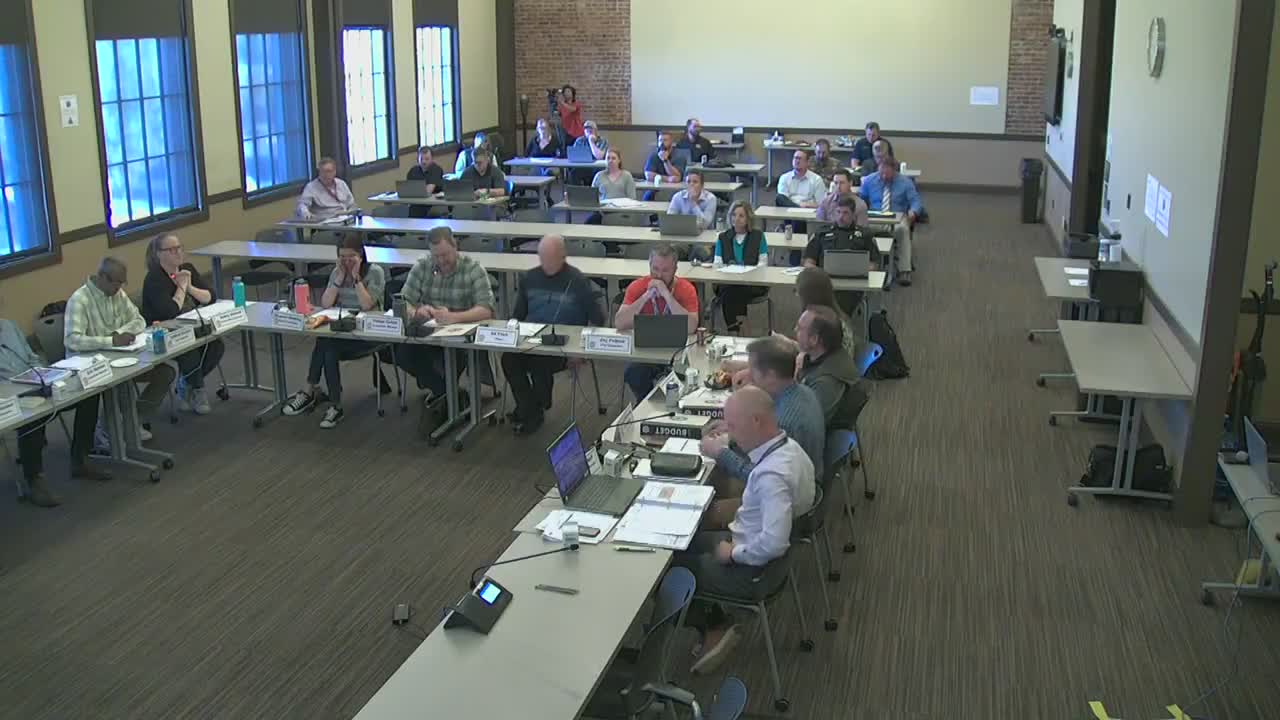
City staff told the Redmond Budget Committee the FY 2025–26 draft budget is cautious, reflecting slower assessed-value growth, modest staff additions and one-time costs; the committee opened and closed the required state shared revenue hearing with no public comment.
The Redmond Budget Committee on Tuesday reviewed a draft fiscal year 2025–26 budget that city staff described as intentionally cautious amid softer revenue growth and a handful of one-time costs.
City Manager Keith Rakowski said the city is “being very careful” about adding staff and programs so “a year from now, we don't wanna regret decisions we made in May 2025.” He flagged a projected slowdown in assessed-value growth and declining state-shared revenues as reasons for restraint.
Deputy City Manager Jason Neff told the committee the budget reflects a mix of recurring and one-time items. Neff said the city faces what he described as a projected $2.6 million reduction relative to recent years, about half of which he characterized as one-time expenditures (including capital and park reprogramming). Neff said that when one-time items are excluded, the structural deficit is smaller but still requires either revenue gains or underspending to maintain fund balance targets.
The committee formally opened the state shared revenue hearing — a statutory step required for the city to receive about $4,100,000 in state-shared revenue — and recorded no public comments before closing the hearing.
City staff outlined the budget assumptions: modest population growth, a consumer price index near recent rates and a personnel cost increase driven largely by health-care and Public Employee Retirement System (PERS) adjustments. Neff said personnel costs in the budget are up roughly 8 percent, which he attributed in part to PERS and health-care assumptions; staff requested two additional positions across the city.
On revenues, staff described property taxes as the largest discretionary resource and noted state statute limits assessed-value increases on existing property to 3 percent annually. The draft also assumes some decline in other state-shared taxes, such as liquor and gas distributions.
The committee recessed and will continue review at a subsequent meeting where department-level fund presentations will be analyzed in greater detail.