Get Full Government Meeting Transcripts, Videos, & Alerts Forever!
Get email alerts on the Budget And Finance topic
No spam. Unsubscribe anytime.
Board reviews FY26 budget adjustments, $130M debt scenarios for school and courthouse and utility funding options
Summary
County financial staff and consultants presented FY26 budget technical updates, recommended CIP timing changes, and several debt scenarios to fund two projects totaling about $130 million; the presentation also covered utility capital borrowing options and implications for rates and connection fees.
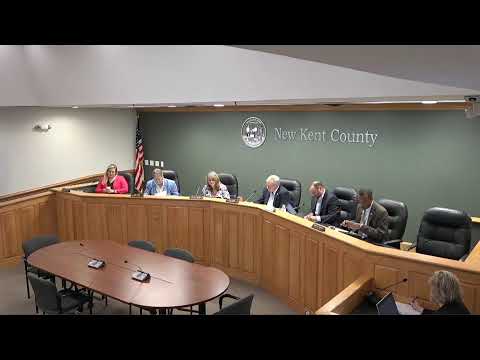
County staff and outside consultants presented updates and financing scenarios for the FY26 budget at the April 20 New Kent County Board of Supervisors meeting, including proposed timing changes to EDA capital items, debt scenarios for a proposed elementary school and courthouse, and options for public‑utility capital funding.
Finance Director Lawrence reported minor technical updates that increased general‑fund revenues by about $25,000 and a Parks & Recreation lease rental correction that reduced a line item from $7,500 to $2,500. He said staff recommends moving an incentive for a private project (referred to as the Bucky’s incentive) from FY26 to FY27 and restoring one EDA sponsorship to FY26; that pair of changes altered the CIP by roughly $92,500. Lawrence also confirmed budget advertisement includes a 3‑cent tax increase as the advertised maximum; the board can lower but not increase the advertised maximum.
Consultant Ted Davenport presented three debt scenarios for two projects that together total about $130 million: an elementary school and a courthouse, each modeled at $65 million. Davenport ran options that borrow for one project in fall 2026, both projects together in fall 2026, or a staggered approach borrowing for one project in 2026 and the other in 2027. He also modeled contributions from capital reserves in increments from $0 up to $10 million and a case that shortens the debt amortization to meet the board’s 10‑year payout ratio policy.
Davenport said one way to fund a single $65 million project without a tax increase would be a one‑time contribution of roughly $2.3 million from reserves; alternatively, the model showed an additional tax of about two cents could be phased in later. For both projects done at once, the analysis indicated substantially larger reserve contributions or a multipenney increase across upcoming budgets. Davenport warned all three 30‑year debt scenarios would create a compliance issue with the board’s 10‑year payout‑ratio policy (the model showed the ratio falling below the board minimum to about 37%), and that fixing the payout ratio would require shortening the loan term (for example to about 18 years) which raises annual debt payments and increases either reserve needs or tax revenue.
On borrowing mechanisms, Davenport described the Virginia Resources Authority (VRA) and Virginia Public School Authority (VPSA) programs as likely options for courthouse and school financing and said those programs typically do not treat the local policy compliance issue as a barrier so long as the county is transparent about it. He also said the county could pursue bank financing or the bond market if it chose.
The meeting also reviewed public utility capital funding. Consultants modeled a minimum revenue bond borrowing of about $13 million to fund carry‑forward utility projects and the FY26 utility capital program; a larger borrowing near $17–18 million would preserve more cash to meet the county’s cash‑position policy. Staff said the utility model assumes a 4% rate increase in 2026 and anticipates near‑term “natural growth” in customer connections (modeled at about 8.9% in the near term). Staff and board members discussed connection fees, nutrient‑credit revenues and whether increases in connection fees could help offset future rate increases.
No final decision on which debt scenario to pursue was made at the meeting; staff and consultants advised the board on tradeoffs and recommended coordinating with architects and the chosen financing program to match application and bid timing.