Get Full Government Meeting Transcripts, Videos, & Alerts Forever!
Get email alerts on the Wildfire Preparedness topic
No spam. Unsubscribe anytime.
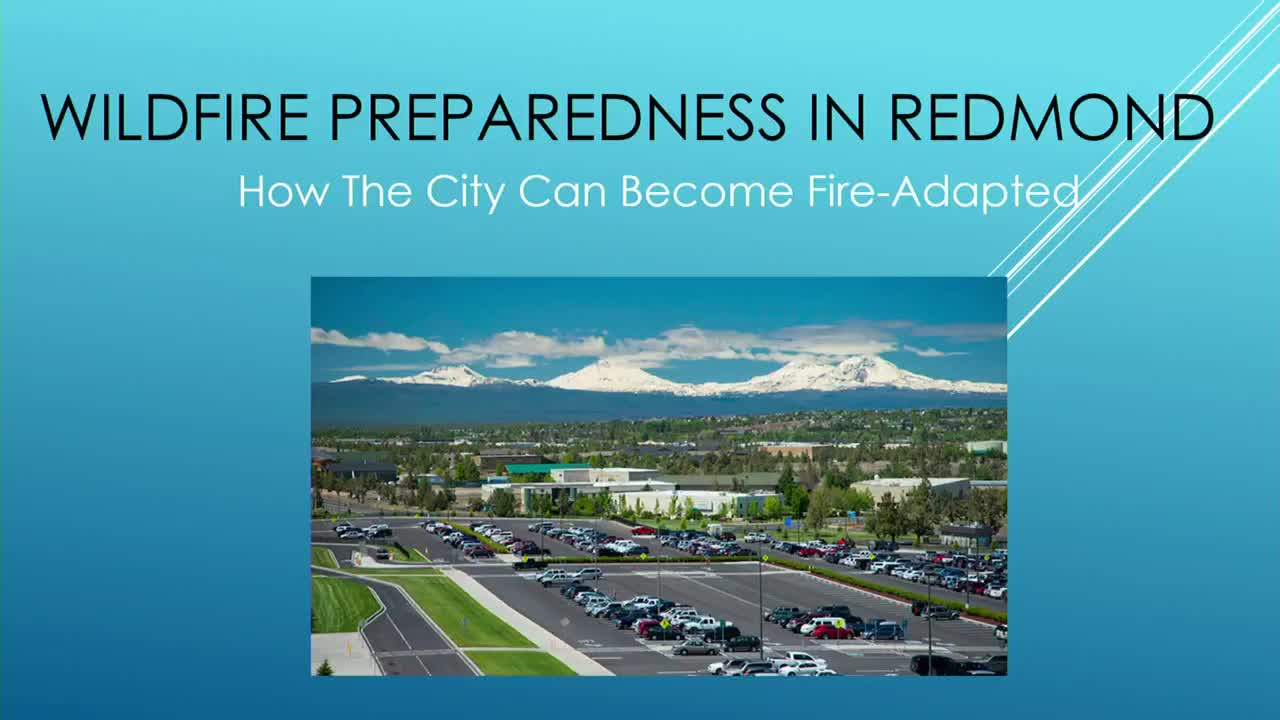
Fire officials urge Redmond homeowners to ‘harden’ houses, use defensible space; $75,000 outreach grant available
Summary
State and local fire officials gave Redmond councilors a condensed wildfire-preparedness briefing, emphasizing home hardening, defensible-space zones and ember risk. Officials said a $75,000 State Farm grant funds free assessments and a $675 reimbursement for eligible work; about $21,000 has been spent to date.
Tom Mooney, fire marshal, and regional wildfire experts told Redmond councilors and residents that preparing homes and neighborhoods is the most realistic way to reduce loss from wildland fire.
Heather Miller, regional fire risk reduction specialist for the Oregon State Fire Marshal’s Office, said “it’s not a matter of if. It’s when” wildfire reaches communities in Central Oregon and urged residents to focus first on things nearest their houses that embers could ignite.
The briefing reviewed wildfire science and “home hardening” steps to reduce ignition risk — measures officials said act as a practical first line of defense while broader landscape treatments continue. Julia Johnson of the Oregon Department of Forestry summarized how topography, wind and fuels control fire behavior and said embers frequently cause homes to ignite even when the flaming front passes.
Why this matters: presenters emphasized that wildfire in Central Oregon is a recurring, landscape-scale hazard and that households and neighborhoods can reduce their loss and help emergency responders by altering fuels, building materials and immediate yard maintenance. Officials added that denser housing makes spread between homes more likely and that some policy and design choices can make neighborhoods more resilient.
Officials described a three-zone approach for homeowners: the first 5 feet around a house should be noncombustible; 5–30 feet should reduce ladder and horizontal fuel continuity; and 30–100 feet should manage spacing and tree ladder fuels. They recommended materials and maintenance steps such as Class A roofing, replacing quarter-inch attic and soffit screening with 1/8-inch, using noncombustible materials near foundations, keeping decks and gutters clear of debris, and creating breaks in wood fence continuity where feasible.
The presentation included video and test-house demonstrations showing that ember showers can ignite mulch, deck undersides and vegetation and that wildfire-resistant siding, a 5-foot noncombustible zone and metal gutters significantly reduced the risk of structural ignition in those tests.
Public questions and local programs: attendees asked about regulatory options for building materials and density; presenters said state-level regulation has been uneven and suggested local policy, HOA covenants or developer agreements as places to act. Officials pointed to existing tools and partnerships: the Greater Redmond Community Wildfire Protection Plan (CWPP, updated 2022), Firewise neighborhood programs (officials said Deschutes County has about 85 Firewise communities), OSU Extension guidance on fire-resistant landscaping, and local fuel-reduction programs.
Grant-funded assessments: Redmond staff and Redmond Fire & Rescue said they received a $75,000 grant from the State Farm Office to offer defensible-space assessments and partial reimbursements. The program reimburses up to $675 per property for eligible mitigation work; staff said roughly $21,000 of the grant has been reimbursed so far and that property owners can sign up for free assessments via rdmfire.org. Officials also described a workforce-training program (Heart of Oregon / COIC referenced) that provides labor and chipping for eligible homeowners who are elderly, disabled or unable to do the work themselves.
Communication and evacuation planning: presenters urged councilors to amplify official incident messages during emergencies — county sheriff, Redmond Fire & Rescue and other official PIO pages — and explained that the county’s emergency-notification system (opt-in) is used for evacuation notices, while social platforms and volunteer aggregators like ‘‘InciWeb/Watchdog’’ are useful but are not official sources. Officials recommended briefings for elected leaders so they can share verified messages during an event.
Next steps and resources: presenters offered to provide the council with outreach materials, prerecorded versions of the full community class, and to work with HOAs and developers on site-specific guidance. Officials encouraged homeowners to sign up for the city’s assessment program and described additional funding and grant opportunities used elsewhere, while noting that regulation and codes are also potential local options under discussion.
Ending: speakers reiterated that home-scale actions — especially reducing ember entry points and removing combustible material immediately adjacent to structures — are the fastest and most actionable measures for Redmond residents to reduce risk.