Get Full Government Meeting Transcripts, Videos, & Alerts Forever!
Get email alerts on the Marijuana Dispensaries topic
No spam. Unsubscribe anytime.
Redmond council refers dispensary time, place and manner rules to planning commission after public hearing
Summary
After a public hearing and review of ballot results, councilors voted to send the proposed time, place and manner (TPM) regulations for marijuana dispensaries to the Redmond Planning Commission for drafting; councilors discussed buffers, zoning, tax options and a likely timeline for ordinance readings.
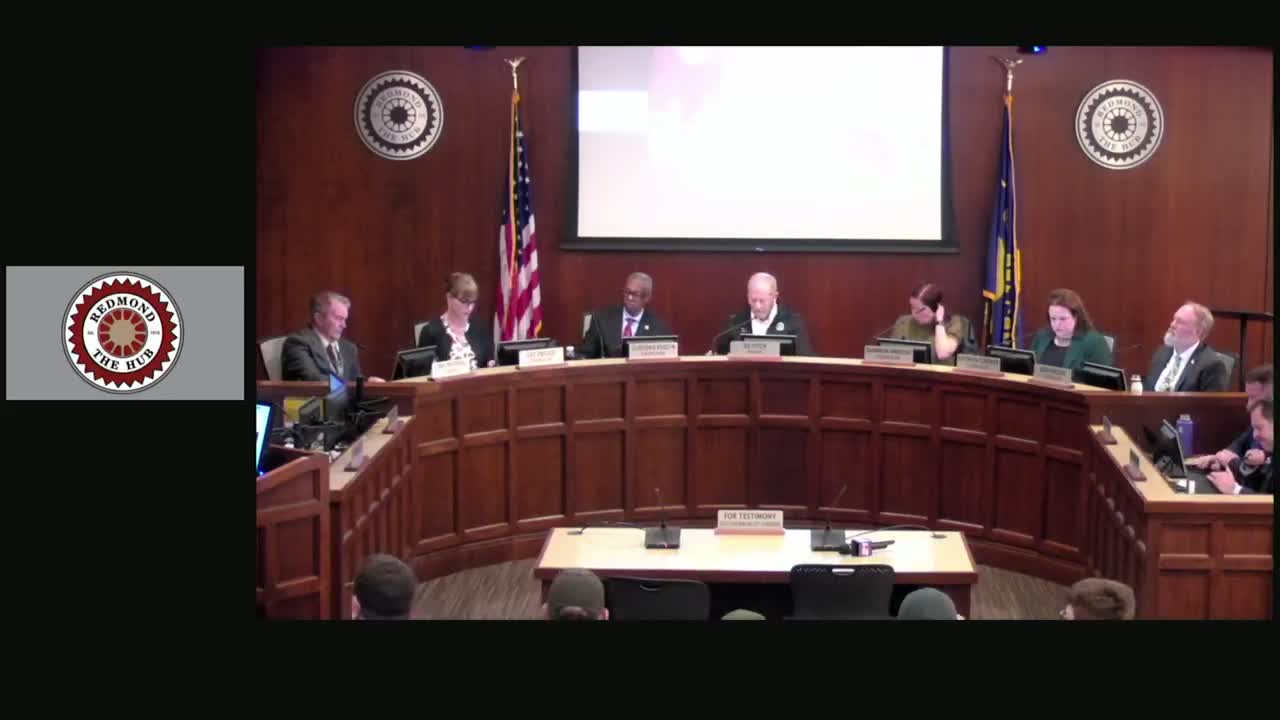
At a public hearing Tuesday, the Redmond City Council reviewed November advisory vote results supporting local dispensaries and a local sales tax, then voted to ask the Planning Commission to draft time, place and manner (TPM) regulations before any business licenses or tax ordinance take effect.
City staff summarized two ballot questions that passed Nov. 5: an advisory measure asking whether dispensaries should be allowed (about 53.5 percent yes) and a separate question authorizing a local retail sales tax on marijuana items up to 3 percent. City Attorney Keith Lights and planning staff described the next legal steps: ordinances to enact a 3 percent local sales tax, changes to the development code and business‑license code to allow dispensaries, and TPM rules to regulate locations, hours and buffers.
Staff proposed statutory and local limits consistent with state rules: state law (OLCC) restricts dispensaries from locating within 1,000 feet of K‑12 schools; staff recommended additional 500‑foot buffers from city parks, day‑cares, transit hubs, treatment centers and shelters (staff clarified the treatment‑center buffer applies to brick‑and‑mortar addiction treatment facilities, not to clinicians who also provide counseling). Staff also proposed excluding dispensaries from residential zoning and from sites adjacent to residentially zoned parcels, and noted state rules prohibit dispensaries within 1,000 feet of each other.
City finance staff said a 3 percent local tax applied to hypothetical $5 million in dispensary sales would yield roughly $150,000–$200,000 annually; the state also provides a modest shared‑revenue calculation that staff estimated at about $1.50 per capita this year (roughly $55,000 for Redmond’s population), but staff cautioned those are preliminary estimates and the FY2025‑26 budget did not include the revenue.
Public comment included residents urging both passage—citing lost local tax revenue and regulated access—and opposition, citing youth access and federal funding concerns. Eric Lee, a Redmond School Board member speaking as a private citizen, urged policies that “keep marijuana out of our schools and out of our public spaces.” Other residents cited job and economic benefits.
After public comment, Councilor Kat moved and a colleague seconded a referral asking the Planning Commission to draft TPM regulations consistent with council discussion, including proposed buffers and location limits. The motion carried on a voice vote; councilors also agreed to defer formal ordinance readings so the Planning Commission and staff can return with recommended TPM language and maps. Mayor Fitch summarized council intent as honoring the voters while limiting impacts for residents who opposed the advisory measure.
If council moves forward after Planning Commission review, staff outlined a potential calendar: Planning Commission review in March, first city‑council readings of TPM and development‑code changes March 25, second readings April 8, and a 30‑day waiting period after ordinances pass before they take effect. Staff noted the Oregon Liquor and Cannabis Commission (OLCC) maintains a licensing process, including a current state moratorium on new licenses and state background checks and fingerprinting requirements; an OLCC license transfer or new application process would still be required for any dispensary to open.