Get Full Government Meeting Transcripts, Videos, & Alerts Forever!
Get email alerts on the Transit topic
No spam. Unsubscribe anytime.
Hampton Roads Transit presents two preferred alignments for high‑capacity transit in Chesapeake
Summary
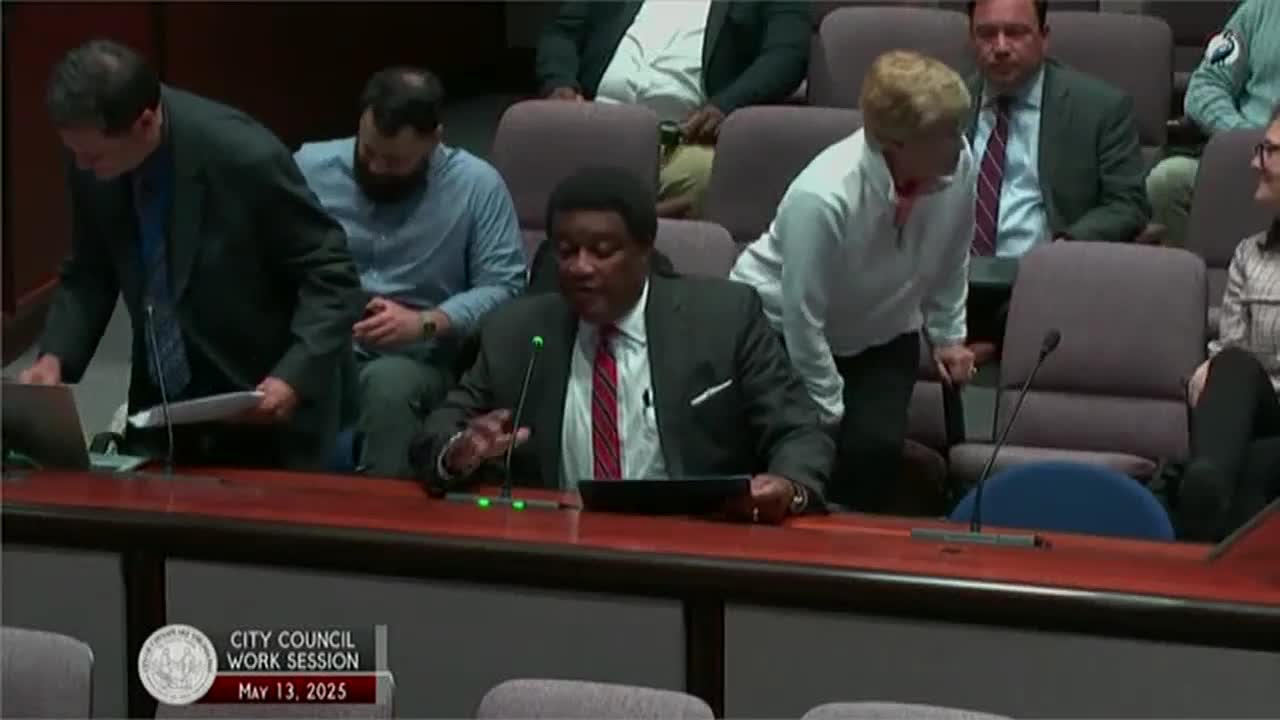
Hampton Roads Transit presented the Connecting Chesapeake study on May 13, recommending two alignments for high‑capacity transit and asking the council for concurrence to proceed to a more detailed planning phase.
Hampton Roads Transit presented the final results of its Connecting Chesapeake regional connection study on May 13, recommending two alignment options and describing next steps to refine station locations, environmental review and funding strategies.
“Transit really is part of the viability of our regional economy,” HRT Executive Director William Harrell told the council, adding that “the majority of individuals riding transit are going to work.” HRT planning staff said the study evaluated express bus, bus rapid transit (BRT) and light rail technologies and analyzed multiple alignments for ridership, traffic impacts, land‑use influence and order‑of‑magnitude costs.
Ray Amoruso, HRT chief of planning and development, said the study used a two‑tiered approach. Tier 1 narrowed numerous routes to four alternatives; Tier 2 evaluated performance and recommended two alignment options for advancement. Amoruso described two recommended alignments that start either at Chesapeake Regional Medical Center or at Summit Point and travel toward Downtown Norfolk via corridors including Battlefield Boulevard, Greenbrier Parkway, Military Highway and Indian River Road. The study identified travel lengths, stop counts and relative end‑to‑end travel times for each alternative.
HRT’s evaluation weighed traffic impacts (including curb running for BRT versus median running for light rail), the ability of a corridor to influence land use (a crucial federal grant criterion) and ridership potential. Amoruso said light rail generally scored higher on ridership but comes with higher capital costs; express bus scored best on capital cost and BRT scored between the two. He also said light rail was not suitable for every alignment due to bridge and guideway constraints.
On funding, HRT staff said a federal Capital Investment Grants award can provide a large share of capital costs (the program is discretionary and highly competitive); state sources through the Virginia Department of Rail and Public Transportation and VDOT SmartScale represent a possible 20% contribution in the HRT estimate; combined federal/state support still leaves a local capital match in the range of roughly 30–40% depending on project scoring and competitive outcomes.
HRT asked the council for concurrence to advance the two recommended alignments into a next study phase that would refine station locations, perform conceptual engineering and NEPA environmental work, and further define capital and operating cost estimates and local funding scenarios. HRT staff said the next stage is funded through regional Surface Transportation Program (RSTP) funds and that they will seek a formal council resolution in the coming weeks to continue the study.
Council members asked for additional details on route options and prioritization. Several members were receptive to further study and asked HRT to return with more information about traffic analysis, ridership assumptions, right‑of‑way impacts and how proposed routes would align with Chesapeake comprehensive planning work, including the Greenbrier area plan. HRT staff said they would coordinate with city planning, public works and economic development staff and seek opportunities to secure federal and state matching funds if the council chooses to advance the project.
No formal council action was taken the night of the presentation; HRT will request a resolution from the council if it proceeds to project development and federal grant application phases.