Get Full Government Meeting Transcripts, Videos, & Alerts Forever!
Get email alerts on the Safe Parking Micro Shelters topic
No spam. Unsubscribe anytime.
Council approves ordinance to allow micro‑shelters at Redmond safe‑parking sites in two‑year pilot
Summary
The Redmond City Council approved Ordinance 2024‑16 amending Chapter 5 of the city code to add definitions and pilot permission for up to four micro‑shelters at safe‑parking sites. The ordinance passed on a roll‑call vote after a public hearing that drew dozens of supportive residents and providers.
Redmond — The City Council voted to approve Ordinance 2024‑16 Thursday, amending Redmond City Code Chapter 5 to add definitions for vehicles and “micro shelters” and allowing a pilot program for up to four micro‑shelters per safe‑parking site through May 30, 2026.
Supporters — providers, volunteers and people with lived experience of homelessness — told the council the structures can provide short‑term shelter that helps people engage faster with case management and move to permanent housing. "A micro shelter ... is a small unit, garden shed sized, in most cases less than a hundred square feet," said Rick Russell, pastor at Mountain View Fellowship and executive director of Mountain View Community Development, which operates Redmond’s safe‑parking program.
The ordinance adds size limits and other standards for micro‑shelters, clarifies rules on open‑flame appliances in RVs, designates outdoor cooking areas for gas grills, and tightens neighborhood notification requirements. The council previously increased the number of vehicles per site from six to eight on Nov. 26; those changes remain in place. The micro‑shelter provisions are set to expire unless the council takes action before the pilot sunset date.
Why it matters: Mountain View and other providers said micro‑shelters can be a lower‑cost, transitional option for people who avoid congregate sheltering — women, families with children and people who have experienced assault — and that case management tied to the sites is key. Rick Russell told the council Mountain View served 134 individuals last year and helped 45 move into permanent housing; he said the provider expects to expand Redmond capacity and to announce a Bend site soon.
Public comment: More than a dozen residents and regional providers urged the council to approve the change. "To say that we’re in a housing crisis is putting it lightly," said John Halen, an employer who told the council he has staff living in vehicles. Chuck Hemingway, board member of Central Oregon Villages, said his organization operates micro‑unit sites in Bend and described the units as structurally sound and effective at helping residents move to stable housing.
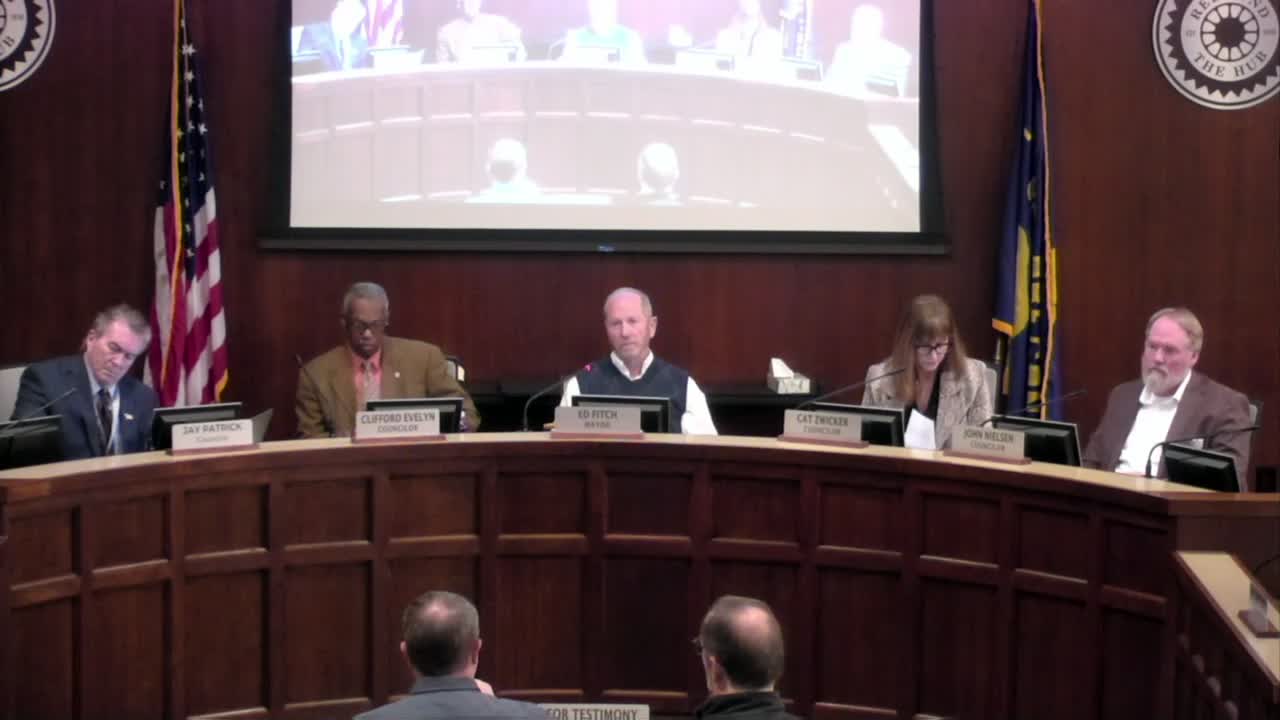
Council action and vote: Councilor [recorded as] Evelyn, Mayor Fitch, Councilor Nielsen, Councilor Osborne, Councilor Patrick and Councilor Zwicker voted aye on final adoption. Councilor Wedding was excused. The ordinance was read by title for first and second reading and then approved on roll call; the ordinance language requires council action before May 30, 2026, to extend the pilot.
Implementation and funding: Russell said Mountain View is not requesting city funds for the pilot; state funds exist to purchase and site units but expire June 30. Providers said the micro‑shelters are movable, require temporary electrical connections, and participants remain subject to the same case‑management and program rules as existing safe‑parking participants (weekly case‑manager contact and documented housing goals).
What councilors asked: Council members and staff discussed structural standards, snow loads, electrical hookups and neighborhood impacts. The council limited the pilot by capping four micro‑shelters per site and requiring the council to extend the program before the sunset date if it is to continue.
Next steps: Mountain View and city staff will proceed with implementation under the pilot rules. Providers said they would draw on experience from other regional programs when finalizing operations, and would work with the city on site‑level notification and permitting as required.
Votes at meeting (other items): The consent agenda (approval of minutes dated Nov. 18, Nov. 26 and Dec. 5) was approved by voice vote. The council also approved a contract for office furniture and equipment for the new public safety facility (see separate article).