Get Full Government Meeting Transcripts, Videos, & Alerts Forever!
Get email alerts on the Civil Exclusion Zone Ordinance topic
No spam. Unsubscribe anytime.
Estrella council discusses proposed downtown exclusion zone to curb repeat illegal behavior
Summary
Estrella City Council spent a work session debating a proposed ordinance that would let police exclude people from a defined downtown area for repeated violations, while councilors and staff sought clearer protections, mandatory service referrals and a review process before any exclusions take effect.
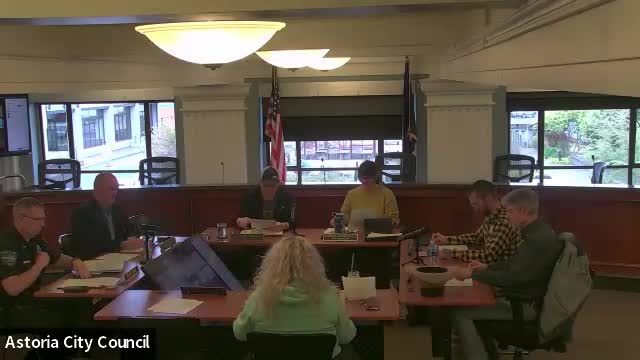
Estrella City Council on Monday held a work session focused on a proposed civil exclusion zone for the city’s downtown, a tool city staff say would let police bar people from a defined area after repeated unlawful behavior.
City Manager Spence, introducing ordinance No. 25, told council the proposal is not a new state law or a change to the city’s camping ordinance but “what is an effective mechanism to enforce the current standards that we have,” and to give staff a draft to refine with council feedback.
The proposal would allow exclusion from a downtown zone for specified violations, with listed exceptions to permit legally allowed activities such as seeking medical care or services. Police and council members repeatedly said the intent is to change behavior and not to deny services: Chief Kelly said the ordinance would allow someone to “walk through the area” and return for court or doctor appointments while preventing them from continuing illegal conduct in the zone.
But councilors and the chief debated how exclusions would work in practice, including how many warnings would be required, how officers document contacts and which offenses belong on the list. Councilor Marzoriello and others urged mandatory, written referrals to social-service providers before exclusions are imposed. Marzoriello proposed that the ordinance explicitly require staff to offer emergency housing and shelter resources before issuing an exclusion notice.
Council members raised civil‑liberty and practical concerns. Councilor Lumpkin warned the rule would change how people interact with public sidewalks, parks and other public assets downtown, not just private property; Councilor Long said she opposed exclusion ordinances in principle and urged more focus on housing solutions. Several councilors urged a tiered approach that treats violent or dangerous crimes differently from lower‑level, quality‑of‑life offenses such as repeat camping citations.
Chief Kelly and staff outlined how the proposed tool would operate alongside existing enforcement: officers would rely on state trespass statutes to make an arrest if someone returned to the excluded area, and exclusions could last weeks to months in practice. The chief said police track chronic contacts with particular individuals — one cited example had 3,678 minutes of police time documented — and argued an exclusion could prevent repeated contacts and reduce officer time on a single person.
Councilors also asked about legal risks and evidence from other cities. Staff reported conversations with Medford city attorneys and police, and said Medford saw its count of illegal camping sites fall sharply after combining exclusion measures with criminalized camping enforcement. Councilors asked for data about whether exclusions pushed people into accessing services or merely displaced them to nearby towns; staff said Medford’s measure included criminal penalties and local jail time that staff told them sometimes produced a temporary pathway into services.
The council discussed appeals, judicial review and oversight. Several councilors preferred that exclusions or contested exclusions be subject to judicial or municipal‑court review; others proposed a council or citizen review process, at least for lower‑tier exclusions such as repeat camping violations. Marzoriello urged a public, recurring review and a sunset clause — she suggested a two‑year pilot with mandatory review — so the council would reassess whether the ordinance produced the intended results.
On outreach and safeguards, staff said they would continue coordinated public information with the downtown association and social‑service partners and post educational materials on social media. Councilors pressed for clearer written materials to give excluded people: a simple, one‑page map of service locations, instructions on how to request a variance or appeal, and documentation that referrals were offered when an exclusion is served.
City Manager Spence and Chief Kelly concluded the session by saying staff would return with draft ordinance options that reflect council feedback — including tiered offenses, a review and appeals process, mandatory referrals to services before exclusions, possible pilot/sunset language, and clearer written protocols for outreach and documentation. No formal action or vote was taken at the work session; the item was presented for council direction and refinement.