Get Full Government Meeting Transcripts, Videos, & Alerts Forever!
Get email alerts on the Economic Development topic
No spam. Unsubscribe anytime.
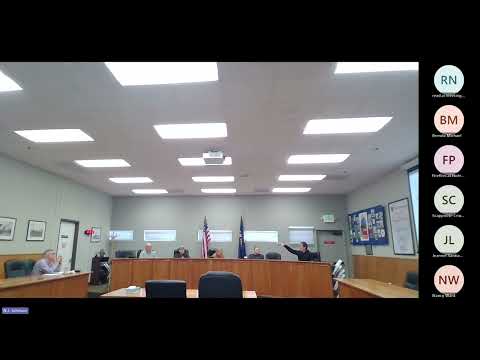
Scappoose committee refines economic plan, flags need for light‑industrial “stepping stone” space
Summary
The Scappoose Economic Code Committee reviewed a draft economic balance sheet and recommended wording to preserve light‑industrial land and encourage small‑business incubator space, while cautioning that rezoning could spur large apartment projects without protections.
The Scappoose Economic Code Committee reviewed the draft economic balance sheet and discussed specific additions to the city’s downtown vision on Thursday, focusing on preserving light‑industrial land, encouraging small‑business “stepping stone” spaces, and identifying levers such as SDC deferrals and tax‑abatement programs to support local business growth.
Committee members and local property owners pressed for clearer language in the draft that would preserve land suitable for light industrial and flexible “flex” or incubator spaces that allow firms to grow from a small footprint (200–700 square feet) into larger spaces without relocating. The group discussed the cost barriers to building new smaller commercial units, the market preference among developers for apartments on rezoned parcels, and a list of possible policy levers the council could consider.
The question of immediate edits was framed as a procedural issue: the committee is not voting to adopt specific policies today but instead to finalize a vision document that city council can use. Carl, committee member, clarified the committee’s role: the draft provides a vision and “a laundry list” of tools council may use, and any specific policy packages would require additional meetings and alignment before formal recommendation to council. Jay, committee member, and Christine, vice chair of the committee, both described a likely next step of presenting the finalized document to the city council after committee edits are completed.
Discussion highlights
• Need for “stepping stone” space: Several speakers, including property owners and committee members, described a local market that supports very small units (200–700 sq ft) but not the mid‑size 1,000–4,000 sq ft spaces many expanding employers would need. One property owner said his buildings are often reconfigured into smaller units because demand for smaller, lower‑cost spaces stays constant while larger spaces are hard to rent.
• Light‑industrial zoning vs. rezoning risk: Committee members raised a concern that rezoning large parcels to “commercial” could incentivize developers to build apartments rather than the light‑industrial or flex space the committee wants to preserve. The draft 50‑year planning packet discussed during the meeting included a proposed 60‑acre area that committee members said needs careful zoning so it remains suitable for light industrial uses and does not default to mostly residential development.
• Policy levers: The committee revisited possible tools listed in the draft, including System Development Charge (SDC) deferrals to make construction more financeable, targeted tax abatements (enterprise zone programs already exist in parts of the city), and public‑private partnerships (PPPs). Participants repeatedly cautioned that PPPs require extreme care because they can transfer substantial risk to the public if not structured appropriately. The committee favored deferral options over elimination of SDCs and suggested existing enterprise programs be considered before creating new abatements.
• Process and next steps: The group agreed to add language to the vision section that explicitly affirms maintaining an adequate amount of industrial zoning to support incubation and expansion of locally based businesses. Carl said he will make the edits, circulate the revised draft to the committee, and seek a final thumbs‑up at the next meeting; any formal policy proposals would be prepared later for council consideration. The committee also noted the downtown overlay and a forthcoming block‑by‑block master plan as vehicles for implementing finer‑grained design and land‑use decisions.
Context and background
Committee members framed the discussion against local market observations: some businesses now operate from home or small offices, demand favors small rentable units at lower price points (one commenter cited $800 per month for 500–700 sq ft as a target market), and larger suites often remain vacant. The committee referenced experiences in nearby cities — including a cautionary example in Rainier — where PPPs and development deals left municipalities with fiscal stress when public risk was not properly managed.
The committee did not adopt new ordinances or vote on zoning changes during the meeting. It approved routine procedural items (agenda and prior meeting minutes) at the start of the session and directed staff to incorporate agreed language into the vision document for review at a subsequent meeting. The finalized document will be presented to the city council for its use in longer‑range planning and potential policy action.
Ending
The committee scheduled follow‑up work: staff edits to the balance sheet/vision, a final committee review at the next meeting, and then a presentation to city council. Members emphasized that specific policy actions — SDC deferrals, targeted abatements, or PPP arrangements — require separate proposals and council approval before any change to zoning or incentive programs is enacted.