Get Full Government Meeting Transcripts, Videos, & Alerts Forever!
Get email alerts on the Personnel Policy topic
No spam. Unsubscribe anytime.
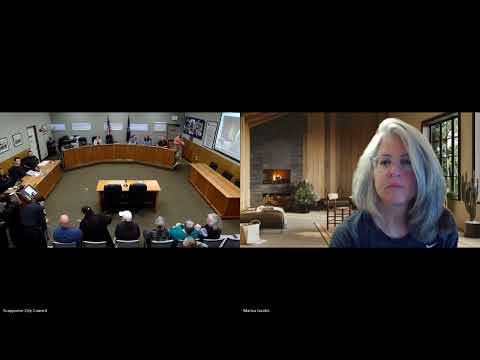
Scappoose adopts updated personnel handbook, strips proposed paid "volunteer leave" after council debate
Summary
The Scappoose City Council on April 21 adopted a revised personnel policy handbook, Resolution 25-04, updating paid-leave rules, travel reimbursements, AI policy and more, and removed a proposed paid "volunteer leave" after council concerns about scope and optics.
The Scappoose City Council on April 21 adopted Resolution 25-04, replacing the city—s personnel policy handbook and repealing Resolution 22-02. The council voted by voice to approve the revised handbook as amended; the resolution takes effect upon passage.
City staff described the handbook as the document that governs the employment relationship between the city and its employees. Assistant to the City Manager N.J. Johnson told the council the update reflects changes in state law, recommendations from staff and a model handbook from the city—s insurer, and local preferences the city added after soliciting staff feedback. "The city's personnel policy handbook is essentially the governing relationship between the city organization and then all employees there within," Johnson said.
The handbook contains a number of substantive changes the council discussed at length. Key revisions include: - Vacation carryover and buyback: The maximum vacation carryover for nonrepresented full-time employees increases to 320 hours; the handbook raises the vacation buyback cap to 80 hours. Staff said employees must have at least 180 hours accrued to be eligible for buyback. City staff estimated that, for an average exempt employee, an 80-hour buyback could cost roughly $3,000 if fully used. - Travel and meals: The handbook directs staff to use U.S. General Services Administration (GSA) lodging rates as an objective benchmark for reimbursable overnight lodging and allows meal tips of up to 20% for restaurant meals and a 10% allowance where customary (for example, rideshare drivers), subject to verification. - Leave expansions and state law implementations: The draft implements recent Oregon statutory changes to paid leave and family/medical leave provisions (OFLA/paid leave Oregon), expands eligibility rules for bereavement leave to better cover part-time schedules, and adds bias crime as an eligible reason for certain protected leaves. - Employee reporting and complaints: The handbook adds a clarified process for public complaints about employees and requires employees to report outside employment when conditions change rather than on an annual schedule. - Other items: The update adds guidance on handling on-the-job injury intake (CIS Rapid Care), expands uniform/clothing allowances to certain public-works supervisors who perform field duties, and adds an AI-in-the-workplace guidance section requiring staff to independently verify AI-generated content before relying on it for city work.
Council debate focused on budget implications and policy optics. Councilor Holmes warned the council about recurring cost implications, saying the city "do[es] not have a general fund that even supports our ongoing costs" and urging caution on changes that add long-term recurring obligations. Several councilors and staff pushed for encouraging employees to actually take vacation time rather than bank it; others said the changes were intended to add flexibility for senior or exempt staff.
One proposal that drew particular scrutiny was a paid "volunteer leave" that would have allowed employees up to 24 hours per year (pro rata for part-time) of paid time to perform volunteer activities in the county. Councilors raised concerns about optics, limits, scope and whether the leave should be limited to Scappoose or Columbia County activities. After discussion the council struck the volunteer-leave provision from the version it approved and asked staff to return with a narrower proposal later.
The council also discussed the draft AI policy. Staff clarified the policy intends to permit AI as a tool but to prohibit using AI-generated text unverified in final city work products. Council members asked the staff to keep the policy conservative initially and to return to the council if the restrictions prove overly limiting.
Motion and final action: a council member moved to adopt Resolution 25-04 as struck and amended; Councilor Santiago seconded. The motion passed on a voice vote.
Council members asked staff to monitor and report any budgetary impacts of the adopted changes over the next year and to promote a culture of encouraging employees to use earned leave.
Ending: City staff said they will prepare any necessary follow-up materials (complaint-intake forms and SOPs) and will return to the council if further adjustments to the handbook are warranted.