Get Full Government Meeting Transcripts, Videos, & Alerts Forever!
Get email alerts on the Historic Preservation topic
No spam. Unsubscribe anytime.
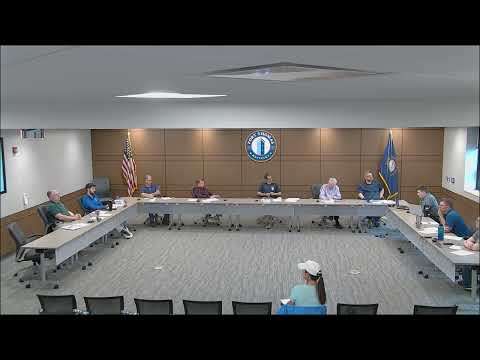
Design Review Board approves minutes, receives Preservation 101 training
Summary
The Fort Thomas Design Review Board approved last month’s minutes and heard a Preservation 101 training from Wes Cunningham, the board’s on‑call preservationist. The presentation reviewed National Register criteria, integrity, treatment standards and financial incentives tied to historic preservation in Fort Thomas.
The Fort Thomas Design Review Board approved last month’s meeting minutes and heard a Preservation 101 training delivered by Wes Cunningham, the on‑call preservationist for Fort Thomas.
The training, which Cunningham framed as a general overview ahead of a later Fort Thomas‑specific session, summarized why historic preservation matters and described the technical framework the board will use when reviewing changes in local overlay districts. “Not only are rehabilitation costs often equal to or less than demolition and reconstruction,” Cunningham said, adding that preservation work “tends to stay in the local economy” and can boost property values, jobs and heritage tourism.
Cunningham reviewed the federal framework that guides preservation practice, including the National Historic Preservation Act, the National Register of Historic Places and Section 106 review, and he outlined how the Secretary of the Interior’s standards and National Park Service guidance inform local decisions. He described the National Register’s typical 50‑year threshold for consideration, the four eligibility criteria commonly cited as A through D (association with events, association with persons, design/construction, and information potential), and the seven aspects of integrity—location, design, setting, materials, workmanship, feeling and association—that determine whether a property can convey significance.
The presentation emphasized rehabilitation as the treatment most relevant to the board’s work: “Rehabilitation . . . makes possible a compatible use for a property through repair, alterations and additions while preserving those portions or features which convey its historical, cultural, or architectural values,” Cunningham said. He also described practical guidance resources—National Park Service bulletins and the Preservation Briefs—and cited roughly 47 existing briefs that cover topics from masonry repointing and window repair to energy efficiency and building‑code approaches for historic properties.
Cunningham reviewed incentives and regulatory exemptions that can affect local projects. He noted federal and state historic rehabilitation tax credits, Kentucky’s tourism tax credit program, building‑code exemptions in the 2021 International Existing Building Code for historic buildings, and two types of floodplain relief that can apply when a property is listed on the National Register. He gave local examples he has worked on in Kentucky, including a large district nomination and a distillery project used to illustrate floodplain exemption applications.
Cunningham said he completed a resurvey of the Town Center Business District last year and authored a Cultural History and Determination of Eligibility Report to identify contributing and noncontributing resources within the local overlay. He told the board the resurvey concluded an eligible district exists but that several buildings within current boundaries should be considered noncontributing. Cunningham and city staff said they are discussing revised, Fort Thomas‑specific design guidelines that would expand on Secretary of the Interior language to reflect local preferences and the overlay districts’ stated purpose.
Earlier in the meeting, an unidentified board member moved to approve the minutes from last month’s meeting; a second was made and the presiding member called the voice vote in favor. The motion passed and the minutes were recorded as approved; no roll‑call tally was recorded in the transcript.
Cunningham closed by inviting questions and suggestions for the second, Fort Thomas‑specific training, which he said will cover application processes, replacement materials endorsed by the Kentucky Heritage Council and how the city’s new Unified Development Ordinance interacts with design guidelines. Board members said they will consider questions and forward them to Cunningham before the next session.