Get Full Government Meeting Transcripts, Videos, & Alerts Forever!
Get email alerts on the Street Reconstruction topic
No spam. Unsubscribe anytime.
Village board opts to pursue DPW‑assisted reconstruction of Park Place, to bid water and curbs separately
Summary
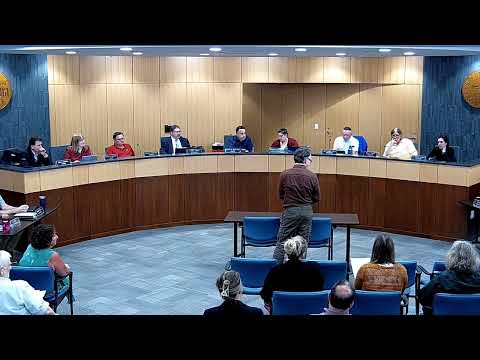
The East Aurora Village Board on May 5 moved to pursue a DPW‑assisted reconstruction of the damaged Park Place block from Oakwood to Prospect (Option 3) and to bid water‑line replacement and new curbs/aprons separately.
The East Aurora Village Board on May 5 moved to pursue a DPW‑assisted reconstruction of the damaged Park Place block from Oakwood to Prospect (Option 3) and to bid water‑line replacement and new curbs/aprons separately, a plan village officials said could be completed sooner and at lower cost than a full engineered reconstruction.
Why it matters: the block has deteriorated into a dust‑and‑mud condition that residents said is creating daily health, safety and accessibility problems. Estimates presented to the board put an engineer‑bid paving-only reconstruction at about $300,000 (option 1), a full rebuild with curbs, drainage and water services near $650,000–$800,000 (option 2), and a DPW‑assisted option at roughly $182,000 with an additional ~$80,000 if water lines are added and perhaps another ~$100,000 if curbs are included — bringing a combined Option 3 total toward $360,000–$400,000 if everything is added.
DPW chief Jeff Stoll described Option 3 as a hybrid: the village would provide hauling, stone and some labor while Robinson Paving (on state/county contract) would supply equipment and paving; the work would include excavation, subbase, geotextile fabric and asphalt. Stoll said Option 3 would not require the full public‑bid process used for Option 1 and could be done faster; he estimated the actual on‑street work could take about a week for pavement and a few days for a hired water contractor to replace water mains once bids are awarded.
Resident concerns shaped the discussion. Mary Hayes and others said the block’s condition makes sidewalks and crossings challenging for people with disabilities and for family access to Hamlin Park. Margaret Potter asked whether board action would be finalized that night; trustees indicated they were ready to proceed with Option 3 and to prepare bid documents for water and curbs. Trustee and staff discussion noted that formal bidding for water and curbs would likely take about two months to prepare and advertise and that curbs alone could exceed the village’s informal bidding threshold (roughly $30,000).
Board direction and next steps: the board instructed staff to move forward with Option 3 and to solicit separate bids for water‑line replacement and for curbs/sidewalks (a la carte). Staff said they would return with price detail on concrete curbs by the end of the week and with a timeline for awarding bids; if some bid line items proved too costly, the board said it could remove those items.
Temporary mitigation: board members noted an interim scrape‑and‑pave to carry the block through the winter would cost about $40,000. Trustees and residents discussed temporary traffic‑control measures (local‑traffic signs) to reduce dust and hazard during summer work and asked DPW and the police to consult with local schools on bus routing.
Ending: Trustees expressed a preference for Option 3 as the best combination of speed and value and asked staff to return with final bid documents and schedule estimates at upcoming meetings; no final bond or funding vote was recorded on May 5.