Get AI Briefings, Transcripts & Alerts on Local & National Government Meetings — Forever.
Residents tell East Aurora board utility crews are damaging trees; village to press county on protection
Loading...
Summary
Residents urged the village to require tree-protection measures during county-led Pine Street reconstruction and to hold utility contractors to arborist standards after multiple complaints about crews trimming or removing mature trees.
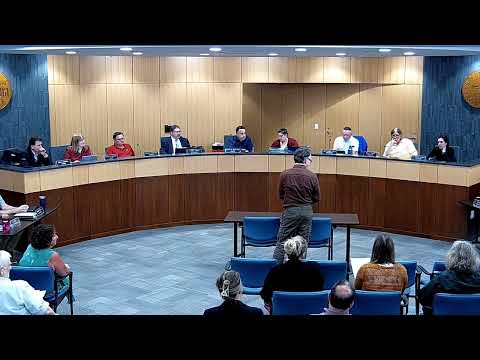
Residents at the May 5 East Aurora Village Board meeting urged officials to force better protections for street trees during utility and county road work, saying crews for NYSEG and contractors hired by GoNetspeed have parked heavy equipment and placed materials inside tree drip lines and performed overly aggressive pruning.
Jesse Griffith, tree board chair, said crews “seem to be pretty sloppy about where they're parking the equipment, where they're putting the giant, concrete bins, you know, bumping things right against the trunks of the mature trees,” and asked the village to press the county and utilities for protections. Griffith also said the tree board plans to plant about 45 replacement trees in the spring where trees were removed or poorly trimmed.
Why it matters: residents and tree stewards said compaction and incorrect pruning can cause long‑term, sometimes irreversible damage to street trees that are part of the village’s public‑realm infrastructure and canopy. Village officials told speakers they would try to secure short‑term protections and push contractors for better communication and documentation.
Village administrator Shane Krieger told the board he would contact county officials the following day based on the tree board’s and residents’ recommendations. DPW chief Jeff Stoll said he would measure the right‑of‑way at 219 Center Street after a resident complained that a contractor refused to give a last name during a property visit.
Multiple residents described interactions with contractors they called disrespectful and said they had difficulty obtaining schedules or counts of trees trimmed. “They might not even count them,” Griffith said about GoNetspeed’s subcontractors; he later reported being told roughly 50% of work in the village was complete and that the full job is currently scheduled for about September.
Lynn Kamara, who identified herself as a master gardener and community tree steward, recommended the village ask the county to require fencing around tree drip lines and to adopt construction‑stage best practices used by Cornell and other municipalities.
Legal and recourse notes: a staff member told the meeting that if a contractor damages trees on private property, property owners may have remedies under state statute and can file civil claims; the board encouraged residents to document damage and said the DPW would follow up with property owners and contractors.
Next steps: Krieger and Stoll were directed to contact county project managers and the subcontractors working for GoNetspeed and NYSEG to seek the make‑ready packages, confirm schedules, and request adherence to arborist best practices. The tree board advised the village it will return May 19 with suggested language for a resolution asking the county and contractors to protect trees during the Pine Street reconstruction.
Ending: Residents and officials agreed to continue outreach to the county and to press contractors for clearer schedules and documentation; the board did not adopt a formal moratorium at the May 5 meeting but signaled staff would pursue immediate protections and an item for a future agenda.