Get Full Government Meeting Transcripts, Videos, & Alerts Forever!
Get email alerts on the Public Safety topic
No spam. Unsubscribe anytime.
East Aurora board narrows Heart of Music Fest hours amid safety concerns
Summary
The Village Board voted 4–2 April 21 to limit live-music hours for the Heart of Music Fest to 1 p.m.–9 p.m. with participating venues required to close by 10 p.m., after residents and emergency responders raised concerns about staffing, crowd size and medical coverage.
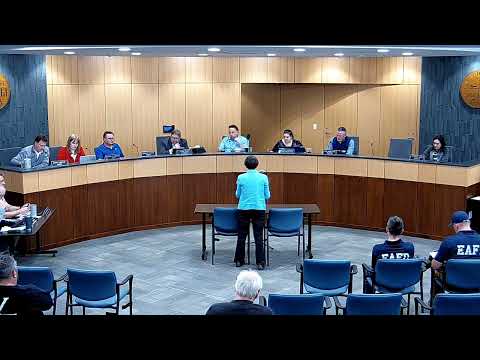
The Village of East Aurora Board voted 4–2 on April 21 to limit the Heart of Music Fest’s live-music hours to 1 p.m.–9 p.m. and to require participating venues to be closed by 10 p.m. The vote followed extensive public comment from local firefighters, EMTs and residents about crowd size and emergency-service capacity.
The measure was driven by safety concerns raised by volunteer emergency responders and residents. Greg Perkins, a captain with the East Aurora Fire Department, said the event “is not a small town event” and told the board organizers were expecting “to draw between 25,000 people.” Dennis McCarthy Jr., an EMT and lieutenant with Pioneer Hook and Ladder, described repeated incidents of fights and underage drinking tied to past events and urged stronger limits on hours and footprint.
Why it matters: Villages of this size rely heavily on volunteer fire and EMS personnel, and speakers said emergency staffing and ambulance availability are already strained. Sam Jaworski, an EMS captain and active firefighter, cited statewide trends showing a decline in active EMTs and called longer hours “likely to increase the chance that you or someone that you love will experience extended wait times for ambulances on that day.”
Board and staff comments focused on whether additional outside resources could mitigate the risks. Police leadership said the office had a verbal commitment from the New York State Police to provide troopers for the day and was pursuing additional mutual aid from neighboring town departments. The police chief told trustees the state troopers would be “on the ground” to supplement local officers. Fire and EMS leaders said they were seeking supplemental first‑response personnel but stressed that transport ambulances and hospital turnaround times remain constraints.
Organizers and health rules: Event representatives discussed state public-health requirements known as Part 18 filings, which govern medical coverage for events that draw thousands. The festival’s representative, Ryan Sheeda, said his team planned a medical setup and that a paramedic on site can substitute in some circumstances for a physician required by Part 18; he said he would provide documentation to the village.
The board attached conditions to its approval: organizers must provide required Part 18 documentation and demonstrate the mutual‑aid commitments for police and fire/EMS the village requested. Trustees also asked village staff and public‑safety leaders to meet with organizers before the event and to hold a debrief afterward to evaluate how the changes worked.
What the vote did: The motion — to set music hours at 1 p.m.–9 p.m. and require participating venues to close by 10 p.m. — passed, 4–2. The motion text and tally were recorded in the meeting minutes; mover and seconder were not specified on the public record.
Board members stressed this was a conditional approval and said future permits could be affected if public‑safety problems recur. Several trustees said they wanted organizers to use social media to communicate expectations to attendees, emphasizing respect for residents and public-safety personnel.
The board and organizers agreed to continue coordinating logistics, with the police chief and fire chief responsible for documenting mutual-aid commitments and the organizer responsible for Part 18 paperwork before the event.