Get Full Government Meeting Transcripts, Videos, & Alerts Forever!
Get email alerts on the Urban Forest topic
No spam. Unsubscribe anytime.
Residents, Chamber and tree board press East Aurora officials for clearer communication as utility crews trim mature trees
Summary
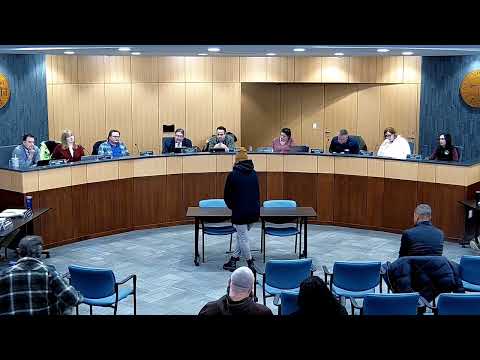
East Aurora — Residents, business leaders and the village tree board pressed village officials on Feb. 3, 2025, for clearer communication and stronger coordination with utility contractors after crews significantly trimmed or removed mature street trees as part of a utility project.
East Aurora — Residents, business leaders and the village tree board pressed village officials on Feb. 3, 2025, for clearer communication and stronger coordination with utility contractors after crews significantly trimmed or removed mature street trees as part of a utility project.
The Greater East Aurora Chamber sent co-chair Josh Smith to speak for the organization; Smith read a prepared statement asking for “accountability, clear communication, and coordinated efforts” among utilities, the village and the tree board and noting that East Aurora is “a proud Tree City USA community since 1998.”
Why it matters: Speakers said the trimming has aesthetic and economic impacts on business corridors and the village’s character, and they asked the village to use available authorities and relationships to reduce further tree losses, to document which trees are considered historic and to provide residents and businesses with advance notice of work that will affect streets and sidewalks.
What speakers said and asked
- Josh Smith, co-chair of the Greater East Aurora Chamber, read the chamber’s position urging “accountability, clear communication, and coordinated efforts” and asked utilities to engage local leadership and the village tree board.
- Nancy Smith, a resident, said volunteers had identified “a list of a dozen trees that are historic in age and size” and asked the village to involve the tree board and the village consulting arborist when decisions are made. She proposed a contest and other outreach so notable trees can be preserved and celebrated.
- Jennifer Bridal and other residents said early informational meetings with utilities were limited in attendance and that public notice has been inconsistent. Residents described feeling “blindsided” when streets were closed or when crews trimmed large portions of tree canopies.
- Jesse Griffiths, chair of the East Aurora Tree Board, asked whether recommendations from the village consulting arborist had been shared with contractors and noted a recommendation to avoid cutting oaks during the April–October period that increases risk of oak wilt.
- Jeff (Department of Public Works staff) said he is in regular contact with contractors and has been receiving photographs of candidate trees for removal; he told the board he texts contractors and will reestablish that picture-sharing where it has lapsed. Jeff also said the village will request more information from contractors when needed and will call the consulting arborist when necessary.
What the board and staff said they would do
- Officials agreed to pursue clearer communications channels. Board members and staff said they would post contact numbers on the village website and consider sharing coordinated notices on social media pages (police, DPW, town page) so residents and businesses see the same guidance.
- Staff asked residents who identified significant trees to submit their list; staff said they would follow up with notes to the contractor team (Stan/O'Connell/GoNetSpeed) to try to protect identified oaks and other historic trees where feasible.
- The board said it would continue to request easement and utility documentation from the companies and the village consulting arborist and to seek answers about whether particular trimming exceeded what utilities typically perform.
Context and unresolved items
Speakers said the work has been under way for about 15 weeks and that residents perceive the town-wide scope in the town differs from the village footprint. Multiple speakers blamed confusion on limited public outreach in the earliest phases of the project. Several residents suggested weekly or biweekly briefings (in-person or virtual) with contractors, DPW and the tree board; village staff said they would attempt to schedule regular updates and to re‑establish the photo-sharing process that had been used early in the project.
Residents also asked the village to publish how many resident inquiries it has received on the issue and to publish a timeline of the village’s responses and actions; the village said it would work on improved public updates.
Ending: The board did not adopt any new formal restrictions on utility work at the Feb. 3 meeting; instead officials directed staff to pursue improved notice and coordination with contractors, to get and review easement documents and to ask the consulting arborist to provide written recommendations when needed.