Get Full Government Meeting Transcripts, Videos, & Alerts Forever!
Get email alerts on the Urban Forestry topic
No spam. Unsubscribe anytime.
Residents, tree board press East Aurora trustees to limit utility trimming during fiber work
Summary
Residents and the village tree board urged trustees to reduce the trimming “box” and protect heritage trees as GoNetSpeed and NYSEG proceed with overhead make‑ready and maintenance work. Board members said they will pursue franchise‑agreement clarifications and legal counsel before seeking binding limits.
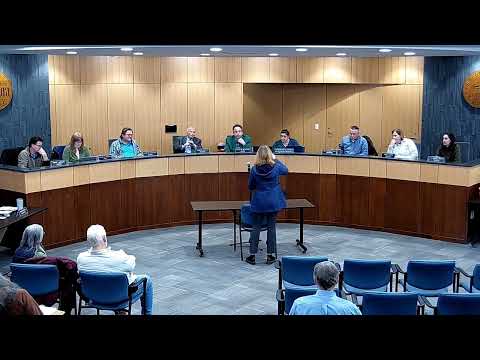
Residents and tree‑board members pressed the East Aurora Village Board on March 17 over widespread tree pruning tied to make‑ready and utility work for new fiber service, urging smaller “trim box” limits, protection for heritage trees and clearer maintenance obligations from NYSEG and GoNetSpeed.
The tree board and several residents described visible over‑pruning along multiple streets and presented petitions and children’s artwork expressing concern about the effect on the village’s canopy. “The kids are watching,” said Tim Noon, a member of the village tree board, who delivered more than 50 drawings made by Parkdale fourth graders.
Village resident Nancy Smith and others pointed to a 1923 franchise agreement with NYSEG that, they said, requires the company to keep poles and wires in safe condition and permits the board to set parameters for work. Smith said she and the tree board have advocated reducing the trim box from a 10‑by‑10‑by‑10‑by‑15‑foot clearance to a smaller 6‑by‑6‑by‑6‑by‑10 standard used in other municipalities, a change she said would “reduce the foliage that needs to be cleared.”
Trustees and staff described steps the village is taking: DPW foreman Jeff Stoll and village staff have been meeting with GoNetSpeed and NYSEG; the board plans to ask its village attorney, Chris Trapp, whether the village can require smaller trim boxes for make‑ready work or hold utilities to a stricter maintenance standard. Shane (staff member) confirmed residents will be notified in advance of trimming — typically by a door knock or door hanger the day before work — and said the foreman on site is a certified arborist.
Board members discussed liability and certification: village arborist Jared and Stoll said certified workers can safely work closer to lines but that doing so raises contractor costs. Trustees also discussed distinguishing make‑ready work (installing new lines) from routine maintenance and whether different clearance standards should apply. The board said it will follow up with the state governor’s Western New York office and NYSEG on franchise obligations and on whether GoNetSpeed will adopt a reduced trim box.
Speakers repeatedly asked about replacement trees. Village staff said GoNetSpeed and NYSEG have offered tree‑planting programs; NYSEG has already pledged a number of replacement trees and GoNetSpeed said it would provide trees but had not provided a final number. The board noted that planting tall trees under lines is no longer practiced and said future planting plans will favor locations that do not conflict with overhead utilities.
Residents also raised concerns about oak wilt and seasonal limits on oak pruning. Jared, the village arborist, told the board there are no documented oak wilt cases in Western New York and that large wounds are best avoided April–October; Stoll said crews would coordinate with the arborist to treat any large pruning wounds if work is required in the risk window.
The board did not adopt any formal restriction at the meeting but said staff will seek legal guidance, press for updated franchise language, and consider interim measures — including the possibility of a short moratorium — if negotiations with the utilities fail.
The discussion spanned public comment and an extended staff update; residents turned in petitions and asked that the board require advance notice beyond a one‑day door knock so homeowners can be present when crews arrive.