
Residents press council on blighted lots; council reopens debate on recreational cannabis after five-year moratorium
Get AI-powered insights, summaries, and transcripts
Sign Up Free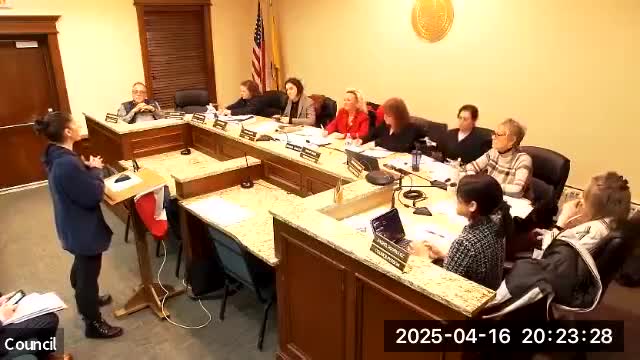
Summary
Public commenters urged the borough to address abandoned, unsightly properties; councilmembers also reconvened discussion about lifting Hopatcong’s five-year ban on retail recreational cannabis sales and asked staff to gather comparative revenue and enforcement data from neighboring towns.
Multiple Hopatcong residents used public comment to press the borough to address long-standing blight and to ask the council to consider policy changes.
In public comment, Denise Grosselis described two long-neglected properties — one on Billings and another on Durban Avenue near the elementary school — and urged the borough to enforce vacant-property and maintenance standards. The administrator confirmed that the zoning officer handles property-maintenance complaints and encouraged residents to submit photos and addresses so staff can investigate and, where needed, initiate enforcement.
Separately, several council members reopened a previously tabled debate about retail recreational cannabis. The borough adopted a five-year moratorium in 2020; council members said that moratorium expires this month and that Hopatcong should study whether to permit retail sales as a revenue source. Mayor Marie Gulati noted the borough’s 2019 vote share in favor of legalization and asked for an analysis comparing neighboring towns’ experience and revenues. Council members proposed gathering the following before any decision: year-over-year municipal revenue data from nearby municipalities with dispensaries, law-enforcement impact reports, and school-system perspectives.
Public commenters urged quick action. Lynn Ritchie, a resident who described visiting dispensaries in other towns, said legal retail outlets are secure, regulated and fast transactions and argued that Hopatcong risks losing the economic opportunity if it waits: “We’re broke. The town has new money coming in here,” Ritchie said, urging council members not to let a market window close to neighboring towns.
Council members agreed to collect data from towns that have permitted retail cannabis and to invite relevant officials — including the police chief and representatives from towns that host dispensaries — to explain operational experience and enforcement consequences. Councilmembers emphasized they will solicit public input before any ordinance decision.
Ending: The council instructed staff to compile a data-driven report on revenue, public-safety experience and zoning implications for retail cannabis, and to produce options for public hearings. Separately, the borough asked residents with concerns about blighted properties to provide addresses and photos to staff so enforcement action can proceed.