Get Full Government Meeting Transcripts, Videos, & Alerts Forever!
Get email alerts on the Municipal Budget topic
No spam. Unsubscribe anytime.
Hopatcong reviews draft 2025 budget as officials consider using $1.9 million in surplus and an 8–10% tax increase
Summary
At a budget work session, Hopatcong officials reviewed a draft 2025 budget that assumes drawing about $1.9 million from the borough's fund balance and projects 8–10% more tax revenue; council directed staff to collect department narratives and schedule a follow-up session for more detail.
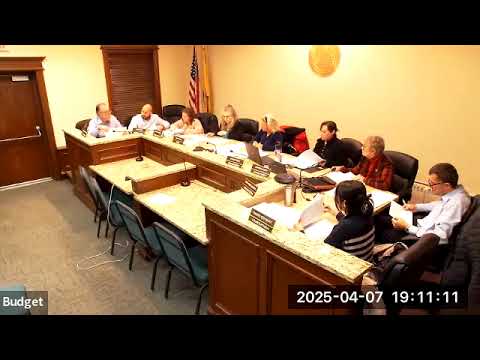
Hopatcong Borough officials spent a work session reviewing a draft 2025 budget that relies on a planned withdrawal from fund balance and anticipates higher tax revenue, but took no formal action.
Administrator Shelby Snow told the council the draft is a working document produced after meetings with department heads and that it shows both required expenditures and “wishlist” items. “What you have here is a working document and it's basically, it's the things that we know we have to pay for,” Snow said, describing the next steps for council review and direction to staff and department leaders.
The draft assumes using about $1.9 million of the borough’s surplus for 2025. Council members and staff discussed recent fund‑balance history: Snow and CFO Judy said the borough’s surplus balance had been reported at about $5.1 million and was updated to $5.3 million; the borough drew roughly $2.5 million from fund balance in the prior year. Officials said reducing the fund balance now would lower the reserve toward a target range they discussed with finance staff.
CFO Judy and other finance staff told the council the budget as drafted anticipates an increase in tax revenues equivalent to roughly an 8–10% rise compared with last year. Council members noted that, even with that increase, the draft still shows an approximate $1.9 million gap that the proposed use of fund balance is intended to cover.
Council discussion focused on sustainability and follow‑up planning. Council member Rebecca Hotsko summarized the position of several members: the shortfall reflects a multi‑year build‑up she described as a “snowball effect,” with past decisions (including several years of little or no tax increase and inconsistent grant administration) contributing to the current position. Hotsko urged the council to identify new revenue sources and emphasized the urgency of planning for 2026.
Officials also reviewed several revenue and expense items that affect the draft: grant reimbursements that were not collected in prior years, flagged in the borough audit, total about $1.8 million; a $707,000 item tied to carbon filtration systems was noted as identified but not yet billed; cell‑tower (PILOT) revenue of about $125,000 a year appears in the revenue lines and contracts run into the later 2020s; and municipal aid and paving projects were delayed last year when a vendor failed to perform. Staff said many grant programs operate on reimbursement and therefore do not directly cover operating budget shortfalls.
Council members and staff also discussed operating and capital changes: anticipated savings from staffing changes that take full‑time positions to part‑time, one‑time costs tied to personnel transitions, increased employee group‑health expenses, and capital requests from departments (including public works, police and fire radio upgrades, vehicle replacements, and recreation projects). Officials emphasized that some capital items are tied to regulatory requirements or safety needs and cannot be deferred.
Given the number of open questions, the council directed department heads to supply short written narratives justifying any capital or other budget requests and asked CFO Judy to compile questions and distribute them to council and staff. Council members agreed to hold a follow‑up budget work meeting to review those narratives and hear department heads; participants discussed availability for a Monday follow‑up with an earliest-possible start of 7:00 (time to be confirmed) and asked staff to circulate a Zoom link and the compiled materials in advance. Council also requested an executive‑session portion be added to the follow‑up agenda so members could discuss sensitive contract or personnel items if necessary.
No formal motions or votes were taken at the session; officials said any budget introductions or formal actions will occur at future public meetings after the follow‑up review and after staff incorporate council direction.
Why it matters: the draft budget’s reliance on a draw of fund balance and on an 8–10% planned increase in tax revenue would affect residents’ tax bills and the borough’s reserves. Council members repeatedly noted the need to balance near‑term relief to taxpayers with the longer‑term goal of restoring the fund balance to a level recommended by finance staff.
Next steps: staff will compile department narratives and other clarifications and distribute them to council; a follow‑up budget work session will be scheduled for the coming week so department heads can answer questions and council can give clearer direction ahead of any formal introduction or adoption process.