Get Full Government Meeting Transcripts, Videos, & Alerts Forever!
Get email alerts on the Drainage topic
No spam. Unsubscribe anytime.
Livingston Parish officials push ordinance requiring drainage plans for small subdivisions to curb flooding
Summary
Council members and representatives from Gravity Drainage District 2 discussed drafting an ordinance to require drainage plans or studies for minor resubdivisions after repeated approvals of successive small filings that have caused localized flooding and maintenance problems.
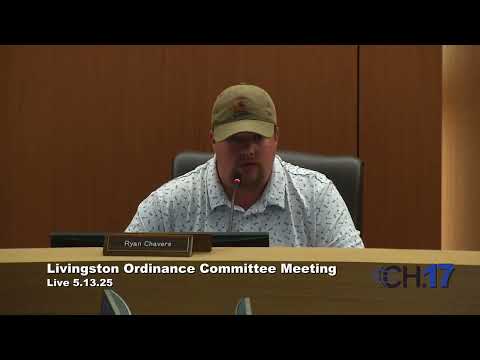
Livingston Parish Council members and representatives from Gravity Drainage District 2 discussed drafting an ordinance that would require drainage plans or, in some cases, full drainage studies for minor resubdivisions after officials said developers have used repeated small filings to evade major-subdivision requirements and created new flooding problems.
Councilman John Mangus said the issue came to his attention after meetings with Gravity Drainage 2; a district representative, Billy Berninger, urged the council to require drainage analysis so that “water runoff without a plan becomes someone else’s problem.”
The discussion centered on a common practice described at the meeting: developers submit a sequence of minor resubdivisions (often nine lots or fewer), wait the allowable interval and then re-file, producing cumulatively larger developments without the drainage studies, road standards or other improvements required of a major subdivision. Berninger described several local instances where small grading changes or driveway construction had redirected runoff onto neighbors’ yards and into private ditches, causing erosion, septic overloads, standing water and disputes.
Council members discussed two policy approaches: lower the threshold that defines a minor resubdivision (suggested options included reducing the cap from nine lots to four) so larger projects must follow full subdivision requirements, or continue to allow minor resubs but require a drainage plan (a lower-cost review) or a drainage impact study for any multi-lot filing. Council members acknowledged a cost trade-off: a full drainage impact study is more detailed and more expensive, while a limited drainage plan is less costly. The meeting record noted approximate cost ranges discussed: a drainage impact study could cost roughly $10,000–$12,000, while a drainage plan might run about $2,000–$5,000.
Council members and district staff identified several specific requirements they expect to include in draft language: clear documentation on where surface water will flow, mapped servitudes or access that allow maintenance crews to clean ditches, and a requirement that applicants obtain sign-off from the gravity drainage district or the parish Department of Public Works (DPW) when appropriate. “If they can’t give us access to clean out the drainage, then my opinion, we deny it,” one council member said during the discussion.
Speakers also discussed implementation and maintenance: some council members suggested the gravity drainage districts could review plans for a fee or that the parish could manage lateral maintenance under DPW with funding routed through parish mechanisms. Several speakers noted many of the developments currently under construction were approved under older ordinances and that new regulations passed in 2023 had not yet affected those projects; the proposed rule changes would apply prospectively.
The council asked staff to draft ordinance language and said they would share it with Gravity Drainage District 2 for review. Councilman Mangus and a council colleague, Jerome, were identified as working on the ordinance and expected to produce a written proposal to circulate to drainage stakeholders for input before returning to the council for further consideration.
The meeting included public comments from residents who described localized drainage problems on parish-maintained and private roadside ditches and asked staff to forward specific maintenance requests to DPW; staff agreed to take those requests after the meeting.
Next steps: council staff will draft ordinance language, circulate it to Gravity Drainage District 2 and DPW for input, and return the item to the council for possible introduction and vote.