Get Full Government Meeting Transcripts, Videos, & Alerts Forever!
Get email alerts on the Zoning Amendments topic
No spam. Unsubscribe anytime.
Ordinance committee backs sending zoning changes on R1.5 and R2 to council after debate over mobile homes and lot width
Summary
The Livingston Parish Ordinance Committee voted to forward proposed zoning changes — reintroducing R1.5 with a one-half-acre minimum lot and amending R2 density and lot-width rules — to the parish council after discussion of mobile-home placement, subdivision practice and drainage.
The Livingston Parish Ordinance Committee voted to forward two related zoning proposals to the parish council: (1) reintroduce an R1.5 zoning classification that sets a minimum lot size of one-half acre and clarifies that single-family detached homes and manufactured/modular homes are permitted while other uses are treated as conditional; and (2) amend R2 rules to reduce maximum density (from 4 to 3.75 housing units per acre) and increase minimum lot width (from 60 to 65 feet).
Councilman Billy Taylor, who presented the R1.5 proposal, told the committee the draft adds a “minimum lot size of 1 half acre” and narrows permitted primary uses to “single family detached homes and manufactured home[s] and modular homes,” moving many other uses to conditional status. Taylor said the change effectively replaces an older 2.5-homes-per-acre metric with a minimum-lot approach. He also asked the committee to consider pausing because 15 rezone requests were pending before the Planning and Zoning Commission; he said a pause would allow the new zoning framework to settle before reopening rules that developers could exploit.
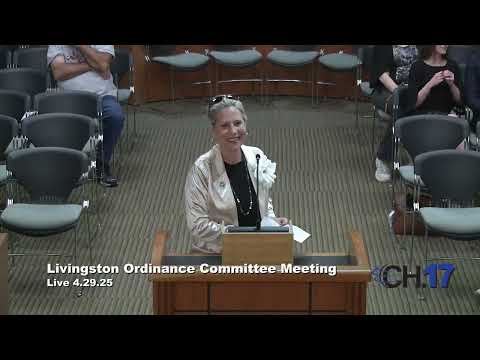
Sarah Ferris, a member of the Planning Commission who spoke from the public, noted a wording inconsistency between the current online municipal code (which references lots) and the draft language (which her copy referenced housing units), and urged the committee to ensure consistent wording. Ferris also flagged a legal/definition issue in the municipal code: “01/2576 defines a mobile home park as more than 1 mobile home located on the same tract of land,” and the current code limits mobile homes to one per parcel except for lineal descendants; she said the change could enable clustered or subdivision-based mobile-home developments if the definitions and subdivision rules are not reconciled.
Councilman Ricky Goff and others argued the R1.5 change would let families with existing half-acre parcels place a manufactured home without needing an acre or agricultural zoning, and that a half-acre (about 22,000 square feet, as discussed in the meeting) better matches many existing lots than the prior square-foot thresholds tied to sewer-system standards. Goff said the proposal would also effectively halve the number of mobile homes a developer could place on larger tracts compared with prior practices.
On R2, committee discussion focused on lot width as much as density. Committee members and staff said increasing the minimum width from 60 to 65 feet would spread houses apart and improve serviceability for utilities and drainage; proponents acknowledged the change reduces developer density modestly (roughly one fewer house per four acres in the committee’s estimate) but said the trade-off improves long-term neighborhood quality and drainage access.
Multiple speakers asked for additional professional input before final council action. Committee members requested written guidance from the parish planning staff, review of drainage and minor-subdivision processes, and a legal review of how mobile-home-park definitions, lineal-descendant exceptions and minor-subdivision rules interact. The transcript records motions to send both items to the parish council; the motions were made and seconded and the items were forwarded for council consideration.
The committee did not record roll-call tallies in the meeting transcript; audio shows members made and seconded motions to forward both proposals to the council.