Get Full Government Meeting Transcripts, Videos, & Alerts Forever!
Get email alerts on the Budget topic
No spam. Unsubscribe anytime.
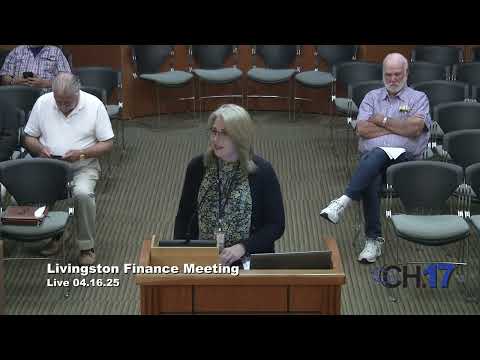
Livingston Parish finance committee reviews 2025 budget highlights, mandated costs and grant cash-flow risks
Summary
At a Finance Committee meeting, parish finance staff summarized 2025 revenue and major expenditure categories, noting large mandated costs, grant-related cash‑flow risks and several line-item budgets that reduce discretionary spending.
The Livingston Parish Finance Committee heard a budget overview from parish finance staff during a meeting where sales‑tax receipts, mandated judicial costs and grant-funded programs were discussed.
The presentation, delivered by Gail (finance staff), listed March remittances for January sales as $2,289,362.77, of which $572,340.69 was allocated to the jail and $1,717,022.08 to the health unit. Gail said ad valorem collections reported for February were $109,780.65 and that year‑to‑date collections totaled $7,396,825. She told the committee the parish is on track to meet its 2025 revenue goal of $16,543,769.
The report emphasized that a large share of parish spending is dedicated or mandated. Chair Lonnie Watts said, "I really feel it's important that the people understand where their money is at," and staff walked the committee through major budget categories and specific line items that constrain discretionary spending.
Staff grouped several mandated and recurring costs: legislative operations ($1,758,941); judicial and district attorney expenses ($1,591,377); ward 2 city court and marshal support ($120,159); justice and constable supplemental pay ($120,000, which the parish pays and then largely receives back from a state supplement, with the parish remaining liable for payroll taxes); and court operations (budgeted at $60,270).
Other highlighted items included a $460,000 budget for courthouse maintenance and grounds, a $171,460 budget for the register of voters (including $116,267 in salaries), and an election contingency of $53,000. Facilities and maintenance across multiple parish buildings were budgeted at $377,013. Planning, permitting and zoning functions were combined into a single category with an expenditure budget of $1,325,291; staff noted those departments also generate permit revenue that offsets part of that cost.
Grant‑funded programs were called out as a cash‑flow management issue. Staff said the "general assistance" category is largely grant expenditures and is budgeted at $6,412,480; those projects can require the parish to front expenditures and wait for reimbursement. Gail explained, "a grant's a great thing, but to facilitate those grants can be very complicated, and it causes massive cash flow sometimes within our parish." The council on aging was described as a flow‑through of roughly $320,000 (the budget line shows $328,200, the difference made up by utilities and maintenance).
Economic development was budgeted at $77,000; staff identified two primary uses: a monthly payment to the parish economic development agency (referred to in the meeting as the LEDC) of about $3,250 and a larger $50,000 item for business‑attraction activities. The presenter said those expenditures are intended to generate future sales‑tax revenue.
Committee members asked for clarifications on several detail lines; one member requested the monthly check register in alphabetical order for easier review. Staff said they would provide those materials on request and noted the finance team will continue a multi‑meeting review of specific funds and departments in coming months.
The presentation closed with an invitation to consult the detailed line‑item financial statements posted with the committee materials and with staff offering to pull additional detail on any requested item.