Get Full Government Meeting Transcripts, Videos, & Alerts Forever!
Get email alerts on the Rulemaking Deadline topic
No spam. Unsubscribe anytime.
Commission considers resolution backing bill to remove deadline for watershed rulemaking
Summary
Commission staff presented a resolution supporting HB165, which would eliminate the statutory deadline for the Amite River Basin Commission to promulgate watershed-management rules, citing limited staff capacity and extensive administrative time requirements.
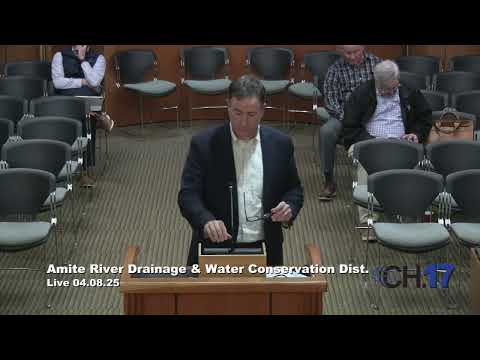
Commission staff described a resolution asking the Amite River Basin Commission to support House Bill 165, legislation that would remove the statutory deadline requiring the commission to promulgate watershed-management rules.
The staff member told commissioners that completing administrative rulemaking — drafting rules, publishing them in the Louisiana Register, and conducting public comment — is time-consuming and resource-intensive. "Representative Edmonston realizes that just simply the administrative procedures of developing rules ... is very, very time consuming," the staff member said, adding that the commission lacks the manpower and capacity to meet both the rule deadline and ongoing planning and watershed responsibilities.
According to the staff explanation, HB165 would eliminate the deadline so the commission can comply with the legislature’s intent at a pace consistent with its available resources while it completes a master plan and other required work as the Region 9 leader for the Louisiana Watershed Initiative.
The transcript records the staff presentation and notes the resolution before the commission but does not record a formal vote, mover, or seconder for the resolution in the provided meeting excerpt.
Why it matters: removing the deadline would change the commission’s statutory timeline for rulemaking and could alter how and when formal watershed-management rules are adopted, with implications for public input timelines and coordination with state-level requirements.